- Email: [email protected]


Biodegradable spunlace Market Situation and Our Momentum
Overall, the worldwide wipes market is growing steadily. This is mainly driven by economic strength, improved living standards and the continuous introduction of new products. A frequent topic of discussion is the so-called plastic ban and the threat plastic poses to our environment. Therefore, the application of natural raw materials and biodegradation technology has become one of the main development directions of wiping cloth manufacturers. This growing threat of plastic pollution and stricter regulations from governments and industry associations has driven us to seek the ideal production technology for fully biodegradable, plastic-free wipes. This process achieves high product performance entirely from natural and/or renewable feedstocks. Using blended fibres such as: wood pulp, short cellulose fibres, viscose, cotton, bamboo or flax, with no chemical additives, results in a 100% sustainable fabric that fully meets customer needs and supports a shift away from plastics and the development trend of synthetic fibers. A one-stop shop for your production equipment We are the only supplier who can provide a complete production process for biodegradable wipes. The systems we supply are cost-effective, flexible and reliable and cover the entire spectrum. From stock preparation/opening and mixing, forming, gluing to drying, you will benefit from our comprehensive process know-how, ensuring that all equipment is in harmony.
Responsibility of the entire industry However, this topic concerns not only us as equipment suppliers, but also the entire industry and supply chain, including raw material suppliers, manufacturers of coil products, finishing and finished products companies, retailers, And finally, the end user. The activities of the supporting industries help to build relevant awareness among all parties and start to influence the habits of end users. As an industry, we can co-create new production technologies focused on a greener environment and a brighter future.
According to the external factors of degradation, it can be divided into:
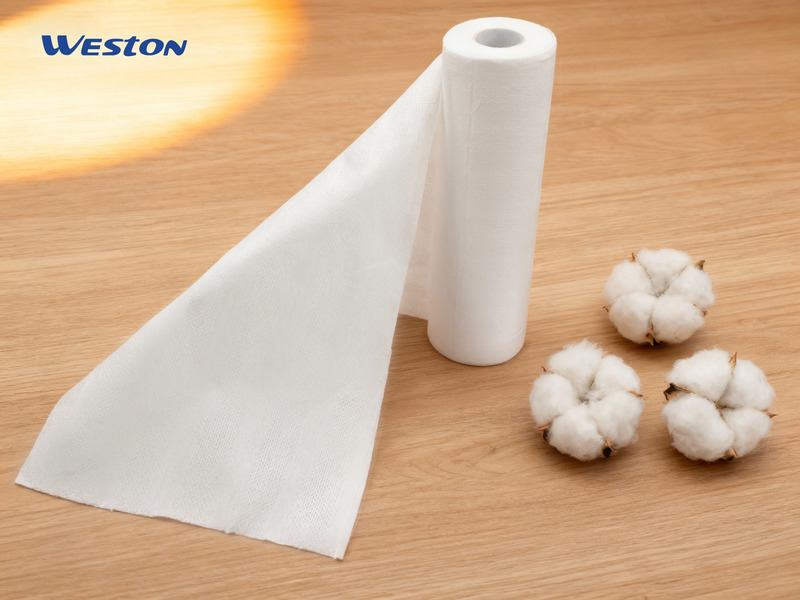
Cotton, that is, cotton fiber is a seed fiber formed by elongation and thickening of the epidermal cells of the fertilized ovule, which is different from the general bast fiber. Its main constituent is cellulose. Cotton fiber is a seed fiber formed by elongation and thickening of the epidermal cells of the fertilized ovule, which is different from the general bast fiber. Its main constituent is cellulose. Cellulose is a natural polymer compound with the chemical structural formula (C6H10O5)n. The cellulose content of normal mature cotton is about 94%. In addition, it contains a small amount of pentoses, waxes, proteins, fats, water-soluble substances, ash and other concomitants. Because cotton fiber has many excellent economic properties, it has become the most important raw material for textile industry.
Properties of cotton fibers:
Cotton fiber has high strength, good air permeability, poor wrinkle resistance and poor stretchability; good heat resistance, second only to hemp; poor acid resistance, dilute alkali resistance at room temperature; good affinity for dyes, easy to dye , the color spectrum is complete, and the color is relatively bright.
The chemical components of bamboo fiber are mainly cellulose, hemicellulose and lignin, all of which belong to high polysaccharides, and the total amount accounts for more than 90% of the dry mass of the fiber, followed by protein, fat, pectin, tannin, pigment, Ash, etc., most of which exist in the intracellular cavity or special organelles, directly or indirectly participate in their physiological functions.
Cellulose is the main substance that composes bamboo fibril cells, and it is also the significance of it as a textile fiber. Due to the difference of bamboo age, its cellulose content is also different, such as 75% of Phyllostachys edulis, 66% of 1-year-old and 58% of 3-year-old. The hemicellulose content in bamboo fiber is generally 14% to 25%, and the average content of moso bamboo is about 22.7%, and with the increase of bamboo age, its content also decreases, such as 24.9% for 2-year-old bamboo, 23.6% of 4-year students.
“Lyocell fiber”, using natural plant fiber as raw material, came out in the mid-1990s, and is known as the most valuable product in the history of man-made fibers for nearly half a century. It has a variety of excellent properties of natural fibers and synthetic fibers. , Lyocell is green fiber, its raw material is inexhaustible cellulose in nature, the production process has no chemical reaction, and the solvent used is non-toxic. “Lyocell” fiber is made of renewable bamboo, wood, etc. The pulp formed after mashing is used as the raw material, and the advanced technology makes its solvent recovery rate as high as 99.7%, which is not only energy-saving, environmentally friendly, but also sustainable.
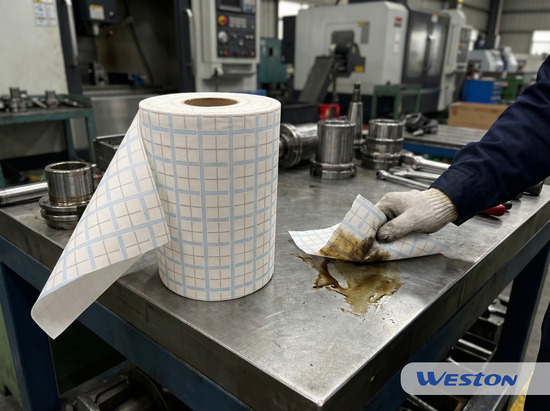
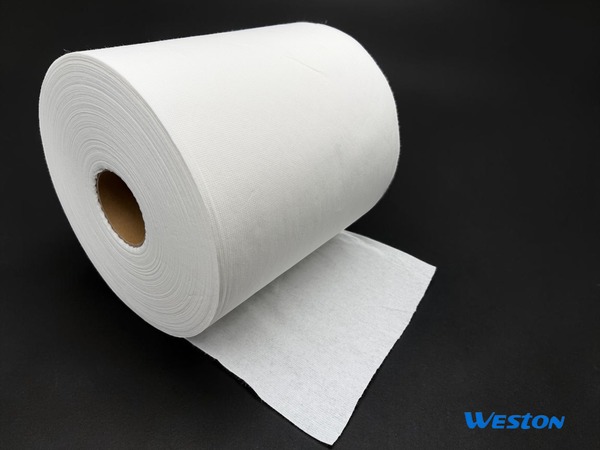
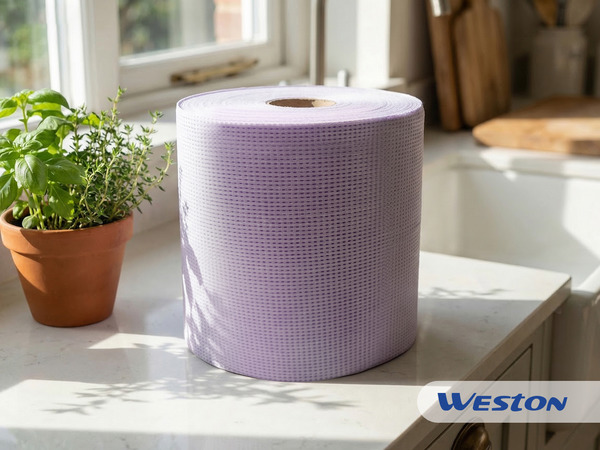
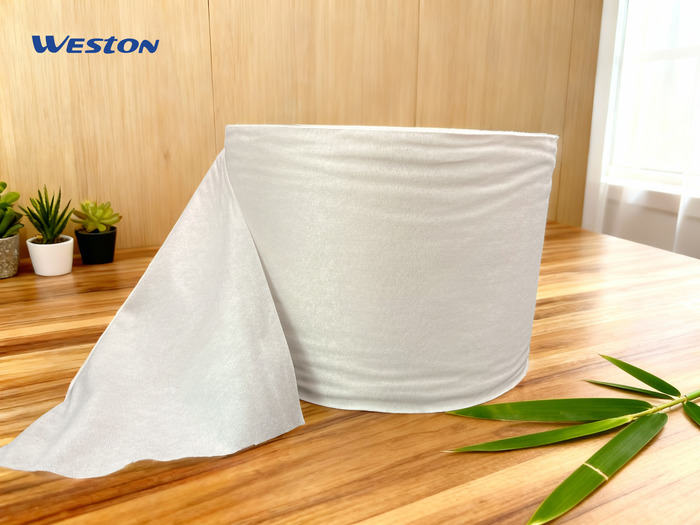
Weston’s biodegradable spunlace line is a premium line layout that combines high capacity up to 25,000 t/y with low energy consumption, capable of producing various types of spunlace coil products. For biodegradable wipes, you can use natural materials such as: viscose, bamboo fiber, linen or cotton. We can produce high-value wipes with top performance. Softness, drape, comfort, conformability, high strength, and no chemicals are what makes spunlace nonwovens we offer you the perfect combination of performance, efficiency and profitability, specially designed for biodegradable wipes Various complete spunlace lines together.

Biodegradable spunlace capacity: up to 25,000 tons/year
Explore More from Weston Manufacturing
Weston X80 Plus Cellulose Polypropylene Spunlace Wipes——Premium cellulose-polypropylene spunlace construction for versatile use.
Weston Rollo Jumbo Similar X80 Red Cellulose Polypropylene Wipes——Industrial-grade red wipes, ideal for OEM applications, comparable to X80 standards.
Interfolded Cellulose Spunlace Wipe Cloth——Convenient interfolded design with high-performance cellulose spunlace.
For certification details, contact: [email protected].
WESTON
Privacy Policy | SiteMap
Copyright WESTON