- Email: [email protected]


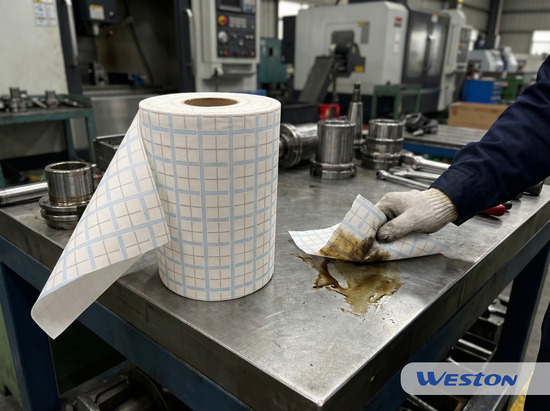
Unlike smooth spunlace materials, the controlled surface folds increase contact area, allowing the fabric to absorb liquids faster and capture oil, grease, and particulates more effectively. This structural advantage makes it particularly suitable for industrial wiping and daily cleaning applications where efficiency and durability are required.
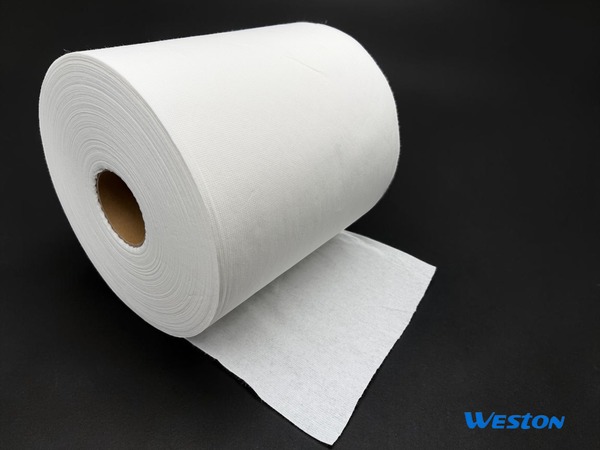
The fabric is supplied in roll form and designed for further converting into wipes, sheets, or customized cleaning formats.
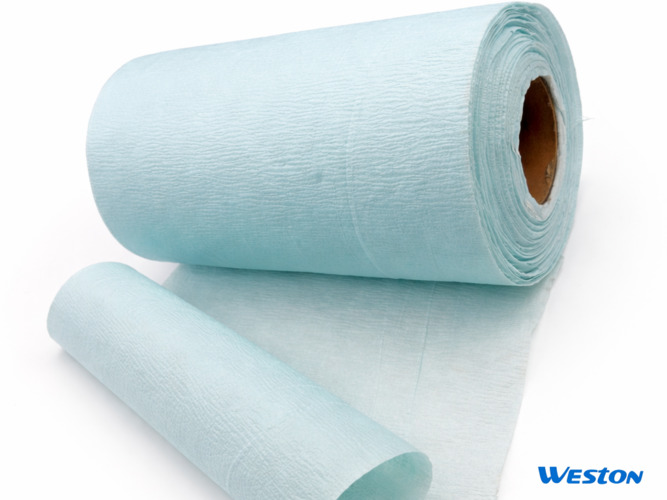
The creped texture is formed during the hydroentanglement and finishing process. Fine surface wrinkles create micro-channels that improve liquid uptake and wiping friction. Compared with flat spunlace fabrics, this structure helps reduce smearing when wiping oil or water-based contaminants.
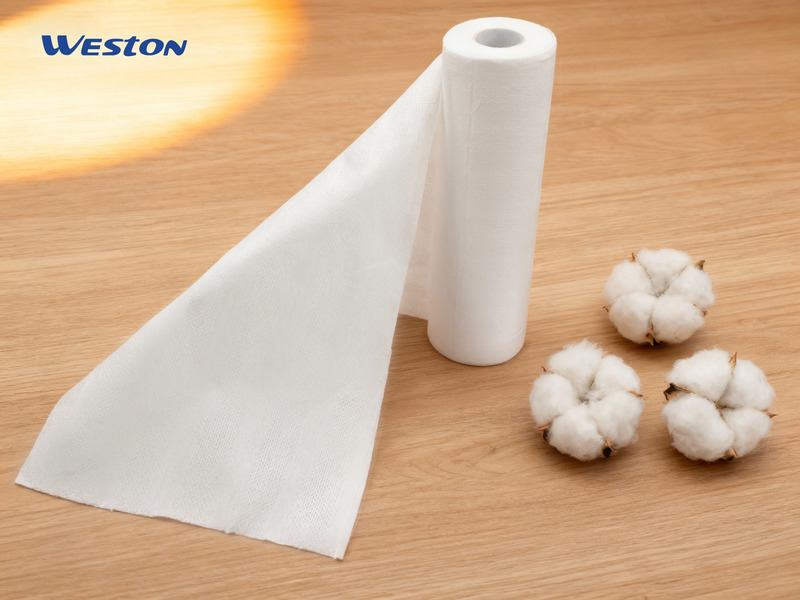
This product is typically produced using a wood pulp / polyester blend, balancing absorbency and mechanical strength:
Wood pulp: enhances water and oil absorption
Polyester fiber: improves tensile strength, tear resistance, and dimensional stability
The material contains no chemical binders and relies entirely on spunlace water-jet entanglement for bonding.
These characteristics allow the fabric to perform consistently in both light-duty and heavy-duty wiping environments.
Machinery and equipment cleaning
Oil and grease removal
Janitorial and Maintenance wipes in manufacturing plants
Workshop and assembly line cleaning
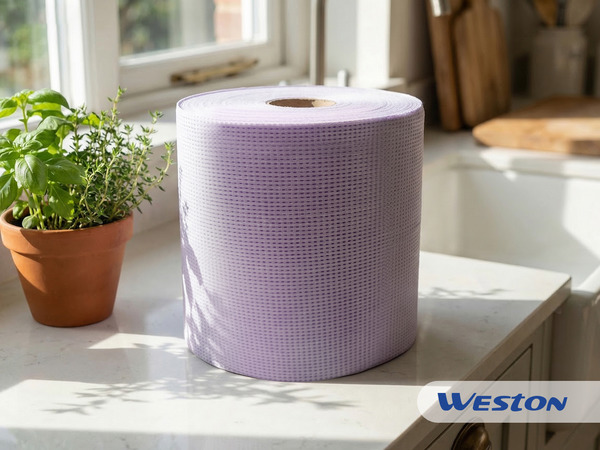
Household cleaning wipes
Commercial cleaning cloths
Disposable surface wipes
The fabric is suitable for further impregnation with cleaning solutions or used dry, depending on end-use requirements.
| Material Composition | Wood Pulp+Polyester |
| Fabric Surface | Creped Surface |
| Basis Weight | 70 GSM |
| Width | Customizable |
| Roll Length / Diameter | Customizable |
| Standard Color | Blue |
| Material Finish | Coarse |
| Supply Form | Jumbo Rolls / Slit Rolls |
Specific material ratios, basis weight, and roll specifications can be customized.
Weston produces spunlace creped nonwoven fabric using controlled hydroentanglement lines. Fiber blending, water pressure, and creping parameters are adjusted to ensure consistent surface texture and mechanical performance across batches. Each production stage focuses on material stability rather than decorative appearance, ensuring suitability for downstream converting processes.
Creped spunlace has a wrinkled surface that improves absorbency and wiping efficiency, especially for oil and heavy liquids.
Yes. The creped structure helps trap oil and grease more effectively than smooth nonwoven fabrics.
Yes. Basis weight, width, and roll dimensions can be customized according to your application.
The fabric is compatible with common industrial detergents and solvents. Compatibility testing is recommended for specific formulations.
Please contact [email protected] for samples, specifications, and technical consultation.
WESTON
Privacy Policy | SiteMap
Copyright WESTON