- Email: [email protected]


If it vanishes with one push of the flush button, is it really “gone”? Or did you just send a small, stubborn piece of fabric on a risky journey through pipes, pumps, and treatment plants?
This article breaks down, in plain language, what “flushable” really means, what happens after you flush, and whether any wipe can honestly be called safe to flush. Along the way, we will also touch briefly on how some modern materials—such as Flushable Lyocell Nonwoven Fabric Roll and Embossed Flushable Spunlace Nonwoven Fabric—try to solve the problem from the fiber level up.
“Flushable” sounds reassuring. But it usually hides a big gap between what consumers think and what the sewer can handle.
The key truth:
Being able to go down the toilet is not the same as being safe for toilets and sewers.
A wipe can flush easily from your bathroom but still become part of a dense, rope-like clog hundreds of meters downstream.
To understand whether a wipe is safe to flush, you need to understand where it goes and what it goes through.
Typical path:
At every point, there are choke points:
Anything that stays strong and intact in water can snag here, and once it snags, it invites more material to tangle onto it.
Toilet paper is engineered to:
This is why, even in low-flow pipes, it usually does not build large, solid masses.
Wipes, by design, are different: they are made to stay together while you use them. That single design goal creates most of the downstream trouble.
To judge flushability honestly, engineers look at how the material behaves in water, not how it looks in your hand.
A truly flush-compatible wipe would need to satisfy at least these conditions:
The wipe should:
Think: “behaves like toilet paper, not like a cloth rag.”
At first, the wipe must withstand:
But then, after flushing, its strength should collapse quickly. If it stays tough for hours, it can easily tangle and clog.
Sewers are not clean, warm, oxygen-rich laboratory tanks. They can be:
A wipe needs to break down in this rough environment, not only in ideal conditions.
Fibers that act like plastic or binders that stay rubbery can:
This is where fiber chemistry becomes vital.
Not all nonwoven materials behave the same way downstream. Fiber type, length, bonding, and surface behavior all decide whether a wipe becomes a soft helper or a hard problem for sewers.
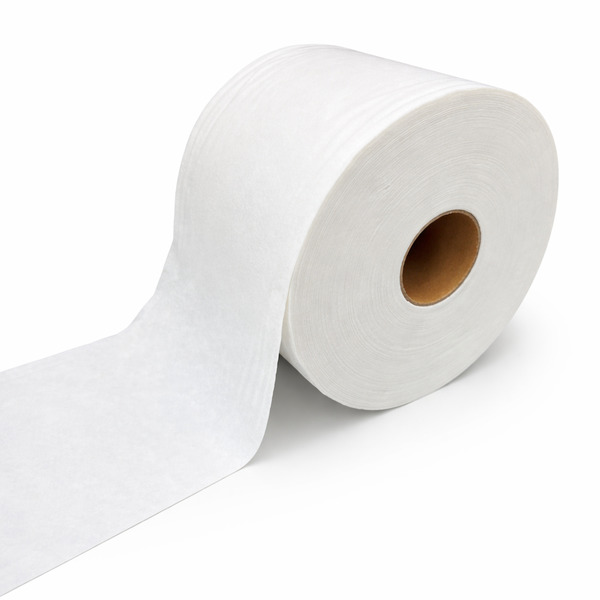
This is where newer materials such as Flushable Lyocell Nonwoven Fabric Roll come in. Lyocell, when used and bonded thoughtfully, can be designed to:

Most wipes are nonwoven fabrics: fibers tangled and bonded together without weaving or knitting. Common bonding methods include:
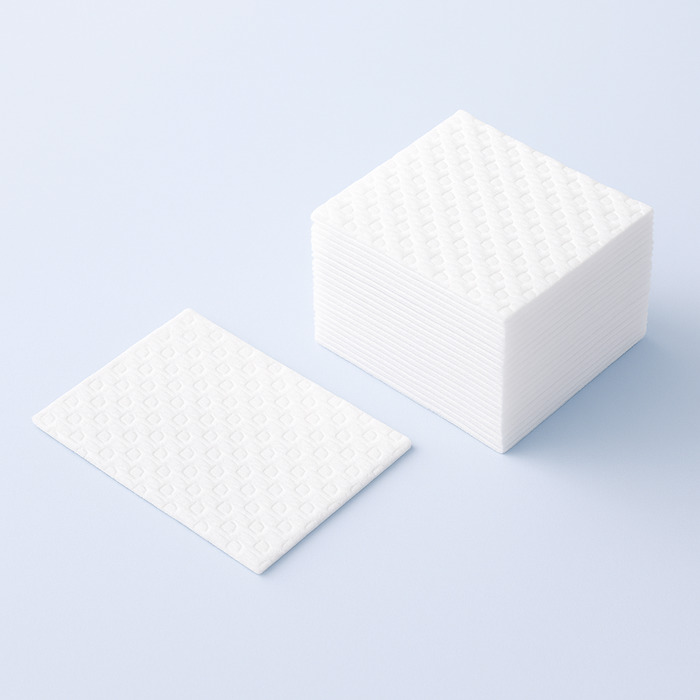
An example is Embossed Flushable Spunlace Nonwoven Fabric, where:
Too strong → great cleaning, terrible in pipes.
Too weak → falls apart in your hand, not acceptable to users.
The challenge is to sit exactly in the narrow window in between.
Even if a wipe looks fragile, its real impact depends on how it behaves when mixed with everything else in wastewater.
A typical blockage process looks like this:
Here’s a simplified comparison of how quickly different materials tend to disintegrate in real-world-like conditions (illustrative, not tied to a specific product test):
| Material Type | Initial Wet Strength | Disintegration Speed in Low-Flow Sewers | Tendency to Form Fiber Clumps |
|---|---|---|---|
| Standard toilet paper | Low | Very fast (minutes to tens of minutes) | Very low |
| Thick multi-layer bathroom tissue | Medium | Moderate | Low |
| Generic “flushable” wipe (plastic-rich fibers) | High | Slow (hours or more) | High |
| Generic cleaning wipe (not marketed flushable) | Very high | Very slow | Very high |
| Engineered plant-based wipe (lyocell/spunlace) | Medium | Faster to moderate (design-dependent) | Low to medium (design-dependent) |
Key point: even among plant-based wipes, engineering choices decide whether they behave closer to toilet paper or closer to a cloth.
Many wastewater professionals still see:
Their stance is simple and practical: “If it isn’t toilet paper, please don’t flush it.” Even if some wipes are better than others, they know they cannot control:
With all this complexity, can we say any wipe is truly “safe to flush”?
A cautious, science-based view would be:
To see why, look at three main performance dimensions:
| Performance Dimension | What “Safe to Flush” Would Require | Common Reality in Marketed Wipes |
|---|---|---|
| Disintegration speed | Similar to or faster than standard toilet paper | Often significantly slower |
| Residual fragment behavior | Small, weak, non-tangling pieces that do not braid with hair or fats | Long, tough fragments that can knot and rope |
| Sewer compatibility range | Can pass through old, rough, low-slope pipes without accumulating | Performance highly dependent on local pipe conditions |
So the honest answer is:
Some wipes are engineered to be less risky to flush than others, but for many homes and older systems, “do not flush any wipes” is still the safest rule.
While the core of this article is neutral science, it’s worth noting how some manufacturers are trying to reduce risk and move closer to true flush compatibility.
Materials like Flushable Lyocell Nonwoven Fabric Roll are built around several design goals:
For structures such as Embossed Flushable Spunlace Nonwoven Fabric, internal engineering may include:
Some facilities, like Weston Manufacturing, work on aligning wipe design with the realities of sewer systems—treating “flushable” as a technical target, not just a marketing word. But even with strong internal testing, responsible producers still advise caution because no one can redesign every aging pipe in the world.
Labels are often optimistic. To protect your own plumbing, it helps to read “flushable” critically, not blindly.
If the answers are unclear, your plumbing is effectively the experiment.
From the system’s point of view, the safest assumption still is:
If it is not toilet paper, the lowest-risk option is to put it in the trash, not the toilet.
A few widespread beliefs make the flushable-wipes problem much worse.
It only means it passed the first meter of its journey. Most of the risk lies in the next hundreds or thousands of meters.
Many tests show:
“Breaks down eventually” is not good enough if “eventually” is after it has already formed a blockage.
Blockages are cumulative. One wipe is often the “hook” on which dozens more get stuck—plus hair and fats.
Many sewer systems:
You do not need to become a wastewater engineer to make better choices.
Pulling everything together:
For most homes and most sewer systems, the only item that should be flushed is toilet paper. Any wipe, no matter how advanced, is safest in the trash.
Innovation in materials—like carefully engineered flushable nonwovens produced by facilities such as Weston Manufacturing—can reduce risk and move us closer to wipes that coexist with existing sewers. But no label can cancel out old pipes, bad habits, and complex real-world conditions.
If you want to be kind to your plumbing, your city, and the people who keep wastewater flowing, remember:
WESTON
Privacy Policy | SiteMap
Copyright WESTON