- Email: [email protected]


To understand why lyocell has emerged as a transformative material in eco-friendly beauty product manufacturing, it is essential to delve into its molecular structure and production chemistry—two pillars that distinguish it from traditional beauty textiles like polyester nonwovens or even conventional cotton.
Lyocell is a regenerated cellulose fiber, derived primarily from sustainably harvested wood pulp (typically from fast-growing species like eucalyptus, birch, or pine). Unlike synthetic fibers derived from petroleum, cellulose—the primary component of wood pulp—is a naturally occurring polymer with a linear structure of β-D-glucopyranose units linked by glycosidic bonds. This structure endows lyocell with inherent hydrophilicity (water-loving properties) and biocompatibility, two critical attributes for beauty applications where skin contact and moisture management are paramount.
Sustainability in raw material sourcing is not merely a marketing claim here: responsibly managed forests for wood pulp production act as carbon sinks, absorbing CO₂ during growth. This stands in stark contrast to petroleum-based fibers, whose extraction and refinement contribute to greenhouse gas emissions and finite resource depletion.
The true innovation of lyocell lies in its manufacturing process, specifically the closed-loop solvent system. Unlike other regenerated cellulose fibers (e.g., viscose), which use toxic chemicals like carbon disulfide (a known neurotoxin) that often escape into the environment, lyocell production relies on N-methylmorpholine N-oxide (NMMO)—a non-toxic, recyclable solvent.
Here’s how the science works: wood pulp is dissolved in aqueous NMMO to form a homogeneous dope solution. This solution is extruded through spinnerets into an air gap, where solvent evaporation initiates fiber formation, before being immersed in a water bath to complete solidification. The key environmental breakthrough? Over 95% of the NMMO solvent is recovered, purified, and reused in subsequent production cycles. This near-zero waste process drastically reduces water pollution and chemical discharge, addressing a long-standing issue in textile manufacturing—especially for beauty products, where consumers and buyers increasingly demand transparency in environmental impact.
For beauty pads (e.g., makeup removers, masks), the performance of the lyocell fiber is amplified by the spunlace nonwoven process—an engineering technique that transforms loose fibers into a strong, flexible fabric without the need for adhesives or heat bonding.
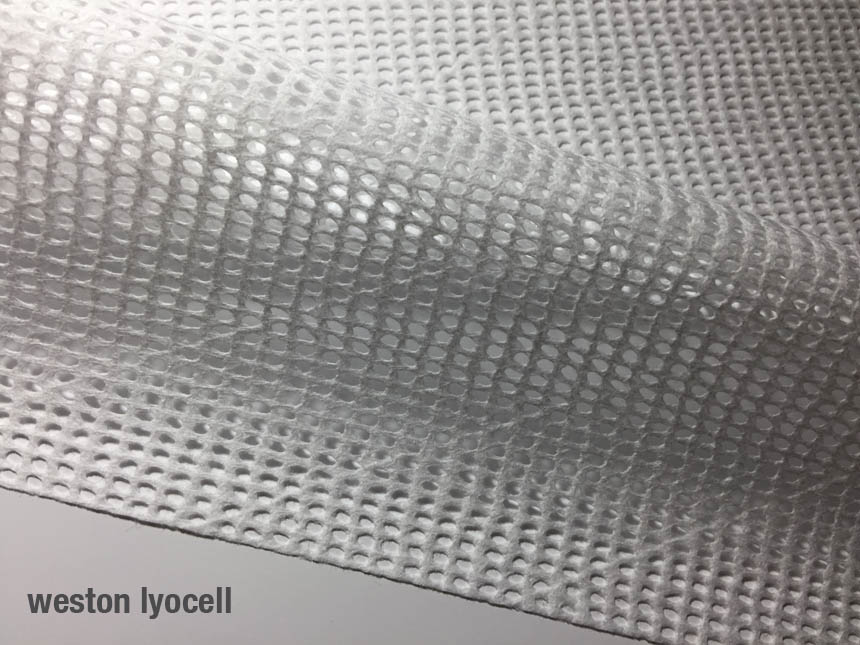
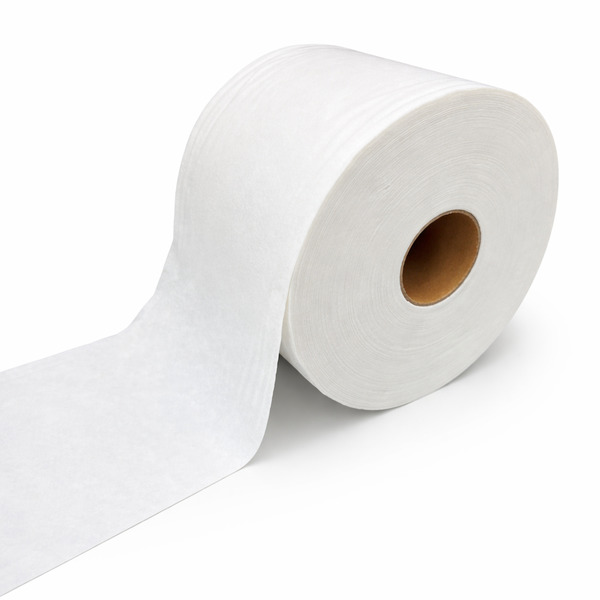
The Lyocell Spunlace Nonwovens manufacturing process uses high-pressure water jets (typically 50–200 MPa) to entangle lyocell fibers. As the water jets strike the fiber web, they push fibers through the web structure, creating mechanical bonds at their intersection points. This entanglement achieves two critical outcomes for beauty applications:
Strength without rigidity: The bonded fibers form a durable fabric that resists tearing during use (e.g., when removing waterproof makeup), yet remains soft and conformable to facial contours.
Porosity and absorbency: The entanglement process creates a three-dimensional network of pores, which enhances liquid retention. Lyocell’s inherent hydrophilicity, combined with this porous structure, allows Lyocell Spunlace Nonwovens to absorb up to 15 times their own weight in water or skincare serums—far exceeding the absorbency of polyester nonwovens (3–5x) or even cotton pads (8–10x).
| Aspect | Lyocell Spunlace Nonwovens | Traditional Alternatives (Polyester/Cotton Pads) |
| Environmental Impact | Biodegradable; closed-loop production reduces waste | Polyester: non-biodegradable (persists in landfills); Cotton: high water/pesticide use in cultivation |
| Skin Compatibility | Hypoallergenic (no chemical binders); smooth fiber surface reduces irritation | Polyester: may cause friction/irritation; Cotton: may retain pesticides or residual dyes |
| Performance | High absorbency; tear-resistant; retains shape when wet | Polyester: low absorbency; Cotton: prone to disintegration when wet |
| Manufacturing Flexibility | Can be tailored to varying thicknesses/porosities for specific uses | Limited customization; cotton pads often require chemical treatments for softness |
The only potential challenge of Lyocell Spunlace Nonwovens? The high-pressure water jets require precise control of water quality (e.g., low mineral content to avoid nozzle clogging) and energy input. However, this is mitigated by advanced process optimization—a strength of manufacturers like Weston Manufacturing, which has refined spunlace parameters to balance performance, efficiency, and sustainability.
Lyocell’s unique combination of science and sustainability makes it adaptable to diverse beauty products. Below, we break down how specific lyocell-based products address unmet needs in the market, grounded in material science.
Lyocell Compressed Mask Tablets are a testament to lyocell’s versatility. These ultra-compact tablets (typically 1–2 cm in diameter) are made by compressing Lyocell Spunlace Nonwovens into a dense form, which expands to a full-face mask when immersed in toner, serum, or essence.
The science behind their performance lies in lyocell’s “swelling capacity”: when exposed to liquid, the cellulose fibers absorb water, causing the compressed structure to relax and expand. Unlike compressed masks made from synthetic fibers, Lyocell Compressed Mask Tablets maintain their shape and integrity after expansion, ensuring even contact with the skin. Additionally, lyocell’s ability to retain moisture means the mask stays hydrated longer, allowing skincare ingredients to penetrate more effectively.
For professional buyers, this product solves a key logistics challenge: compressed tablets occupy 70–80% less space than pre-moistened masks, reducing shipping costs and storage requirements—without compromising on performance.
The Moisturizing Lyocell Spunlace Mask takes advantage of lyocell’s dual properties: high absorbency and skin-friendly biocompatibility. Unlike traditional sheet masks, which are often made from polyethylene terephthalate (PET) or rayon, this mask uses Lyocell Spunlace Nonwovens as the base, which:
Locks in moisture: The spunlace structure’s porous network holds up to 10x more serum than PET masks, preventing drippage and ensuring the skin is continuously exposed to active ingredients.
Enhances ingredient delivery: Lyocell fibers have a slightly negative surface charge, which interacts with positively charged skincare ingredients (e.g., hyaluronic acid, peptides) to slow their release—extending the mask’s moisturizing effect beyond application.
Reduces irritation: The absence of chemical binders (a byproduct of the spunlace process) and lyocell’s smooth fiber surface make the mask suitable for sensitive skin—a growing concern for consumers globally.
100% Lyocell Makeup Remover Pads redefine cleansing by combining lyocell’s softness with its oil-absorbing capabilities. The science here lies in cellulose’s chemical structure: cellulose fibers have hydroxyl (-OH) groups on their surface, which interact with both water and oil (via hydrogen bonding and van der Waals forces). This amphiphilic nature allows the pads to remove both water-based (e.g., foundation) and oil-based (e.g., mascara) makeup without the need for harsh surfactants.
Compared to cotton makeup remover pads, 100% Lyocell Makeup Remover Pads offer two key advantages:
Less friction: Lyocell fibers are finer (typically 1–2 denier) than cotton fibers (5–10 denier), creating a smoother surface that reduces tugging on the skin—critical for preventing premature aging and irritation around the eyes.
Reusability potential: When properly washed, the spunlace structure’s durability allows the pads to be reused up to 10 times, reducing single-use waste—an added selling point for eco-conscious consumers.
A common misconception in eco-friendly beauty manufacturing is that sustainability comes at the cost of performance. Lyocell, however, challenges this trade-off—though it is not without limitations. Below is a balanced analysis of the opportunities and hurdles, tailored to professional buyers evaluating OEM partnerships.
Regulatory Alignment: With global regulations tightening on single-use plastics (e.g., the EU’s Single-Use Plastics Directive) and toxic chemicals in beauty products, Lyocell Spunlace Nonwovens and related products (e.g., Lyocell Compressed Mask Tablets) help buyers comply with standards without sacrificing quality.
Consumer Demand: A 2024 study by the Beauty Packaging Association found that 68% of consumers are willing to pay a premium for beauty products with “proven eco-friendly materials”—and lyocell’s closed-loop production and biodegradability provide tangible proof, unlike vague “greenwashing” claims.
Performance Innovation: As outlined earlier, lyocell’s absorbency, softness, and ingredient compatibility outperform traditional materials, allowing buyers to launch products that stand out in a crowded market.
Upfront Investment: The closed-loop solvent system and spunlace equipment require higher initial capital than traditional nonwoven production lines. This can be a barrier for small-scale manufacturers—but for OEM partners like Weston Manufacturing, which has already made these investments, buyers can access lyocell technology without upfront costs.
Supply Chain Stability: Wood pulp prices are subject to market fluctuations (e.g., due to weather or forestry regulations). To mitigate this, Weston Manufacturing maintains long-term contracts with certified sustainable pulp suppliers, ensuring consistent material quality and pricing for OEM clients.
Technical Expertise: Optimizing lyocell fiber dissolution and spunlace bonding requires specialized knowledge. Weston’s in-house R&D team works closely with buyers to tailor Moisturizing Lyocell Spunlace Mask and 100% Lyocell Makeup Remover Pads to specific performance criteria (e.g., serum retention, tear strength).
For professional buyers, partnering with an OEM that understands the science of lyocell is critical to bringing high-quality, eco-friendly products to market. Weston Manufacturing’s OEM process is rooted in three core principles: material transparency, process control, and collaborative customization.
Weston sources only FSC-certified wood pulp for its Lyocell Spunlace Nonwovens, ensuring that every fiber traces back to sustainably managed forests. Buyers receive detailed material data sheets, including:
This transparency not only builds consumer trust but also simplifies compliance with regional regulations (e.g., the FDA’s cosmetic ingredient guidelines).
To maintain performance across batches, Weston uses real-time monitoring systems for every stage of production:
Every batch undergoes third-party testing for absorbency, tear resistance, and skin irritation—results that are shared with buyers to validate product quality.
Weston’s OEM service is designed to adapt to diverse product requirements. For example:
Buyers can also customize packaging (e.g., compostable film for compressed tablets) and request free samples to test performance before full-scale production. To request a free sample of any lyocell-based product, contact Weston.
As the beauty industry shifts toward circularity, lyocell is poised to become a cornerstone material—not just for its environmental credentials, but for its ability to deliver superior performance. Innovations like lyocell-blend fibers (e.g., lyocell with bamboo cellulose for enhanced antibacterial properties) and bio-based solvents (to further reduce carbon footprint) are already in development, and manufacturers like Weston Manufacturing are at the forefront of translating these innovations into scalable, market-ready products.
For professional buyers, the choice to invest in lyocell is not just a sustainability decision—it is a strategic one. By partnering with an OEM that combines scientific expertise with manufacturing excellence, buyers can launch products that resonate with eco-conscious consumers, comply with evolving regulations, and outperform traditional alternatives.
Weston Manufacturing’s commitment to lyocell technology—from sustainable raw materials to precision OEM services—positions it as a trusted partner for buyers looking to lead the next wave of eco-friendly beauty innovation. To explore how Lyocell Compressed Mask Tablets, Moisturizing Lyocell Spunlace Mask, and 100% Lyocell Makeup Remover Pads can elevate your product line, reach out to the team at Weston for a personalized consultation and free sample.
WESTON
Privacy Policy | SiteMap
Copyright WESTON