- Email: [email protected]


Mud stains are deceptively simple. At first glance, they seem like harmless dirt that can be brushed away, but once they dry and embed into a shoe’s material, they become a complex combination of minerals, organic compounds, and colorants that interact with the shoe fibers on a microscopic level. Understanding how to properly remove them requires more than just elbow grease—it requires science.
Mud is not just “dirt.” It’s a mixture of fine mineral particles (like clay and silt), organic matter, and water. Once it dries, these components form physical and chemical bonds with the shoe material.
The process looks like this:
| Component | Effect on Shoe Material | Cleaning Challenge |
| Clay minerals | Embed deeply in fibers | Hard to loosen mechanically |
| Organic matter (humus, plant residues) | Oxidizes, causing yellow or brown tint | Requires chemical softening |
| Iron oxides | Cause reddish discoloration | Needs controlled pH cleaning |
| Dust and silt | Fill surface pores | Block breathability and flexibility |
The result? A persistent, layered stain that can’t be effectively treated by casual washing alone.
Fresh mud is soft, water-rich, and easy to wipe away. Over time, moisture evaporates, leaving behind compacted particles that bond tightly with shoe fibers. In addition, oxidation darkens the residue, making stains more visible.
Temperature and humidity accelerate this bonding process, which is why shoes left uncleaned for weeks often develop stiff, discolored patches that feel almost cemented onto the surface.
Every shoe material behaves differently under cleaning stress. Using one method for all types can cause irreversible damage.
| Material Type | Reaction to Mud | Cleaning Considerations |
| Leather | Absorbs moisture and stiffens when dry | Requires gradual rehydration and conditioning |
| Suede | Fibers trap fine dust | Needs minimal water and soft brushing |
| Canvas/Textile | Easier to clean but retains residue if rinsed poorly | Must be fully air-dried to prevent mildew |
| Synthetic Mesh | Doesn’t absorb much dirt but stains visually | Gentle pH cleaning prevents fading |
Knowing what you’re dealing with determines not just how to clean, but how much force and what type of agent to use.
Cleaning effectively follows a precise sequence of actions rooted in material science. It’s not about “scrubbing harder,” but about targeting the right molecular interactions.

Dry Brushing:
Use a soft, dry brush to remove any loose dirt particles. This prevents further embedding once water is applied.
Controlled Rehydration:
Reintroduce moisture gradually using microfiber cloths like Weston’s Colorful Microfiber Cleaning Cloths. Their fine split fibers absorb water evenly, softening dried mud without oversaturating the surface.
Chemical Neutralization:
Apply a mild, neutral pH cleaning agent. Avoid strong alkaline detergents, as they may damage leather oils or fade color.
Mechanical Lifting:
Wipe gently in circular motions. The microfibers’ electrostatic effect helps attract and trap fine soil particles rather than pushing them deeper.
Residue Control:
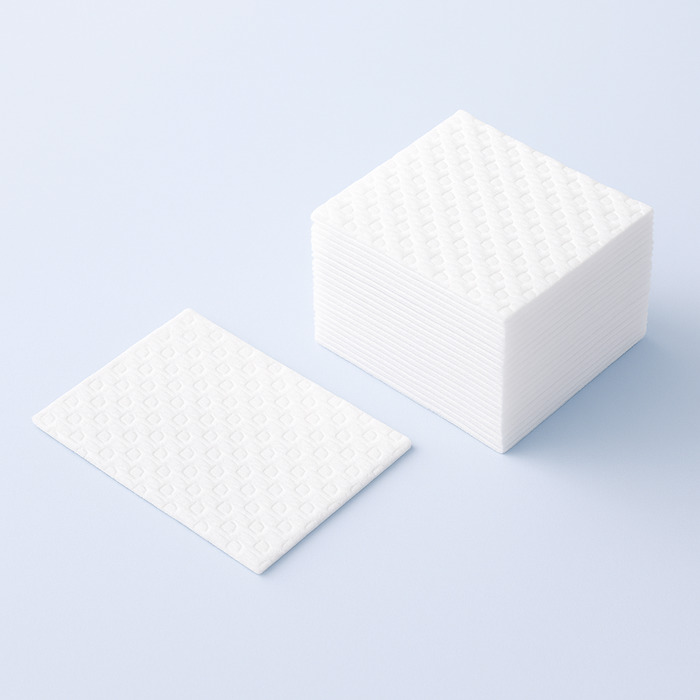
Follow with Weston’s Shoe Cleaning Wipes, ideal for removing leftover soap or mineral traces. Their lint-free spunlace design ensures no streaks remain.
Drying & Conditioning:
Let shoes dry naturally at room temperature. Avoid direct sunlight or heat sources, which can warp synthetic materials or crack leather.
Many conventional cleaning “hacks” do more harm than good.
Let’s separate the myths from the facts.
| Common Myth | Scientific Reality |
| “Hot water cleans faster.” | Heat causes some stains to set permanently and weakens adhesives. |
| “Stronger soap means deeper cleaning.” | High-alkaline cleaners degrade fibers and remove protective coatings. |
| “Scrubbing harder removes dirt faster.” | Friction damages microfibers, spreading particles instead of lifting them. |
| “Bleach removes all stains.” | Chlorine bleach can permanently discolor and weaken fabrics. |
Science supports moderation: the right temperature, gentle chemistry, and patient mechanical action.
Once shoes are clean, prevention becomes the next step in material care.
Consider these evidence-based tips:
Protective Coatings: Use breathable waterproof sprays that create a micro-barrier against dirt and moisture.
Routine Wiping: A quick clean with Colorful Microfiber Cleaning Cloths after outdoor wear prevents buildup before it sets.
Proper Storage: Store shoes in dry, ventilated areas to reduce humidity-related hardening.
Rotation: Alternate footwear to give materials time to breathe and recover.
These measures reduce cleaning frequency and extend the functional lifespan of the shoe.
Behind effective cleaning is a quiet revolution in material science. Nonwoven technologies, like those developed by Weston Manufacturing, redefine how we maintain delicate surfaces.
Their microfiber and spunlace nonwoven lines—seen in Shoe Cleaning Wipes and Colorful Microfiber Cleaning Cloths—are engineered with:
High-density fiber splitting for increased dirt capture.
Balanced capillary absorption that prevents overwetting.
Lint-free, streak-free finish suitable for both leather and synthetic uppers.
By combining precision engineering with ecological responsibility, Weston Manufacturing enhances both performance and sustainability in everyday cleaning applications.
For inquiries or free samples, contact:📧 [email protected]
What might seem like a simple household chore—removing old mud stains—is actually an exercise in applied chemistry, physics, and material engineering. Every fiber, every stain, and every wipe embodies a small scientific system governed by molecular forces and surface dynamics.
When cleaning is approached with this awareness—using pH-balanced solutions, microfiber technology, and thoughtful drying methods—it stops being trial and error. It becomes controlled restoration.
And that’s where innovation like Weston Manufacturing’s nonwoven materials truly shines: by transforming ordinary shoe care into a precise, reliable process that preserves integrity, comfort, and aesthetic value.

WESTON
Privacy Policy | SiteMap
Copyright WESTON