- Email: [email protected]


To use an erosion control blanket effectively, you first need to know your “enemy.” The core of slope erosion lies in the “unbalanced battle” between soil, water, and wind:
When raindrops fall, they can reach a speed of 20 meters per second—fast enough to break apart soil aggregates (like scattering tightly packed small building blocks). Loose soil particles then follow the water flow to form “surface runoff.” The slope’s incline makes this runoff faster and faster, carving deeper and deeper gullies (known as “rill erosion”). Over time, this doesn’t just cause soil loss; it can even lead to slope collapse.
More insidiously, when topsoil is lost, the organic matter and microorganisms in the soil disappear too. This is equivalent to the soil losing its “fertility foundation.” Even if you try to plant vegetation later, it will struggle to survive. So, an erosion control blanket doesn’t just “hold soil in place”; it rebuilds the balance between soil and water.
Many people think an erosion control blanket is just a “physical barrier,” but it actually hides three layers of “ecological wisdom”:
The First Layer is “shock absorption and pressure reduction.” The blanket disperses the impact of raindrops, like holding a “soft umbrella” over the soil to prevent soil aggregates from being broken apart directly. At the same time, the texture on the blanket’s surface slows down runoff, giving water more time to seep into the soil instead of carrying away mud.
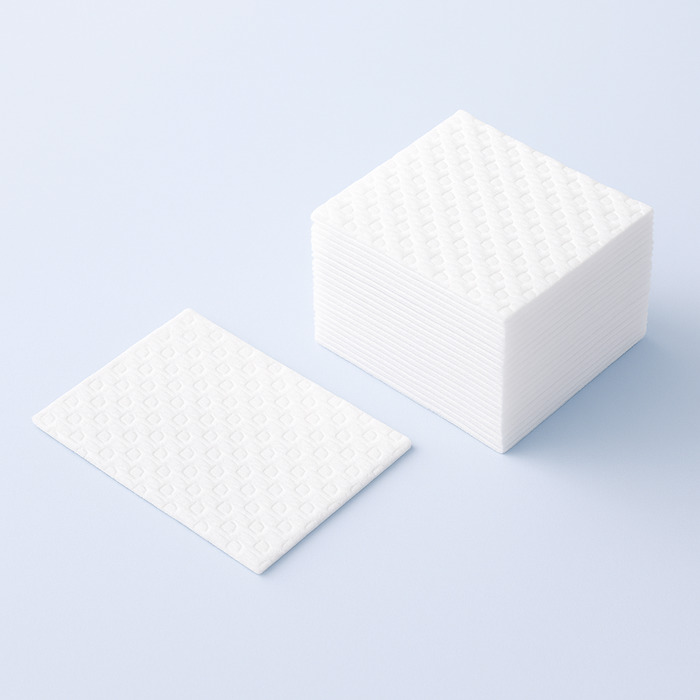
The Second Layer is “microenvironment creation.” A high-quality control blanket acts like a “mini greenhouse,” keeping soil moisture stable (avoiding cracking in dry weather and waterlogging in rainy weather) and regulating temperature—both crucial for seed germination and microbial activity. For example, Weston Manufacturing’s Duoprotex Nonwoven Fabric for Plant Cultivation has a non-woven structure that locks in moisture without suffocating roots, creating the perfect “growth safe zone” for young seedlings.
The Third Layer is “root support.” The control blanket doesn’t “steal the spotlight” forever; instead, it guides plant roots to grow through it. As roots deepen and form an “underground network,” they replace the blanket as the slope’s “permanent guardians.” This is the ultimate goal of the control blanket: transitioning from “artificial protection” to “ecological self-protection.”
Only by mastering scientific methods can you maximize the effectiveness of an erosion control blanket. The entire process has 5 key steps:
First, measure two key pieces of data:
Additionally, check if the slope has existing gullies or waterlogging points. These areas need to be repaired first (e.g., filling gullies with soil) before laying the blanket.

Remove gravel, weeds, and dead branches from the slope. These debris will prevent the blanket from fitting tightly to the soil, allowing rainwater to seep through gaps and cause “local erosion.” If the soil is particularly loose, gently compact it (but don’t press too hard—this will affect seed germination), then spread a thin layer of decomposed organic fertilizer on the surface to boost soil fertility.
After laying the blanket, spread grass seeds (e.g., Bermuda grass, tall fescue) or shrub seeds suitable for the local climate on the blanket’s surface. The control blanket protects seeds from being washed away by rain while retaining heat and moisture. After sowing, gently step on the blanket to ensure seeds make close contact with the blanket and soil.
No method is “one-size-fits-all.” We need to view its pros and cons rationally:
Double Protection, Fast Results: It not only stops erosion immediately but also cultivates vegetation at the same time—much faster than just planting trees (which take 1-2 years to be effective). Experiments show that after laying a blanket, slope erosion is reduced by 70%-90%, and vegetation coverage can reach over 60% within 6 months.
Eco-Friendly, Zero Pollution: Compared to concrete slope protection or chemical soil stabilizers, control blankets are biodegradable (high-quality products decompose naturally in 2-5 years). They don’t damage the soil structure and even promote microbial reproduction.
Strong Adaptability, Wide Applications: Whether it’s a backyard slope, highway embankment, or mine restoration, as long as you choose the right type of blanket (e.g., Weston’s Spunlace Erosion Control for Slopes), it will work.
Difficult to Lay on Steep Slopes: For slopes with a gradient over 35°, U-shaped anchors alone may not be enough. Auxiliary materials like geogrids are needed, increasing costs and workload.
Tests from Extreme Weather: Continuous heavy rain may cause water to accumulate at the blanket’s edges, leading to “local leakage.” Long-term high-temperature exposure can also accelerate blanket aging (so choose UV-resistant products).
Requires Follow-Up Management: If you don’t water or replenish seedlings after laying the blanket, the slope may face erosion again once the blanket ages.
Adjusting methods based on the environment will double the effectiveness:
Rainy Areas (e.g., Southern Regions): Choose blankets with high water permeability (such as Spunlace Erosion Control for Slopes), and dig a shallow drainage ditch at the slope’s bottom to prevent water from accumulating under the blanket.
Arid Areas (e.g., Northern Regions): Choose water-retentive Duoprotex Nonwoven Fabric for Plant Cultivation, and cover the blanket’s surface with a thin layer of straw to further lock in moisture.
Cold Areas (with Frozen Soil): Lay the blanket in late spring (after frozen soil has completely thawed) to avoid blanket cracking from winter frost heave. Also, choose cold-resistant blanket materials.
Choosing the right blanket makes the job half-done. Focus on these 3 indicators:
If you want to experience the effect of these materials firsthand, Weston Manufacturing offers free samples. You can get them via [email protected], making it easy to test suitability for your slope.
In fact, the core of using an erosion control blanket well is combining “artificial tools” with “natural laws.” We’re not trying to “conquer” the slope—we’re helping it rebuild its ability to protect itself. Every patient step, from assessing the soil to waiting for roots to take hold, gives the slope a chance to “regain health.” With the right method, even the hardest-to-protect slope can become a “green ecological slope” covered in grass.


WESTON
Privacy Policy | SiteMap
Copyright WESTON