- Email: [email protected]


In the world of nonwoven materials, progress often comes quietly. Engineers and material scientists are constantly searching for ways to make wipes and cleaning fabrics more efficient—less lint, stronger wet performance, faster liquid absorption. One of the most promising evolutions in recent years has been the wood pulp–lyocell spunlace blend, a structure that combines nature’s absorbency with modern fiber precision. Behind this development, factories like Weston Manufacturing have refined the process to produce Biodegradable High Friction Wood Pulp Lyocell materials that perform reliably across industrial and personal care settings.

At its core, wood pulp–lyocell spunlace is a mix of two cellulose-based fibers.
Wood pulp is the same natural raw material found in paper and tissues. It’s hydrophilic, meaning it quickly attracts and absorbs liquid.
Lyocell, on the other hand, is a regenerated cellulose fiber with a smooth surface and excellent strength.
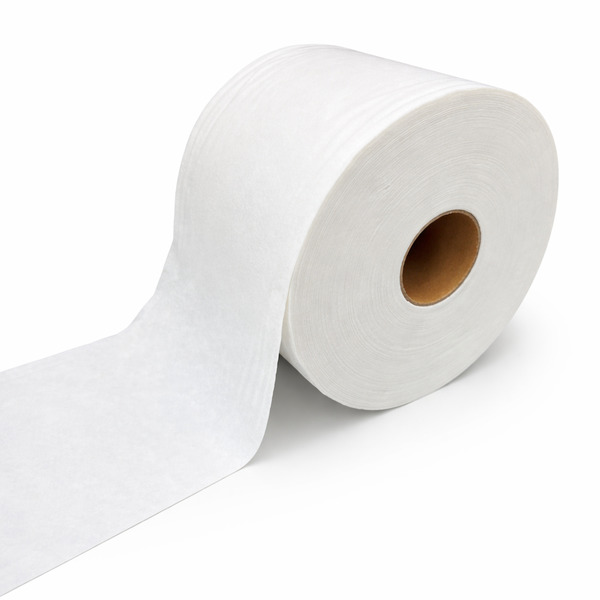
When high-pressure water jets intertwine these fibers—known as the spunlace or hydroentangling process—the result is a soft, fabric-like nonwoven sheet. No chemical binders or adhesives are used; it’s purely mechanical bonding. This clean structure is what gives the blend its signature strength, cleanliness, and biodegradability.
Each component brings its own strengths—and weaknesses—to the table. Wood pulp is inexpensive and absorbent but lacks mechanical strength, especially when wet. Lyocell is strong, lint-free, and dimensionally stable, but on its own it can feel smooth and less absorbent.
By combining them, the spunlace process balances both sides:
The wood pulp gives fast uptake of water, oil, or alcohol.
The lyocell fibers reinforce the structure, preventing disintegration and shedding.
The blend maintains a pleasant hand feel, closer to fabric than paper, while staying tough enough for repeated wiping motions.
In short, it’s not just about mixing fibers—it’s about achieving harmony between performance and practicality.
For industries like automotive painting, semiconductor assembly, or medical cleaning, lint is a silent threat. Tiny loose fibers can contaminate surfaces or affect coatings. The lyocell fibers in the blend significantly reduce lint release by locking wood pulp into a stable network. That’s why Weston Manufacturing’s spunlace line focuses on controlled fiber distribution and precise entangling pressure—details that decide how “clean” a nonwoven performs.
Absorbency is not just about how much a fabric holds—it’s about how fast and how evenly it soaks. The porous cell structure of wood pulp acts like a sponge, while the lyocell channels help spread liquid across the surface instead of trapping it in one spot. The result is a wipe that absorbs quickly but doesn’t collapse under load, an essential feature for professional cleaning and healthcare use.
Unlike pure pulp sheets that tear once wet, the spunlace structure stays intact even during vigorous scrubbing. The entangled lyocell acts as a reinforcing frame. Users notice this most when the material stays flat and strong even after absorbing solvent, alcohol, or oil—proof that structural integrity matters as much as absorbency.
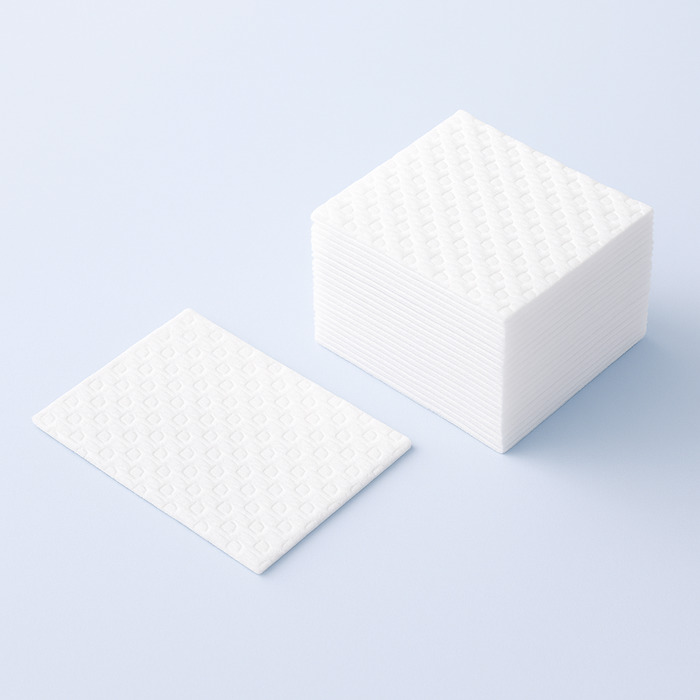
While most attention goes to lint and absorbency, surface friction quietly defines real-world usability. A smooth surface may glide well but often fails to lift dirt efficiently. A higher-friction surface, especially one created by precise embossing, improves mechanical cleaning performance.
In Biodegradable High Friction Wood Pulp Lyocell materials, the interplay between wood pulp’s microtexture and lyocell’s tensile strength creates a natural, non-slippery feel. This makes the fabric grip surfaces better, removing residues more effectively without leaving behind fibers or streaks. In workshops or medical prep rooms, that tactile control translates directly to efficiency.

Sustainability has become a performance requirement, not a marketing claim. Both wood pulp and lyocell are cellulose-based and naturally biodegradable. Unlike synthetic fibers that can linger for decades, these materials return to the environment safely when disposed of properly.
Factories like Weston Manufacturing focus on efficient water use during hydroentangling and on producing blends that decompose under industrial composting conditions. Because the structure uses no plastic binders, it avoids microplastic release, offering an authentic low-impact profile while maintaining the technical standards expected in industrial and healthcare products.
Low lint and high friction make the material ideal for surface preparation, machinery maintenance, and precision cleaning. It holds together under pressure, handles solvents, and leaves minimal residue.
Soft, breathable, and biodegradable, the same structure serves well in facial wipes, personal care cloths, or cosmetic pads. Users experience natural softness without synthetic film feeling—a crucial factor for sensitive skin.
Where fiber release can affect testing or sterile zones, the uniform structure and fiber purity ensure a consistent, predictable outcome. The clean manufacturing process aligns with the needs of contamination-sensitive industries.
While wood pulp–lyocell spunlace solves many challenges, it’s not a universal solution.
It may not match the thermal resistance of fully synthetic fibers.
Its strength, while high, depends on the pulp–lyocell ratio and water-jet density.
Cost and performance balance can vary depending on application needs.
However, for most cleaning, wiping, and hygiene applications where absorbency and biodegradability matter, it strikes a remarkably effective midpoint between natural fiber softness and engineered durability.
Every industry—from electronics to healthcare—depends on materials that work silently in the background. The advance of wood pulp–lyocell spunlace is a reminder that innovation does not always shout; sometimes it’s measured in cleaner surfaces, fewer lint particles, and wipes that hold together just a little longer.
Through years of refinement, Weston Manufacturing has positioned this blend not as a luxury, but as a logical next step in performance nonwovens—proof that sustainable design and high efficiency can coexist in one continuous fiber web.
Upgrading base materials isn’t about chasing trends; it’s about building reliability from the fiber up. And in that sense, the evolution of Biodegradable High Friction Wood Pulp Lyocell is one of the most practical upgrades the nonwoven industry has seen in years.
WESTON
Privacy Policy | SiteMap
Copyright WESTON