Definition and production: Bamboo charcoal is the carbonized product of bamboo heated in low-oxygen conditions. Its microstructure (turbostratic carbon with micropores and mesopores) differs from fully graphitized carbons.
Distinction from bamboo fiber: “Bamboo” in textiles may refer to viscose/rayon derived from bamboo pulp; that is not bamboo charcoal. Bamboo charcoal powder can be incorporated into polymers or nonwovens, affecting color, adsorptive properties, and infrared emissivity.
Functional mechanism: High internal surface area enables physisorption of certain organics and odors; mineral ash may contribute to ion exchange; surface oxygenated groups influence hydrophilicity and reactivity.
Environmental accounting: feedstock, energy, and end-of-life
Feedstock sustainability: Bamboo grows rapidly, sequesters carbon during cultivation, and can be harvested without replanting. However, carbonization energy and process emissions determine net climate benefit.
Energy and emissions: Kiln design, temperature profile, and off-gas capture (syngas reutilization) substantially alter the life-cycle profile. Without energy recovery, benefits may be eroded.
End-of-life: Embedded bamboo charcoal in nonwovens is typically not recoverable; therefore biodegradability and wastewater compatibility of the host matrix dominate overall impact.
Adsorption science: when claims hold up
Volatile organic compounds (VOCs) and odors: Microporous carbon can adsorb small hydrophobic molecules; performance is humidity-sensitive because water competes for adsorption sites.
Ion and heavy metal binding: Unmodified bamboo charcoal shows limited capacity compared with engineered activated carbons; efficacy depends on activation, surface area, and functional groups.
Bacterial control: Charcoal isn’t inherently an antimicrobial agent. It can reduce moisture and adsorb metabolites that odor-causing bacteria utilize, indirectly reducing malodor. Direct bactericidal effects require added chemistries or specific surface treatments.
Skin-contact benefits: For wipes or masks, charcoal’s absorptive capacity can modulate sebum and impurities, but formulation (humectants, surfactants, pH) and substrate topology drive the user outcome more than charcoal alone.
Human health and safety considerations
Particle safety: Properly bound charcoal within fibers or nonwovens should not shed respirable particles. Powder handling requires standard dust precautions at the factory level.
Skin compatibility: In inert matrices, bamboo charcoal is generally non-irritating; however, skin physiology varies. Patch-testing is advised for leave-on products.
Chemical co-ingredients: Real-world performance depends on wetting agents, preservatives, and pH buffers. These, not the charcoal, most often determine irritation risk and microbial control.
Engineering bamboo charcoal into nonwovens: structure matters
Fiber-matrix integration: Charcoal can be compounded into viscose, PLA, or PET fibers, or it can be dispersed within webs and locked via hydroentanglement.
Porosity and capillarity: Spunlace nonwovens can be tuned for pore size distribution; charcoal’s presence may alter wicking, fluid retention, and handfeel.
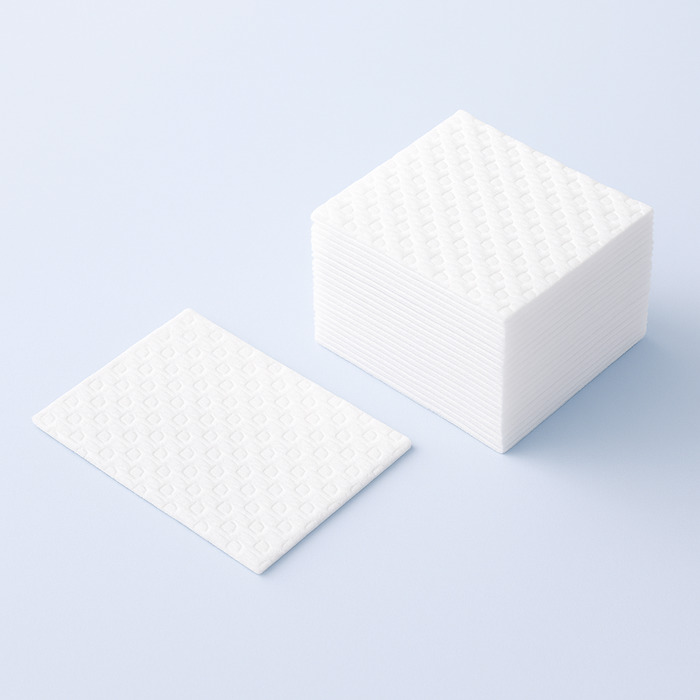
Surface topology: Embossed textures (e.g., pearl or 3D micro-ridges) change contact mechanics with skin, lifting debris efficiently at lower pressure.
Evidence-based pros
Moisture and odor management in enclosed environments due to adsorption of low-mass organics; performance strongest under moderate humidity and adequate surface exposure.
Potential reduction in perceived oiliness on skin-contact applications via uptake of sebum components.
Far-infrared emissivity and thermal regulation effects are plausible but small and context-dependent; useful in some textile applications when combined with appropriate fabric architecture.
Bamboo as a fast-renewing resource supports responsible sourcing when paired with efficient carbonization and waste-gas utilization.
Evidence-based cons and caveats
Overgeneralized antimicrobial claims are not supported without added actives or specific treatments.
Adsorption capacity saturates; without regeneration or replacement, performance declines.
In wet systems and at high relative humidity, adsorption of water limits odor/VOC uptake.
If the host substrate is non-biodegradable or non-flush-compatible, end-of-life impacts can outweigh feedstock benefits.
Black pigmentation from charcoal can constrain design choices and may require careful wet chemistry to prevent staining during processing.
Practical guide to reading labels and claims
Look for statements about pore structure, specific surface area (BET), and activation—not just “contains bamboo charcoal.”
Distinguish between “odor reduction” (adsorption-driven) and “antibacterial” (requires separate validation).
For wipes and mask sheets, substrate grammage, texture pattern, and liquid recipe matter as much as charcoal content.
Minimalist experimental checklist for buyers and specifiers
Odor adsorption A/B test: Equal volumes of a challenging odorant (e.g., isovaleric acid proxy) at controlled humidity; measure headspace reduction over time.
Sebum pickup: Artificial sebum mass uptake per unit area under controlled pressure and strokes.
Flushability: Disintegration time and Fibers in Suspension Index under standardized agitation.
Sensory panel: Perceived cleanliness and residue after use; correlation with analytical metrics.
From lab to product: what design knobs truly move the needle
Charcoal particle size and dispersion uniformity within fibers.
Web basis weight and hydroentanglement energy for linting control.
Texture emboss patterns to balance lift vs. gentleness.
Wetting system pH (near skin’s acid mantle), low-irritancy surfactants, and preservative systems with broad-spectrum efficacy.
Quiet but critical variables often missed
Competing adsorbates in real air/water reduce capacity; load ordering matters.
Regeneration is rarely feasible in single-use hygiene products; design for adequate one-time capacity.
Microplastic risk is minimized with plant-based fibers and controlled fiber length; verify via friction disintegration tests.
Dark dye migration is not from charcoal itself but from co-colorants; watch processing auxiliaries.
Where bamboo charcoal synergizes with modern nonwovens
Hydroentangled, plant-based substrates provide high contact area and mechanical lift; charcoal adds selective adsorption to the toolkit.
Textured surfaces amplify frictional cleaning while limiting pressure on skin, enabling lower-irritation routines.
Flush-compatible architectures align with sanitation goals when dispersion and wet-strength decay are tuned.
Ethical sourcing and transparency
Responsible bamboo cultivation avoids habitat conversion and respects local water budgets.
Charcoal production that recovers pyrolysis gases for process heat improves carbon efficiency.
Disclose activation status, charcoal loading, and independent test methods to allow informed comparison.
Application snapshots with material exemplars
Oil-control facial towels:
Pair a soft, embossed spunlace with light charcoal loading to pick up oils without stripping moisture.
Example substrate cues: look for terms like “pearl texture,” uniform lint control, skin-comfort pH finishing. Products similar in concept include the Pearl Texture Facial Towels
Skin-contact mask sheets:
For balanced adsorption and serum release, a gentle, bio-derived sheet that sits well on skin contours is ideal. Materials in the class of Silk Cocoon Derived Face Mask Sheet illustrate this approach.
Charcoal-integrated wipes:
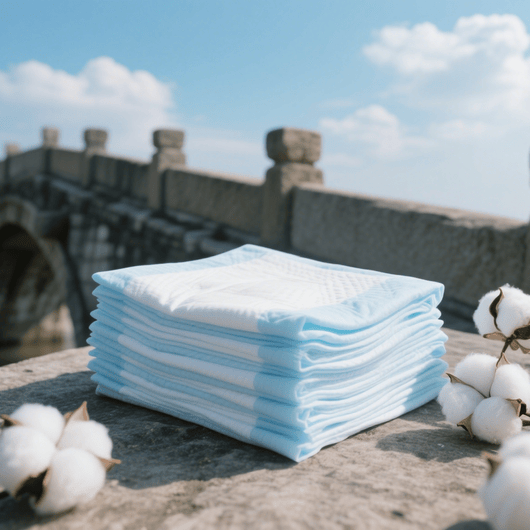
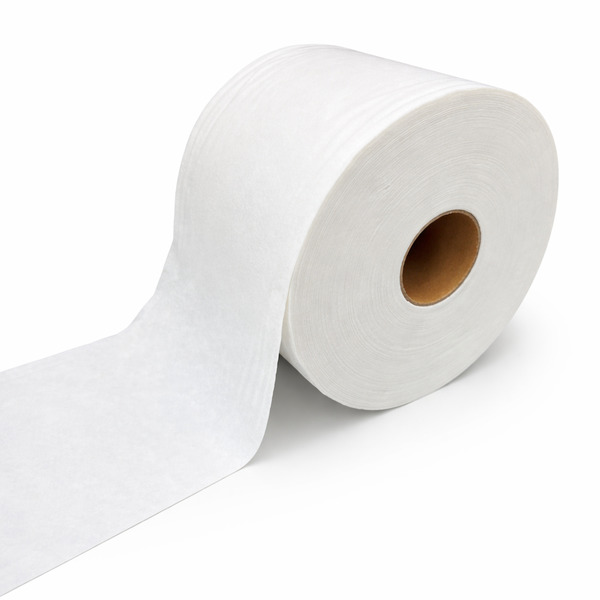
Combine adsorption with fluid management; consider dispersion behavior for toilet-disposable formats. Plant-based, hydroentangled options analogous to Flushable Plant Based Spunlace Nonwoven Fabric demonstrate how substrate engineering governs plumbing compatibility.
Raw-material layer for odor control:
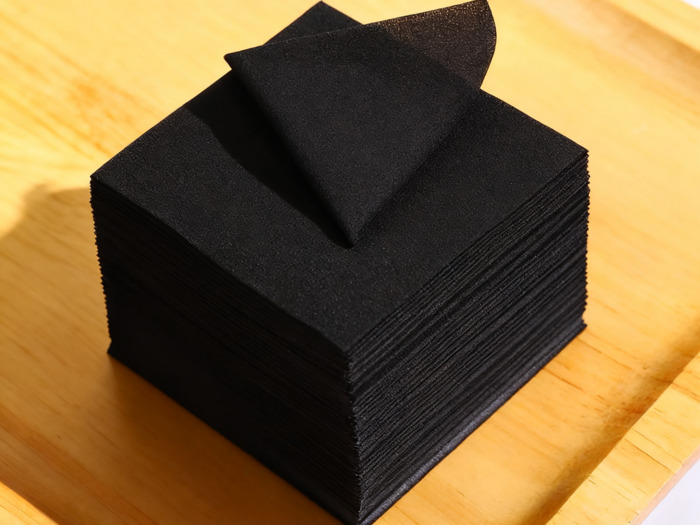
A charcoal-containing hydroentangled web used as a liner or interleaf can serve passive odor management. Materials in the realm of Bamboo Charcoal Spunlace Material exemplify this layer-first strategy.
Is bamboo charcoal good? A nuanced answer
It is “good” when used for specific, verifiable functions—odor management and sebum pickup—within well-engineered substrates and realistic humidity conditions.
It is not a catch-all antimicrobial or detoxifier; claims require clear, testable evidence.
Its environmental merit hinges on efficient carbonization, plant-based matrices, and end-of-life compatibility (e.g., disintegration and dispersion for sewer systems).
Within hydroentangled nonwovens, Weston Manufacturing focuses on tunable pore structures, controlled charcoal dispersion, and texture embossing that align with skin physiology and sanitation engineering principles.
Representative capabilities:
Plant-based flush-compatible spunlace architectures with wet-strength decay for sewer safety.
Charcoal-integrated layers for targeted odor and oil management.
Soft-contact textures for facial care with minimized linting.