- Email: [email protected]


If you’ve ever used disposable face masks, sanitary napkins, or cleaning wipes, you might have come across the term “spunlace” (also called hydroentangled nonwoven). But here’s the big question: when these products end up in landfills or nature, do they break down harmlessly? The answer isn’t a simple “yes” or “no”—it depends on what the spunlace is made of, where it ends up, and even how it’s made. Let’s dig into this with real science, no jargon overload.
First, let’s get the basics right. Spunlace isn’t a single material—it’s a manufacturing process that turns fibers into a strong, soft fabric. Here’s how it works: machines shoot high-pressure water jets at a layer of loose fibers (like cotton, bamboo, or polyester). The water’s force tangles the fibers together, creating a durable web—no glue, no heat, just water. That’s why spunlace feels so gentle (great for sensitive skin!) and versatile (used in everything from medical wipes to beauty masks).
But the process itself doesn’t decide if it’s biodegradable. The star of the show? The fibers used to make the spunlace. Think of it like baking: the “dough” (fibers) matters more than the “mixing method” (spunlace process) when it comes to how it breaks down.
Biodegradation happens when tiny microbes (bacteria, fungi) eat away at a material, turning it into harmless stuff: water, carbon dioxide, and natural biomass. For spunlace, whether microbes “want to eat it” depends on if the fibers are natural or synthetic.
Natural Fiber Spunlace: Yes, It Biodegrades
Natural fibers (like bamboo, cotton, or wood pulp) are made of substances that microbes already know how to break down—think cellulose (the same stuff in leaves or tree bark). Let’s take two examples:
The key here? No synthetic additives. If natural fiber spunlace has harsh chemicals (like plastic-based dyes or waterproof coatings), those can slow down biodegradation—but pure natural spunlace? It’s a win for the planet.
Synthetic Fiber Spunlace: No, It Hardly Biodegrades
Synthetic fibers (like polyester, nylon, or polypropylene) are made from plastic. Plastic molecules are long, tough chains that microbes can’t “chew through”—they’re too stable. A polyester spunlace wipe, for example, can sit in a landfill for 200+ years without breaking down. Even if it does split into tiny pieces (microplastics), those bits never fully disappear—they end up in oceans, soil, and even our food.
Blended Spunlace: It’s a Middle Ground
Most spunlace products aren’t 100% natural or 100% synthetic—they’re blends (like wood pulp + polyester). The biodegradability here depends on the ratio of natural to synthetic fibers. For example:
This is a crucial point: “blended spunlace” doesn’t mean “partly biodegradable” in a good way—it means part of it pollutes forever.
Even if spunlace is made of 100% natural fibers, it might not break down—because environment matters. Let’s look at two key factors:
The “Right” Conditions for Biodegradation
Microbes need three things to work: warmth, moisture, and oxygen. If a natural spunlace product ends up in a closed landfill (where there’s no air or water), microbes can’t survive. Instead of biodegrading, the product rots anaerobically (without oxygen) and releases methane—a greenhouse gas 28x more powerful than CO2.
But if that same product goes into a compost pile (or even a backyard garden), it thrives. For example, a 100% organic cotton face mask sheet in a home compost bin will break down in 2–3 months; in a landfill, it could take years.
Chemical Additives: The Hidden “Blockers”
Some spunlace products have extra ingredients that kill microbes. Waterproof coatings (often plastic-based), antibacterial chemicals, or synthetic fragrances can stop biodegradation in its tracks. Even a bamboo fiber sanitary napkin with a plastic waterproof layer will act like a synthetic product—because the coating traps the natural fibers, making it impossible for microbes to reach them.

Let’s be honest: no material is perfect. Biodegradable spunlace has big benefits, but it also has tradeoffs.
So, back to the original question: “Is spunlace biodegradable?” The answer is:
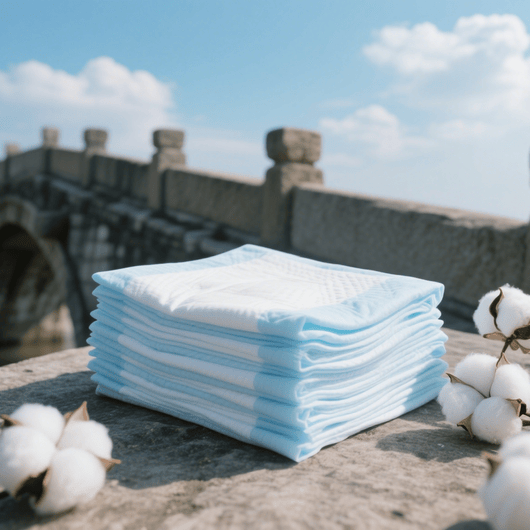
If you want to try biodegradable spunlace products for yourself, Weston Manufacturing offers options that align with these principles: their Bamboo Fiber Sanitary Napkins (natural, gentle, and designed to break down), 100% Organic Cotton Face Mask Sheets (no harsh chemicals, perfect for sensitive skin), and Wood Pulp Polyester Spunlace Cleanroom Wipes (a blend for durability, with the natural wood pulp component breaking down over time). If you’d like to test them out, you can request a free sample by reaching out to [email protected].
At the end of the day, the best way to help the planet isn’t just picking “biodegradable”—it’s choosing products that match how they’ll be disposed of. A 100% organic cotton face mask is great, but only if you compost it. A synthetic wipe is bad, but reusing it (if safe) is better than throwing it away. Small choices add up—and now you have the science to make the right ones!
WESTON
Privacy Policy | SiteMap
Copyright WESTON