- Email: [email protected]


For OEMs, nonwoven rolls are not just raw materials. They determine how stable production runs are, how consistent finished products feel, and how reliably those products perform in real use. A small change in fiber blend or bonding method can affect absorbency, tensile strength, linting, and even downstream converting efficiency.
Lyocell–wood pulp spunlace rolls have gained attention because they offer a balanced performance profile. Rather than excelling in only one area, this material aims to meet multiple functional needs at the same time, which is often what OEMs require most.

Lyocell–wood pulp spunlace is produced by blending regenerated cellulose fibers with natural wood pulp fibers, then bonding them using high-pressure water jets. No chemical binders are introduced during the bonding stage. The fabric’s integrity comes from fiber entanglement rather than adhesive fixation.
This structure gives the material two important characteristics:
The surface remains soft and uniform
The internal network stays strong even when wet
For OEMs, this translates into predictable behavior during both manufacturing and end use.
Lyocell fibers are engineered from cellulose and have a smooth, controlled cross-section. In spunlace applications, they primarily contribute:
Tensile strength, especially in the machine direction
A soft hand feel without excessive bulk
Dimensional stability during wet use
Because lyocell fibers are consistent in length and fineness, they help reduce variability between production batches, which is critical for OEMs supplying large-volume programs.
Wood pulp fibers behave differently from continuous or long-cut fibers. Their shorter length and porous structure allow them to:
Absorb liquid quickly
Distribute moisture evenly across the fabric
Enhance cleaning efficiency in wipe applications
In a spunlace structure, wood pulp improves absorbency without requiring increased basis weight. This is particularly valuable for OEMs designing lightweight disposable products that still need reliable liquid handling.
When combined, lyocell and wood pulp fibers create a fabric suited for multiple use scenarios:
Wet strength: Maintains integrity during wiping, folding, or stretching
Controlled linting: Important for personal care, hygiene, and medical-related uses
Balanced softness: Suitable for skin-contact applications without feeling fragile
Efficient absorbency: Handles water-based and light oil-based liquids effectively
OEMs often choose this blend because it performs consistently across different end uses without heavy reformulation.
From an OEM production standpoint, material behavior on the line matters as much as lab data. Lyocell–wood pulp spunlace rolls typically offer:
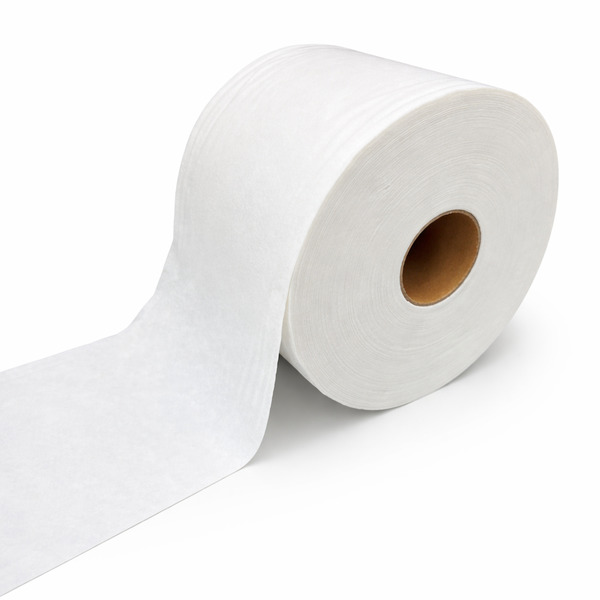
Smooth unwinding with minimal fiber shedding
Good compatibility with slitting, folding, embossing, and laminating
Reduced downtime caused by fabric breakage
Stable roll density, improving tension control
At facilities such as Weston Manufacturing, where spunlace nonwoven production focuses on process control and repeatability, these characteristics help OEMs standardize their converting parameters.

OEMs often serve multiple customers with different positioning needs. Lyocell–wood pulp spunlace supports this by allowing:
Adjustments in basis weight without major performance loss
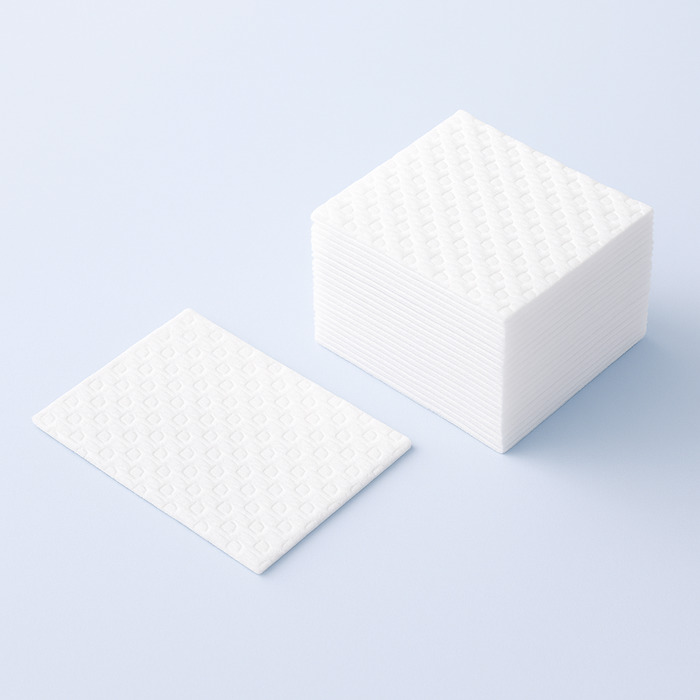
Surface texture variation through water-jet pattern control
Custom ratios of lyocell to wood pulp depending on strength or absorbency targets
This flexibility allows a single Wood Pulp Lyocell Spunlace Nonwoven Fabric platform to support a wide range of private-label and contract manufacturing programs.
The environmental profile of this material comes from its composition and process, not from marketing language:
Both fiber components are cellulose-based
Water-jet bonding avoids chemical adhesives
The fabric structure is compatible with waste-reduction strategies through lightweighting
For OEMs, the advantage lies in meeting market expectations for responsible material choices without introducing instability into production.
No nonwoven material is universally ideal. Lyocell–wood pulp spunlace also has boundaries:
Not designed for heavy abrasive or industrial scrubbing uses
Absorbency is optimized for liquids, not high-viscosity substances
Higher softness may not be necessary for purely technical applications
Understanding these limits helps OEMs apply the material where it makes sense, rather than forcing it into unsuitable roles.
Lyocell–wood pulp spunlace rolls are especially effective in:
Disposable wipes for personal care and household cleaning
Hygiene and medical-related disposable products
Skin-contact items requiring low irritation risk
Applications prioritizing balance over extreme performance in one area
OEMs working with experienced spunlace nonwoven manufacturers like Weston Manufacturing often select this fabric for its reliability rather than novelty.
WESTON
Privacy Policy | SiteMap
Copyright WESTON