- Email: [email protected]


Sanitary pads may look simple, but they are built from a layered system of carefully selected raw materials. Each layer serves a specific purpose, from skin contact to fluid control to leak protection. Understanding what these materials are — and how they work together — helps explain why some pads feel dry and comfortable, while others feel hot, stiff, or irritating after hours of wear.
This article focuses on materials, not branding. No buzzwords, no exaggerated claims — just a clear look at what sanitary pads are actually made of.
Most product descriptions focus on thickness, absorbency levels, or decorative packaging. What often gets overlooked is the fact that material selection defines performance.
Raw materials determine:
How fast liquid moves away from skin
Whether heat and moisture can escape
How the surface feels after prolonged contact
How stable the pad remains when compressed
Two pads with the same absorbency rating can behave very differently if their materials are not engineered well.
A sanitary pad is not one sheet. It is a multi-layer system, typically made of:
Top sheet (skin-contact layer)
Acquisition or distribution layer
Absorbent core
Back sheet (leak barrier)
Each layer uses different raw materials, chosen for mechanical strength, softness, or fluid control.
The top sheet plays a quiet but critical role. It decides whether liquid spreads, pools, or disappears quickly.
Polypropylene (PP) nonwoven fabric
Viscose (rayon) nonwoven
Cotton-based nonwoven blends
Lightweight and flexible
Designed for rapid liquid penetration
Can be engineered for smooth fiber surfaces
Low-quality PP may feel plasticky
Rough bonding methods increase friction
Poor airflow can trap heat
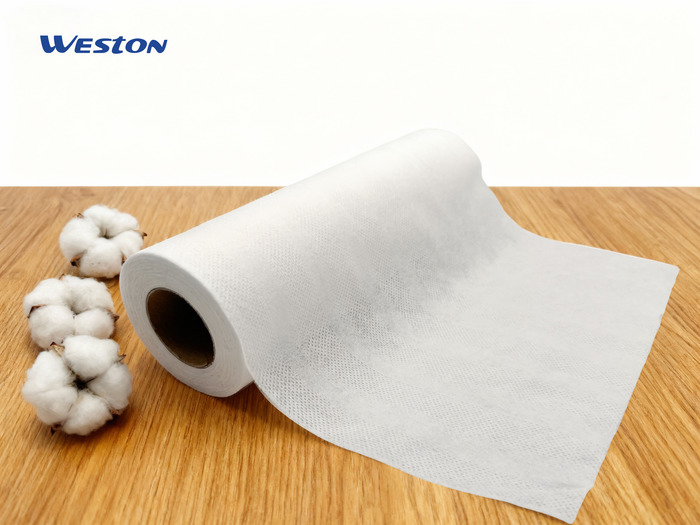
Many manufacturers now favor spunlace technology for this layer. Hydroentangling allows fibers to interlock without thermal bonding, resulting in a softer, more cloth-like surface. In this context, Breathable Cotton Nonwoven Fabric has gained attention for combining airflow with natural fiber comfort, especially for extended wear.
Below the top sheet sits a layer designed to spread liquid sideways instead of letting it concentrate in one spot.
Polyester or PP nonwoven
Blended cellulose-synthetic webs
Reduces surface wetness
Improves absorption speed
Helps maintain pad shape
Extra layers increase material cost
Poor design can slow re-absorption
Over-engineering may reduce flexibility
When designed properly, this layer works silently. When done poorly, users notice clumping or delayed absorption.

The absorbent core does most of the visible work.
Fluff pulp (wood-based cellulose fibers)
Super Absorbent Polymer (SAP)
High liquid retention
Lightweight relative to capacity
Stable under moderate pressure
Excess SAP can create stiffness
Low-grade pulp sheds dust
Thick cores reduce breathability
Modern designs aim to reduce bulk while maintaining capacity. This shift places more pressure on surrounding nonwoven layers to handle airflow and comfort.
The back sheet prevents leakage while allowing vapor to escape.
Polyethylene (PE) breathable film
Film-nonwoven laminates
Reliable barrier against leaks
Flexible and tear-resistant
Low breathability increases heat
Noisy films affect user experience
Inferior lamination reduces durability
Breathable films improve comfort, but only when paired with air-permeable upper layers.
Traditional woven textiles are rarely used in disposable hygiene products. Nonwoven fabrics offer:
Precise control over fiber density
Consistent thickness
High production efficiency
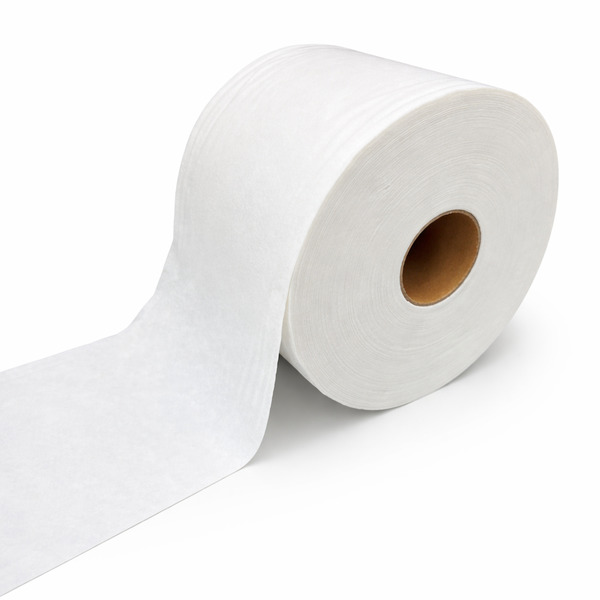
Among nonwoven methods, spunlace stands out. Water jets entangle fibers without adhesives or heat, preserving softness and airflow. This makes spunlace structures suitable for top sheets and comfort layers, particularly when using cotton or viscose blends.
Some manufacturers, including Weston Manufacturing, focus on spunlace nonwovens engineered specifically for hygiene use. Their Breathable Cotton Nonwoven Fabric is designed to balance softness, airflow, and structural stability without unnecessary additives.
This is not a debate with a single winner.
Pros
Soft hand feel
Familiar to consumers
Good moisture interaction
Cons
Fiber quality varies by source
Requires careful processing
Less consistent without blending
Pros
Uniform performance
Strong and lightweight
Stable during storage
Cons
Can feel artificial
Lower moisture absorption
Heat retention if poorly designed
Most sanitary pads use fiber blends to combine the strengths of both.
Irritation rarely comes from absorption alone. It often comes from:
Trapped moisture
Repeated friction
Poor airflow
Smooth fiber surfaces, breathable nonwoven structures, and clean production conditions reduce these risks. Material choices matter more than fragrance, color, or printed patterns.
Material development is moving toward:
Thinner structures with equal capacity
Higher air permeability
Fewer processing residues
Better fiber traceability
Rather than adding complexity, manufacturers are refining fundamentals — fiber quality, bonding methods, and layer interaction.
Marketing terms rarely explain why a pad feels the way it does. Material composition does.
When consumers understand:
What fibers are used
How layers interact
Where breathability comes from
They can make choices based on comfort and function, not slogans.
For brands and converters seeking material solutions, Weston Manufacturing offers spunlace options such as Breathable Cotton Nonwoven Fabric for hygiene applications.
Free material samples are available upon request at [email protected].
WESTON
Privacy Policy | SiteMap
Copyright WESTON