- Email: [email protected]


For decades, the phrase “fragrance-free” has carried an unspoken promise — the idea that what lacks a scent must be gentler, safer, and kinder to the skin. In the baby care market, this perception has shaped entire product categories. Yet, as more skin specialists and material scientists look closer, they’re uncovering a more complex truth: the absence of fragrance is only a small piece of a much larger skin-health equation.
Today’s professional buyers, especially those sourcing for hygiene, cosmetics, or healthcare brands, are looking beyond surface claims. They’re asking the right questions — about fiber purity, formulation compatibility, and manufacturing integrity. Because when it comes to newborn or sensitive skin, everything that touches it must be designed with precision, not assumption.
It’s easy to believe that removing fragrance means removing irritation. But dermatological evidence shows that irritation potential often depends on the base material and the chemical environment of the wipe, not merely the absence of scent.
Residual surfactants, unstable preservatives, or even fiber finishing agents can trigger mild to moderate reactions on baby skin. Fragrance is just one variable among many. True gentleness must be engineered — from fiber selection to water purity during production — and verified through consistent performance on the skin’s barrier layer.
A baby’s skin barrier is about 30% thinner than that of an adult, which means it absorbs water faster but also loses it more easily. This thin, developing structure depends on a balanced microclimate: not too dry, not too wet, and free from chemical interference.
A wipe that disrupts the skin’s pH or leaves behind microscopic residue can disturb the natural lipid matrix, leading to dryness or redness. That’s why modern wipe innovation focuses less on what’s added — such as fragrance or lotion — and more on how the substrate material interacts with the skin itself.
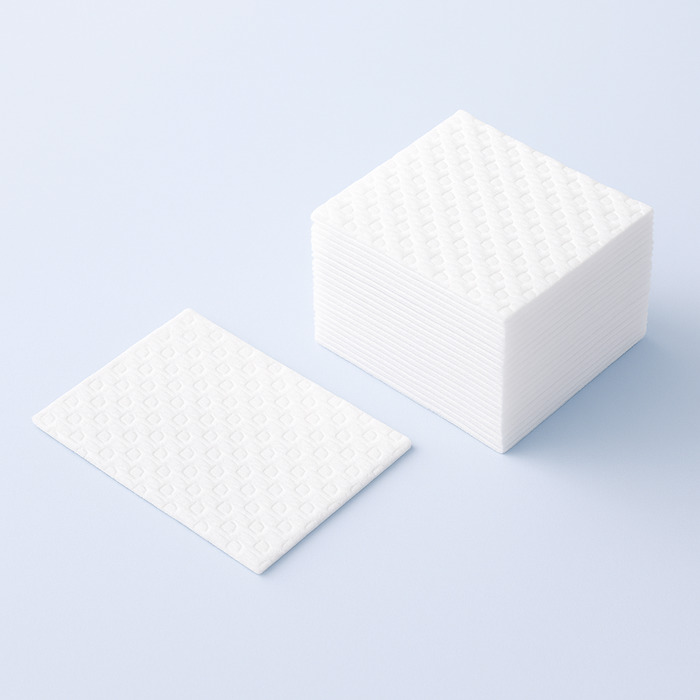
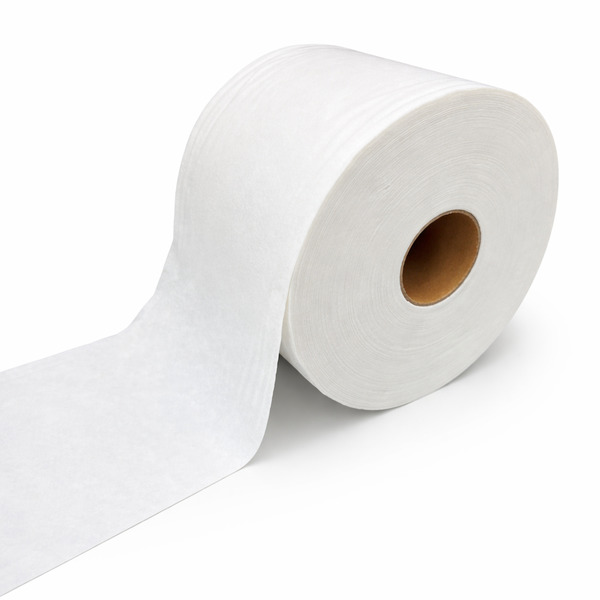
Behind every high-performance baby wipe is its foundation: the nonwoven fabric. The structure, density, and absorbency of the fiber network determine how the wipe behaves on skin — whether it drags, leaves lint, or glides effortlessly.
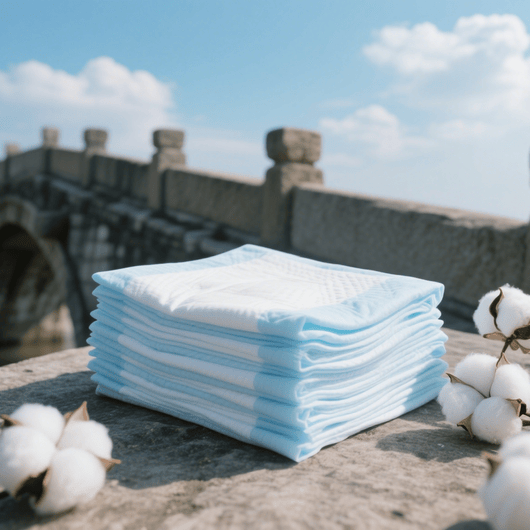
In the past, manufacturers often relied on low-cost polyester blends. Today, with rising awareness about skin health and sustainability, the industry is turning toward plant-derived materials like viscose and cotton. These natural-origin fibers mimic the skin’s own moisture balance and are biodegradable, making them both skin-friendly and environmentally responsible.
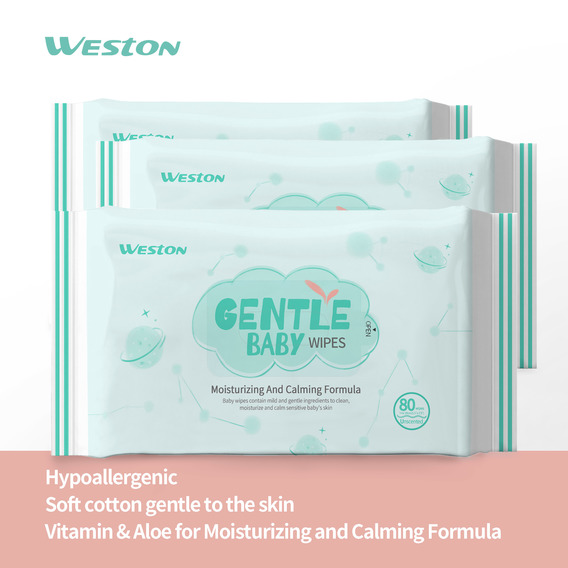
At the forefront of this movement is Weston Manufacturing, a specialist in spunlace nonwoven production. By using high-pressure water jets instead of chemical binders, Weston creates a uniform, soft, and solvent-free fabric base ideal for Skin Friendly Baby Wipes. Each fiber layer is entangled precisely to maintain structural integrity while ensuring a cushion-like softness that reduces friction during use.
The label “fragrance-free” is often oversimplified. In technical manufacturing terms, a truly fragrance-free wipe must meet several conditions:
No added aromatic compounds, including so-called “masking fragrances.”
No reactive aldehydes or residual esters within fiber or finishing agents.
Controlled pH and solvent content throughout production.
Cleanroom-level fiber handling to prevent contamination.
When these principles are observed, the wipe’s purity is no longer a marketing statement but a measurable performance attribute. Professional buyers can validate this through supplier transparency and consistent lab data — not consumer-facing slogans.
Softness is often described subjectively, but in textile engineering, it’s quantifiable. Texture smoothness, pore uniformity, and water absorption rate determine how a wipe feels and functions.
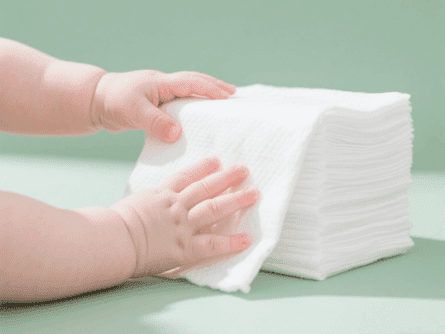
A premium-grade spunlace viscose nonwoven exhibits an even fiber web that provides a balance between absorption and tensile strength. When moistened, it maintains elasticity and glide, minimizing micro-abrasions on delicate skin. This subtle interaction — how the fabric “responds” to the skin’s micro-topography — defines real comfort.
Here lies another hidden truth: babies may not react to fragrance, but their skin reacts to friction, residue, and fiber stiffness. That’s why wipe texture engineering deserves as much attention as lotion formulation.
Today’s professional buyers are not only sourcing for performance but also for ecological responsibility. The demand for biodegradable substrates has increased sharply, driven by both consumer awareness and corporate sustainability goals.
However, eco-friendly does not automatically mean skin-safe. Some recycled or blended fibers carry trace contaminants from prior processing. To balance sustainability with skin compatibility, manufacturers must use clean, renewable raw materials and apply hydroentanglement technology that avoids adhesives or formaldehyde-based binders.
Weston Manufacturing achieves this through a closed-loop water filtration process and controlled fiber sourcing, ensuring each batch of Skin Friendly Baby Wipes materials meets high standards for purity and biodegradability.
Every baby wipe is essentially a tiny delivery system for moisture. The type of water and pH level it contains matter profoundly. High mineral content or unstable pH can alter the wipe’s behavior over time. A slightly acidic formulation — mirroring the skin’s natural state — is ideal for preserving barrier integrity.
Equally important is the nonwoven’s ability to release moisture evenly without over-saturation. An advanced spunlace structure allows consistent hydration, preventing the wipe from feeling sticky or overly wet. This controlled liquid retention is a quiet but powerful contributor to skin comfort.
As the industry evolves, professional buyers are shifting from marketing-driven choices to evidence-based sourcing. Fiber composition, process traceability, and residual content now define credibility. Brands that once relied on “free-from” claims are learning that material truth speaks louder than packaging language.
In this new landscape, Weston Manufacturing represents a manufacturing philosophy built on transparency and precision. By combining clean production environments, fiber science, and rigorous testing, Weston enables global hygiene brands to create genuinely Skin Friendly Baby Wipes that meet both dermatological and environmental expectations — quietly redefining what “fragrance-free” truly means.
Fragrance-free baby wipes are not just about removing a scent; they’re about rethinking what purity means from the ground up — from fiber sourcing to final texture. For professional buyers, that means looking beyond familiar claims and demanding measurable proof of safety, softness, and sustainability. The skin, after all, doesn’t read labels. It simply responds to what’s real.
WESTON
Privacy Policy | SiteMap
Copyright WESTON