- Email: [email protected]


SMS nonwoven fabrics are widely used in medical, hygiene, and industrial products. They look simple, but their performance comes from a precise combination of materials science and engineering design. This article focuses on how SMS fabrics are made, why they work, and what makes them reliable in real-world use.
SMS stands for Spunbond–Meltblown–Spunbond, a three-layer composite structure. Each layer has a clear role, and the performance comes from how these layers work together rather than from a single material.
| Layer | Structure Type | Main Function |
| Spunbond (Top) | Continuous fibers | Strength and protection |
| Meltblown | Microfine fibers | Filtration core |
| Spunbond (Bottom) | Continuous fibers | Support and durability |
The outer spunbond layers provide mechanical strength and protect the inner layer. The meltblown layer, placed in the middle, is responsible for capturing particles.

Most SMS fabrics are made from polypropylene (PP). This is not accidental. PP has a combination of properties that fit the process:
Low melting temperature (easy to process)
Chemical resistance (suitable for medical use)
Lightweight structure
Cost efficiency for large-scale production
These characteristics allow manufacturers to produce consistent fabrics at high speed without complex chemical treatments.
The spunbond process creates the outer layers:
Polymer is melted and extruded into long filaments
Filaments are stretched to improve strength
Fibers are laid randomly and bonded together
Key result: strong, breathable sheets with uniform thickness
The meltblown layer is the technical core:
Melted polymer is pushed through very fine nozzles
High-speed hot air stretches fibers into micro-scale diameters
Fibers form a dense, web-like structure
Key result: extremely fine fibers with high surface area
SMS fabrics do not rely on a single filtration method. Instead, they combine several physical mechanisms:
Mechanical interception
Larger particles are physically blocked by fibers
Inertial impaction
Fast-moving particles collide with fibers due to inertia
Diffusion effect
Very small particles move randomly and attach to fibers
Electrostatic attraction
Charged fibers attract and hold particles
Among these, electrostatic attraction is especially important. It allows SMS fabrics to maintain good airflow while still capturing fine particles.
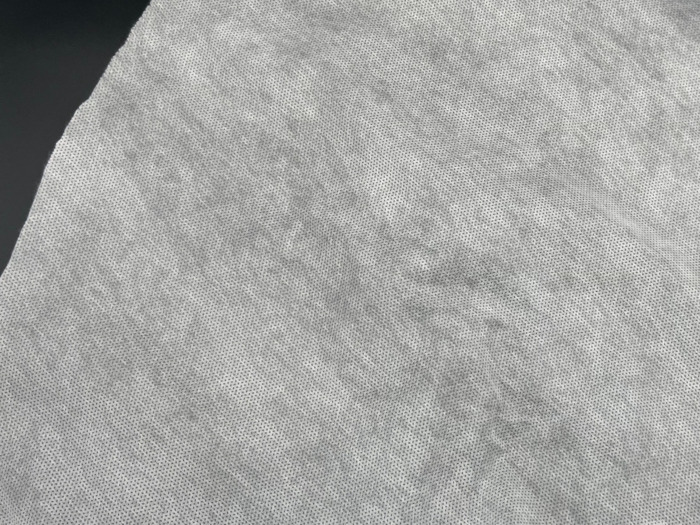
A single dense layer would block particles but also restrict airflow. SMS solves this problem through structure design:
Outer layers remain relatively open → allow air to pass
Middle layer is dense → captures particles
Combined structure balances filtration and breathability
This layered approach is the reason SMS fabrics are widely used in face masks and protective clothing.
The difference between SMS and woven materials is not just in structure, but also in function.
| Feature | SMS Nonwoven Fabrics | Woven Fabrics |
| Fiber arrangement | Random | Ordered (warp and weft) |
| Production speed | High | Lower |
| Filtration ability | Strong (with meltblown) | Limited |
| Flexibility | Good | Moderate |
SMS fabrics are designed for performance, not for repeated washing or long-term wear like textiles.
In real applications, SMS fabric performance depends on several measurable factors:
Fiber diameter (affects filtration efficiency)
Basis weight (gsm) (affects strength and density)
Electrostatic charge stability
Layer bonding quality
For example, lighter materials such as 27 gsm fabrics are often used where breathability is critical but basic filtration is still required.
Even though SMS fabrics are widely used, there are still limitations:
Environmental impact
Polypropylene is not biodegradable
Charge decay
Electrostatic performance can decrease with humidity or time
Layer separation risk
Poor bonding reduces durability
These challenges are actively being studied, especially in sustainable material development.
From a manufacturing point of view, consistency is more important than complexity. A reliable SMS Nonwoven Fabrics Manufacturer focuses on:
Stable fiber formation
Uniform layer distribution
Controlled bonding processes
Some manufacturers also develop specialized variants. For example, Weston Manufacturing has introduced 27 gsm Hydrophilic SMS Fabric, designed to improve moisture absorption while maintaining the basic structure of SMS materials. This type of adjustment shows how small material changes can adapt SMS fabrics to specific applications without altering the core technology.
SMS fabrics are rarely designed in isolation. Their structure is adjusted based on final use:
Medical use → higher filtration and hygiene standards
Hygiene products → softness and liquid handling
Industrial use → durability and barrier performance
This application-driven approach explains why SMS fabrics come in many variations, even though the basic structure remains the same.
The effectiveness of SMS fabrics comes from a combination of simple principles:
Use of thermoplastic polymers for stable processing
Fiber size control across different layers
Multi-mechanism filtration instead of a single method
Structural layering to balance airflow and protection
Rather than relying on complex chemistry, SMS technology depends on precise control of physical structure. This is what makes it both scalable and dependable in everyday products.

WESTON
Privacy Policy | SiteMap
Copyright WESTON