- Email: [email protected]


The three-letter acronym that quietly powers modern medicine, hygiene, and industrial protection—SMS—stands for Spunbond-Meltblown-Spunbond. If you’ve worn a surgical mask, used a disposable bed sheet in a hospital, or handled a protective medical gown, you’ve experienced SMS nonwoven fabric technology. But what makes this layered structure so extraordinarily effective, and what genuine trade-offs should you understand about it? Let’s explore the complete picture.
SMS fabric represents a composite nonwoven material where three distinct layers work synergistically.
This three-layer architecture achieves something remarkable: combining the durability of strong outer layers with the filtration precision of delicate meltblown technology.
The polypropylene composition means SMS fabric is inherently hydrophobic—it repels water. Yet through specialized treatments, manufacturers can create hydrophilic (water-loving) versions that absorb fluid, making the same material suitable for both protective barriers and absorbent applications.

SMS fabric achieves bacterial filtration rates exceeding 98%, creating a microscopic labyrinth that traps pathogens, viral particles, and contaminating dust. This isn’t theoretical protection—it’s why infection control standards across 180+ countries specify SMS-based materials for surgical gowns and face masks. During the COVID-19 pandemic, when mask shortages threatened healthcare systems worldwide, SMS production capacity became strategic infrastructure.
Here’s the paradox that makes SMS remarkable: it weighs as little as 27 grams per square meter (gsm) yet delivers tensile strength of 600-840 N/5cm in the machine direction. Compare this to cotton textiles at 2-3 times the weight with lower strength, and you understand why surgeons prefer SMS gowns. They move freely, reduce fatigue during long procedures, and resist tearing during emergencies—critical when seconds matter.
The hydrophobic outer spunbond layers repel blood, bodily fluids, and oils, while the inner layer remains breathable. Hospital workers experience this dual benefit directly: protection from biological hazards without the suffocation of impermeable materials. Extended wearing periods don’t cause skin maceration or respiratory difficulty—essential for 8-12 hour hospital shifts.
Polypropylene’s inherent composition provides natural resistance to bacteria, viruses, and numerous chemicals. SMS fabric doesn’t degrade under exposure to common disinfectants (isopropyl alcohol, sodium hypochlorite), nor does it support microbial colonization. This means SMS-based products maintain effectiveness through sterilization and storage—critical for medical applications.
SMS production involves no adhesives, relies on thermal bonding (heat-sealing the layers together), and generates minimal waste. Modern SMS lines produce at 500+ meters per minute with consistent quality. This efficiency translates directly to affordability without compromising performance—making protective equipment accessible globally rather than an expensive luxury.
The global nonwoven fabric market—valued at 49.84billion∗∗in2025andprojectedtoreach∗∗49.84 billion** in 2025 and projected to reach **49.84billion∗∗in2025andprojectedtoreach∗∗76.05 billion by 2032 at 6.2% annual growth—demonstrates SMS fabric’s widespread adoption. Medical applications claim 35% of this market, hygiene products another 30%, with industrial filtration, automotive, and agriculture claiming the remainder. This diversity reflects genuine material superiority across disparate industries.

Let’s address this directly: SMS fabric’s foundation—polypropylene—takes 100 to 500+ years to biodegrade in landfill environments. During 2020-2021, billions of single-use SMS masks entered waste streams globally, creating visible environmental accumulation. Wildlife encounters microplastic fragments, and marine ecosystems show polypropylene detection in fish populations. Unlike natural fibers decomposing within months, SMS fabric represents long-term environmental persistence.
While polypropylene is technically recyclable, the practical reality is limited recycling infrastructure in many regions. Most SMS fabric ends up in landfills or incineration—neither environmentally ideal.
Polypropylene melts at approximately 160°C (320°F). This creates a critical limitation: SMS fabric cannot withstand high-temperature sterilization methods (standard autoclave operates at 121-132°C, but extended exposure approaches the melting threshold). Healthcare facilities relying on sustained heat sterilization must use alternative materials or employ gamma radiation or ethylene oxide sterilization—adding cost and complexity.
SMS fabric lacks elasticity by design. Applications requiring form-fitting comfort (elastic waistbands, contoured garments) demand additional elastic reinforcement, strategic seaming, or blended materials with spandex or other elastic fibers. This limitation adds manufacturing complexity and cost for certain product categories.
Prolonged ultraviolet exposure causes polypropylene degradation and embrittlement. Agricultural uses (row covers, greenhouse shade cloth) require UV-stabilizing treatments (additional cost) or naturally shortened product lifespans. Outdoor applications face inherent performance constraints compared to UV-stable materials.
SMS fabric production depends entirely on polypropylene resin availability and petrochemical market pricing. Geopolitical disruptions, crude oil price volatility, or regional production constraints can create supply scarcity and cost unpredictability. Unlike natural fiber alternatives with decentralized agricultural sources, SMS fabrication concentrates supply chain risk.
| Characteristic | SMS Nonwoven | Pure Spunbond | Woven Cotton | Natural Fiber Blends |
| Filtration Efficiency | 98%+ | 85-90% | 60-75% | 70-85% |
| Tensile Strength | Excellent | Moderate | Excellent | Good |
| Production Speed | Very Fast | Fast | Slow | Moderate |
| Cost | Low | Low | High | Moderate-High |
| Biodegradability | Poor (500+ years) | Poor (500+ years) | Good (months) | Better (2-3 years) |
| Heat Resistance | Limited (160°C max) | Limited (160°C max) | Excellent (200°C+) | Moderate (150°C) |
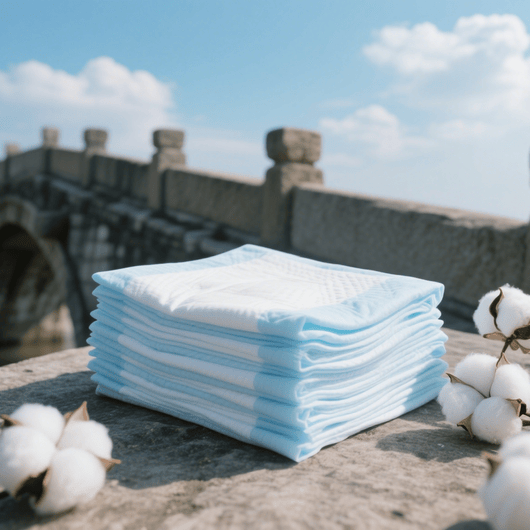
The pharmaceutical, surgical, and hygiene industries have standardized SMS because performance requirements override other considerations. A surgical gown failing under stress during emergency resuscitation poses unacceptable risk. A disposable incontinence pad losing integrity creates dignity and health hazards. A respiratory mask with inadequate filtration endangers vulnerable populations.
SMS fabric solves these problems with proven, manufacturable technology at globally accessible prices. Environmental concerns, while legitimate, remain secondary to immediate safety and performance requirements in medical applications.
Emerging developments show promise: biodegradable polypropylene blends, recycled plastic incorporation in SMS production, and advanced manufacturing reducing energy consumption per unit. Some innovative manufacturers now produce SMS lines capable of processing bio-based plastics (polylactic acid, bio-derived polymers).
The intelligent choice remains application-specific. For surgical protection, medical device manufacturing, and high-performance filtration, SMS remains unmatched. For long-term outdoor applications, high-temperature environments, or maximum sustainability priorities, alternatives deserve consideration.
SMS nonwoven fabric represents a genuine technological achievement—combining filtration precision, mechanical strength, manufacturing efficiency, and global affordability. Its limitations in heat resistance, biodegradability, and elasticity are real and matter for specific applications.
The honest assessment: SMS fabric excels within its operational parameters because the engineering is sound and the performance is measurable. When medical professionals, industrial engineers, and procurement specialists specify SMS, they’re making calculated choices based on proven performance rather than marketing claims.
For manufacturers and procurement professionals evaluating SMS nonwoven fabrics, understanding these specific properties—filtration efficiency, weight specifications, barrier performance, and durability characteristics—determines successful application.
Weston Manufacturing specializes in precision SMS fabric solutions tailored to rigorous performance requirements. Our product lineup includes:
Organizations requiring custom SMS compositions, specific weight specifications, or volume production capabilities should explore whether our manufacturing capabilities align with your requirements. We provide free samples to qualified applicants for direct performance evaluation.
For material specifications, sample requests, or custom SMS fabric solutions, email us at [email protected].
WESTON
Privacy Policy | SiteMap
Copyright WESTON