- Email: [email protected]


For most industries, “clean” equals safety, productivity, and compliance. From automotive shops to food processing plants, powerful cleaning agents and wipes are used daily to keep machines and surfaces spotless.
But there’s a growing realization: cleaning can get dirty — at least, environmentally speaking. The chemicals, materials, and waste behind industrial cleaning processes can have far-reaching consequences for air, water, and soil.
Let’s break down what really happens when industries “wipe away” grime — and explore how more sustainable solutions are reshaping this essential part of modern manufacturing.
Industrial cleaning products are complex chemical cocktails designed for performance under pressure. They include:
| Common Component | Function | Environmental Concern |
| Surfactants | Break down grease and oils | Some are non-biodegradable |
| Solvents (like isopropanol, toluene) | Dissolve contaminants | VOC emissions, air pollution |
| Preservatives | Prevent microbial growth | Toxic residues |
| Synthetic fibers in wipes | Strength and durability | Plastic microfibers in water systems |
While these ingredients are effective, they can also linger in wastewater, enter ecosystems, and accumulate in living organisms. Over time, they disrupt aquatic life and affect biodiversity — a high price for industrial cleanliness.

When industrial wipes or sprays evaporate, they don’t just disappear. Many release volatile organic compounds (VOCs) that contribute to smog and poor indoor air quality.
In enclosed spaces like factories or workshops, this can harm worker health.
Outdoors, VOCs mix with nitrogen oxides and sunlight to form ground-level ozone — a pollutant harmful to lungs and crops.
This “invisible pollution” means that environmental responsibility must extend beyond waste bins. Even the air in cleaning operations matters.
Industrial wastewater is often the silent carrier of chemical residues. Whether rinsed off floors, tools, or machinery, these liquids can contain solvents, surfactants, and heavy metals.
Improperly treated wastewater may:
Degrade aquatic ecosystems.
Reduce oxygen levels in water bodies.
Affect drinking water sources downstream.
The irony? A process meant to create hygiene can end up contaminating natural systems — unless industries rethink how and what they use to clean.
While chemical reformulation gets most of the attention, the materials used for wiping and absorbing are just as crucial.
Traditional cleaning cloths and synthetic wipes are often made from polyester or polypropylene that can shed microplastics during use.
Newer, nonwoven technologies are stepping in — blending natural pulp fibers, sustainable polymers, and innovative bonding techniques that maintain durability while reducing waste and emissions.
Here’s how they compare:
| Feature | Traditional Synthetic Wipes | Modern Nonwoven Wipes |
| Composition | 100% plastic-based | Wood pulp, PP blends, or biodegradable fibers |
| Durability | High | High, with enhanced absorbency |
| Environmental Impact | Persistent waste | Reduced residue and better biodegradability |
| Typical Use | Heavy machinery, oil cleanup | Cross-industry, sustainable cleaning |
Across industries, sustainability is no longer a trend — it’s becoming standard.
Forward-looking manufacturers are replacing old materials with smarter, cleaner alternatives:
Water-based solvents instead of harsh chemicals.
Reusable or biodegradable wipes instead of disposables.
Closed-loop cleaning systems to minimize wastewater discharge.
These changes don’t just help the planet; they cut long-term costs and support corporate sustainability goals.
Practical ways for industrial facilities to minimize environmental impact include:
Audit cleaning operations. Identify where chemical intensity and waste are highest.
Switch to certified eco-friendly wipes that maintain strength without excessive plastic.
Educate employees on correct dilution and disposal methods.
Partner with sustainable suppliers that offer material traceability and cleaner production.
Each small step — from the chemicals used to the cloth in hand — contributes to a cleaner future.
The ultimate challenge is redefining “clean.”
It’s no longer just about visible shine, but about long-term responsibility — protecting workers, communities, and ecosystems from invisible harm.
Modern material science is making this possible. By merging performance with sustainability, industries can stay efficient and environmentally accountable.
One example of this shift comes from the world of industrial nonwoven materials — where innovation meets responsibility.
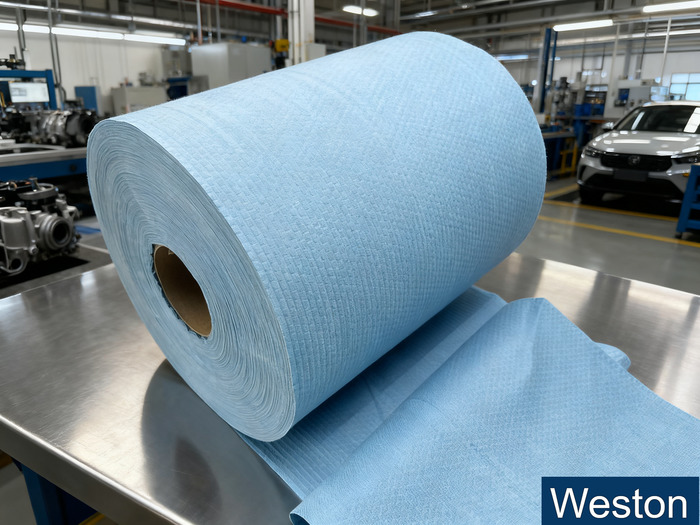
Advanced fabric engineering allows wipes to remain strong under heavy use, absorb oil efficiently, and reduce synthetic residue.
Among the latest material innovations are:
Industrial Grade High Friction Wood Pulp PP Fabric – combining absorbency with minimal shedding for mechanical or oil-cleaning applications.
Durable Dot Bonded Spunlace For Heavy Use – tough, long-lasting wipes ideal for manufacturing environments.
Hexagonal Embossed Industrial Wipes – engineered texture for maximum friction and cleaning precision.
These products demonstrate how sustainability doesn’t have to mean compromise. They prove that durability, performance, and environmental care can exist in the same fabric.
For more information or free samples, contact [email protected].
| Challenge | Consequence | Solution |
| Chemical-heavy products | Water & air pollution | Biodegradable, water-based alternatives |
| Plastic wipes | Microfiber pollution | Wood pulp–based nonwovens |
| Wastewater discharge | Ecosystem damage | Closed-loop systems |
| Short product lifespan | More waste | Durable reusable wipes |
Clean isn’t just a result — it’s a responsibility.
By embracing smarter materials and cleaner chemistry, industries can protect what truly matters: the health of our planet and the integrity of their work.
WESTON
Privacy Policy | SiteMap
Copyright WESTON