- Email: [email protected]


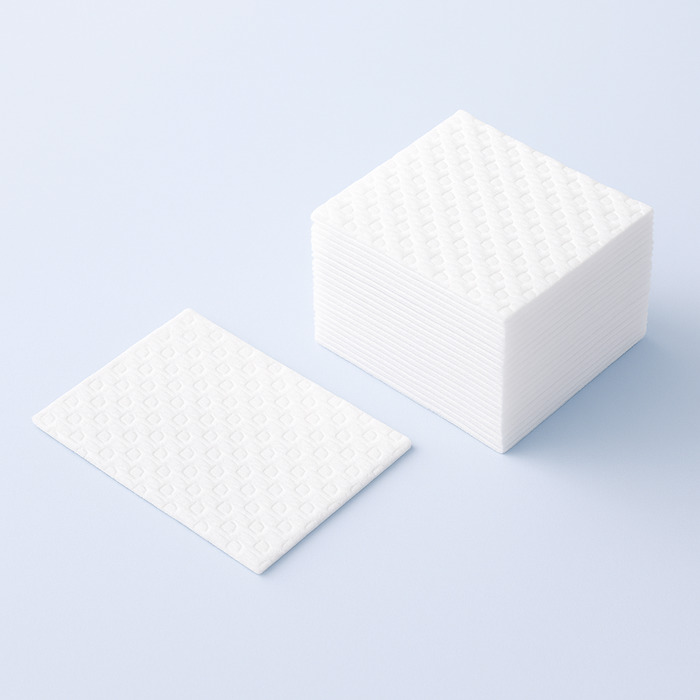
Spunlace nonwoven technology represents a watershed moment in skincare product engineering, revolutionizing how facial masks and treatment products deliver active ingredients to the skin. Unlike woven fabrics or other nonwoven alternatives, spunlace fabrics are created through a sophisticated hydroentanglement process that utilizes high-pressure water jets (typically 50-200 MPa) to mechanically interlock fibers without chemical binders or thermal treatments. This physical bonding mechanism preserves the inherent properties of the constituent fibers while creating a three-dimensional network of micropores and channels that function as a precision delivery system for skincare formulations.
The mechanical engineering behind spunlace technology ensures that the resulting fabric maintains an optimal balance between tensile strength and conformability. When these fabrics are saturated with serums and essences, their structural integrity prevents tearing during application while allowing the material to drape seamlessly over facial contours. This intimate skin contact eliminates air gaps that impede ingredient transfer, creating an occlusive environment that enhances penetration of active compounds through the stratum corneum—the skin’s outermost protective barrier.

The efficacy of spunlace fabrics in skincare applications is fundamentally determined by the molecular properties of their constituent fibers. Different fiber types offer distinct advantages in serum absorption and delivery mechanisms:
The spunlace process creates a hierarchical pore structure within the fabric that operates across multiple scales to optimize serum management. Macropores (10-100 micrometers) between fiber bundles facilitate rapid liquid distribution throughout the entire mask substrate, preventing pool formation in specific areas. Mesopores (1-10 micrometers) within fiber clusters create capillary forces that pull serum toward the skin contact surface. Micropores (0.1-1 micrometer) within individual fibers enable temporary storage of solution molecules until they are released onto the skin.
This multi-scale porosity system explains why spunlace fabrics demonstrate superior absorption-desorption kinetics compared to other delivery substrates. The fabric doesn’t merely absorb serum; it manages the precise release of liquid through a combination of capillary pressure, surface tension, and vapor transmission mechanisms. When applied to skin, the temperature-dependent viscosity changes in the serum formulation combined with the transepidermal water gradient create conditions that promote continuous directional flow toward the skin surface.
Studies comparing application substrates have demonstrated that properly engineered spunlace fabrics can achieve serum transfer efficiencies of 85-95%, meaning that nearly all the absorbed active ingredients are delivered to the skin rather than remaining trapped within the mask after removal. This represents a significant improvement over traditional woven textiles or non-woven alternatives produced through different manufacturing processes.
The biomechanical interaction between spunlace fabrics and human skin contributes significantly to their efficacy in skincare applications. The surface topography of hydroentangled fibers creates optimal contact characteristics that maximize the effective transfer area while minimizing interfacial resistance. This is particularly important for ensuring uniform delivery of active ingredients across irregular facial topography, including the nasal labial folds and periorbital regions.
Advanced spunlace fabrics engineered for skincare applications exhibit friction coefficients typically ranging from 0.15 to 0.25 against human skin—significantly lower than traditional textile materials. This reduced mechanical irritation is crucial for maintaining skin barrier integrity, especially when treating conditions such as rosacea, eczema, or post-procedure sensitivity. The absence of chemical binders in the production process further eliminates potential sources of irritation or allergic reactions.
The occlusive environment created by a well-fitted spunlace mask sheet raises skin surface temperature by approximately 0.5-1.5°C, which modestly increases peripheral blood circulation and temporarily enhances the permeability of the stratum corneum. This thermal effect, combined with the continuous hydration provided by the saturated fabric, can increase the penetration of active ingredients by 2-3 times compared to simple topical application.
Recent advancements in spunlace technology have focused on enhancing the functional properties of these fabrics through fiber selection and processing innovations:
The environmental profile of spunlace fabrics represents both a challenge and opportunity for the skincare industry. Traditional nonwoven production often relies heavily on synthetic fibers derived from petrochemical sources, which present concerns regarding biodegradability and environmental persistence.
In response to these concerns, advanced alternatives have emerged that maintain the performance characteristics of traditional spunlace fabrics while addressing their environmental limitations. Compostable Baby Wipes represent one such innovation, utilizing cellulose fibers from sustainably managed sources that break down completely in industrial composting conditions.
The development of closed-loop production systems for regenerated cellulose fibers used in spunlace fabrics has significantly reduced the environmental impact of these materials. These advanced manufacturing processes recover and reuse over 95% of process solvents, minimizing water consumption and eliminating discharge of potentially harmful chemicals.
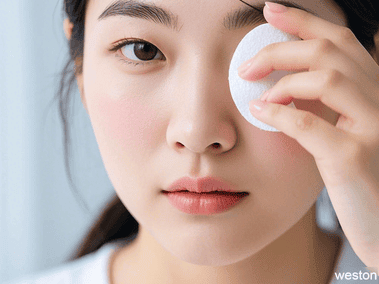
Lifecycle assessments comparing various skincare application substrates have demonstrated that optimized spunlace fabrics can reduce the environmental footprint of skincare treatments by 30-40% compared to conventional alternatives, primarily through reduced material usage and enhanced delivery efficiency that minimizes the quantity of active ingredients required for effective treatment.
The continuing evolution of spunlace technology for skincare applications focuses on increasingly sophisticated approaches to performance optimization:
In professional skincare settings, the selection of appropriate application substrates is recognized as a critical factor influencing treatment outcomes. The advanced performance characteristics of modern spunlace fabrics have made them the substrate of choice for clinical treatments, professional skincare services, and premium home-use products.
The versatility of spunlace technology enables the creation of specialized fabrics optimized for specific skincare applications. For example, products designed for OEM Rayon Facial Wipes Supplier partnerships require different characteristics than those developed for intensive treatment masks. This adaptability demonstrates the capability of modern manufacturing processes to tailor fabric properties to precise functional requirements.
Professional skincare developers recognize that the substrate selection influences multiple aspects of product performance, including stability of active ingredients during storage, ease of application, precision of delivery, and overall user experience. The continued refinement of spunlace fabrics addresses each of these considerations through material science innovations and production process optimizations.
For developers seeking to create advanced skincare products, the selection of appropriate substrate technology represents a critical decision point that significantly influences formulation efficacy, user experience, and environmental impact. Contemporary spunlace fabrics offer an unprecedented combination of performance characteristics that make them particularly suitable for premium skincare applications.
Organizations specializing in advanced nonwoven technologies, such as Weston Manufacturing, provide comprehensive development support including access to technical expertise, performance testing capabilities, and free sample evaluations through [email protected]. These resources enable skincare developers to make informed substrate selections based on empirical performance data rather than marketing claims alone.
The ongoing collaboration between materials scientists, skincare formulators, and manufacturing specialists continues to drive innovation in this field, resulting in progressively more sophisticated fabric technologies that enhance the efficacy, sustainability, and user experience of skincare treatments.
WESTON
Privacy Policy | SiteMap
Copyright WESTON