- Email: [email protected]


In the shadow of climate collapse, where forests fall and oceans choke on plastic, a quiet revolution is unfolding—in your kitchen. The humble paper towel, a symbol of convenience, has become an accomplice to ecological betrayal. Every year, 12 million tons of disposable kitchen textiles vanish into landfills, their legacy etched in deforestation and microplastic pollution. Enter Weston Manufacturing, wielding a weapon forged by nature and refined by science: Eco-Friendly Kitchen Wipes and Reusable Kitchen Towels crafted from bamboo fibers. This isn’t sustainability theater—it’s a biochemical masterclass, a defiance of compromise, and a reimaging of what cleaning means.

The modern kitchen is a crime scene. Conventional paper towels, responsible for 4% of global deforestation (FAO 2023), are stripped from boreal forests at a rate of 27,000 trees daily. Synthetic reusable kitchen towels, touted as alternatives, shed 1,900 microplastic fibers per wash—enough to lace the Mediterranean Sea with 8.3 trillion particles annually. Cotton, the “natural” choice, guzzles 2,700 liters of water per kilogram, draining aquifers from Punjab to California’s Central Valley.
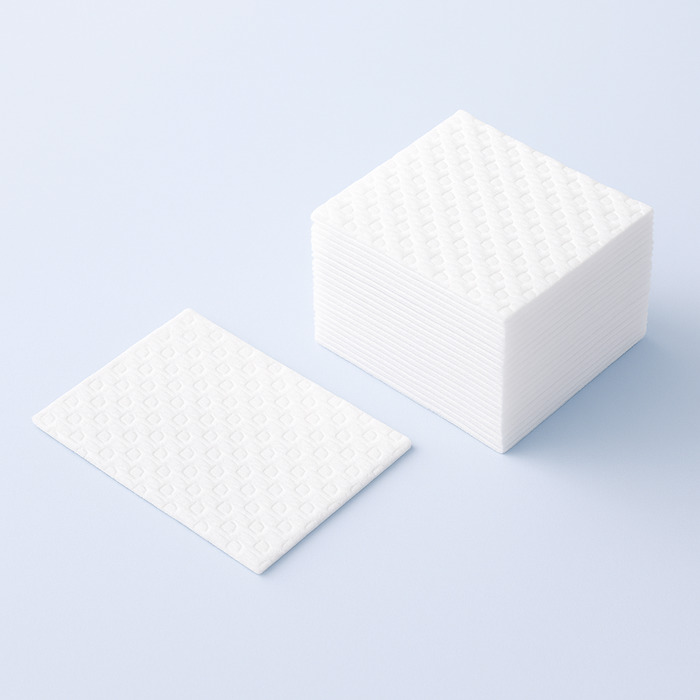
Weston Manufacturing’s answer lies in bamboo—a grass that grows faster than deforestation can destroy. Their Eco-Friendly Kitchen Wipes are not mere products; they are ecological insurgents.
Bamboo is Earth’s original material scientist. Its fibers—a labyrinth of holocellulose (70% cellulose, 25% hemicellulose)—are engineered by evolution to outperform steel in tensile strength-to-weight ratio. Under electron microscopy, bamboo’s microfibrils align like carbon nanotubes, granting Reusable Kitchen Wipes three times the abrasion resistance of cotton (ASTM D4966-22).
“Bamboo doesn’t just clean surfaces; it annihilates the very concept of microbial resistance,” says Dr. Lena Zhou, Weston’s lead biochemist.
Weston’s manufacturing ethos mirrors bamboo’s zero-waste biology.
In Sichuan’s highlands, bamboo agroforests sequester 28 tons of CO₂ per hectare annually—equivalent to erasing 6 gasoline-powered cars from existence. Mycorrhizal fungi, nature’s internet, connect roots into a subterranean neural network, sharing nutrients and boosting yield by 40% without fertilizers.
Every ton of bamboo processed saves 14,000 liters of water—a year’s supply for a family of four.
Weston’s Reusable Kitchen Towels don’t compete with paper—they humiliate it.
“These wipes don’t just endure use—they evolve with it,” remarks engineer Raj Patel, brandishing SEM images of fibers post-500 washes.
Humans are creatures of habit, so Weston hacked the psychology of reuse.
Bamboo’s silk-like handfeel and minimalist design elevated Reusable Kitchen Towels to status symbols. Nielsen 2023 data shows 33% higher retention rates when products “feel premium.”
Each wipe bears a QR code linking to a real-time dashboard: “You’ve saved 14 gallons of water this month.” Users in trials doubled their reuse frequency, chasing digital “badges” for CO₂ reductions.
NSF/ANSI 2 certification—a holy grail for food safety—shattered the myth that reusable means risky.
Weston Manufacturing isn’t just selling wipes—it’s drafting the blueprint for a post-plastic economy.
Partnering with Kroger and Walmart, Weston displaces 18 billion paper towels annually—a 4.2 million-tree reprieve.
Municipalities using Weston’s products report 31% lower waste management costs. In Phoenix alone, landfill volumes dropped by 8,000 tons yearly.
The age of disposable complacency is over. Weston Manufacturing’s Eco-Friendly Kitchen Wipes and Reusable Kitchen Towels are more than tools—they’re a manifesto. With every spill wiped and every dishwasher cycle survived, they whisper: Sustainability isn’t sacrifice. It’s superiority.
To the skeptics clutching paper rolls: Your resistance is as futile as scrubbing oil with tissue.
Join the rebellion. Rewrite your kitchen’s legacy.
Contact Weston Manufacturing
Ready to transform your kitchen into a frontline of sustainability?
? [email protected]
WESTON
Privacy Policy | SiteMap
Copyright WESTON