- Email: [email protected]


Engine assembly is one of those manufacturing processes where “almost clean” is not clean enough. Parts may look spotless to the eye, but microscopic debris, excess oil, or loose fibers can still interfere with tolerances, sealing, and long-term reliability.
Wipes play a quiet but critical role here. They touch engine components repeatedly throughout assembly—often more than tools do. Choosing the right type of wipe is less about brand names and more about understanding materials, structure, and real-world performance.
This article takes a practical, engineering-focused look at what makes a wipe suitable for engine assembly, and what to watch out for when selecting one.

Engine assembly environments are not the same as general workshops. Components are precision-machined, surfaces are functional rather than cosmetic, and many steps rely on controlled lubrication.
During assembly, wipes are commonly used to:
Remove machining fluids and corrosion inhibitors
Clean bearing surfaces and mating faces
Wipe down tools and gloved hands
Absorb excess oil without stripping necessary lubrication
Each of these actions requires control. A wipe that sheds fibers, smears oil, or breaks apart can introduce problems that are difficult to trace later.
Lint is one of the most overlooked risks in engine assembly.
Loose fibers can:
Stick to oil films on metal surfaces
Accumulate in grooves or threads
Become trapped between sealing surfaces
Once the engine is sealed, those fibers don’t disappear. They circulate with oil or remain lodged where they don’t belong.
This is why low-lint performance is non-negotiable. Compared with paper towels or woven rags, well-made spunlace nonwoven wipes release far fewer fibers, even when rubbed hard or soaked with oil.
Softness is often emphasized in consumer wipes, but in engine assembly, strength is more important.
Assembly wipes must:
Resist tearing when wet
Hold together under pressure
Maintain structure during repeated wiping
A wipe that falls apart creates more contamination than it removes. Spunlace nonwovens are valued here because their fibers are hydroentangled, forming a mechanically strong web without chemical binders.
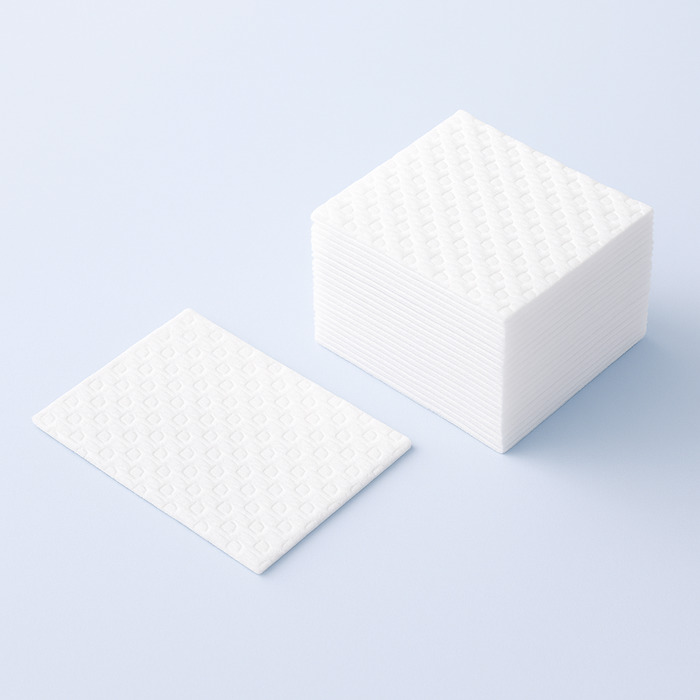
Medium-duty spunlace wipes—such as X70 Similar Medium Duty Workshop Spunlace Wipes—are commonly used because they strike a balance between flexibility and durability, making them suitable for both component cleaning and general assembly tasks.
Absorbency is not simply about soaking up as much liquid as possible.
In engine assembly, wipes should:
Absorb excess oil without leaving streaks
Lift contaminants instead of spreading them
Avoid over-drying surfaces that still require lubrication
Overly absorbent materials can strip away necessary oil films, while low-absorbency wipes tend to smear rather than clean. A balanced fiber blend and controlled web density help achieve the right behavior.
Engine assembly involves contact with a range of substances, including:
Mineral and synthetic oils
Assembly greases
Light cleaning solvents
Wipes must remain stable in these conditions. Some low-quality materials swell, weaken, or release binders when exposed to chemicals, which compromises both cleanliness and safety.
Industrial spunlace wipes are designed to handle these environments, maintaining consistent performance whether used dry or saturated.

Surface texture plays a subtle but important role.
A wipe that is too rough may scratch sensitive surfaces or leave visible marks. One that is too smooth may struggle to pick up particles.
Controlled texture allows the wipe to:
Capture fine debris
Glide over machined surfaces
Provide tactile feedback to the operator
This is why consistent manufacturing is important. Variations in thickness or embossing can change how a wipe behaves from batch to batch.
Reusable cloth rags are still found in some facilities, but they introduce challenges:
Inconsistent cleanliness after laundering
Risk of carrying contaminants between processes
Variable lint and wear over time
Disposable nonwoven wipes offer better process control. Each wipe starts clean, behaves predictably, and is discarded after use. For assembly lines focused on repeatability, this predictability matters.
Medium-duty disposable options like X70 Similar Medium Duty Workshop Spunlace Wipes are often selected because they can replace rags in many tasks without sacrificing strength.
No single wipe is ideal for every assembly step. Some practical pairings include:
Precision surface prep: low-lint polyester or polyester-blend spunlace
General wipe-downs: wood pulp/polyester blends for higher absorbency
Tool and hand wiping: medium-duty spunlace with good wet strength
Understanding where and how the wipe will be used helps avoid over-specifying or underperforming.
Several selection mistakes show up repeatedly in workshops:
Using household paper products due to convenience
Choosing wipes based on softness rather than lint performance
Ignoring fiber composition and manufacturing method
Mixing different wipe types within the same assembly process
These shortcuts often lead to inconsistent results and hidden contamination risks.
Not all spunlace wipes are the same. Fiber selection, web formation, and hydroentanglement pressure all affect final performance.
As a water-jet entangled nonwoven manufacturer, Weston Manufacturing focuses on producing spunlace materials designed for industrial handling rather than consumer comfort. Products aligned with X70 Similar Medium Duty Workshop Spunlace Wipes specifications are engineered for controlled lint, stable strength, and repeatable performance—qualities that matter more on an assembly line than on a store shelf.

WESTON
Privacy Policy | SiteMap
Copyright WESTON