- Email: [email protected]


Let’s be honest—before 2020, most of us never gave a second thought to the material inside a face mask. It was just a flimsy piece of white fabric. But that unassuming layer is actually a marvel of modern engineering. It’s the difference between breathing in clean air and inhaling a cocktail of dust, allergens, and microscopic invaders.
This layer is the Melt Blown filter. It is the heart of every N95 mask, the engine of your air purifier, and the unsung hero that keeps modern industry running cleanly. But what exactly is it? And why do engineers treat this chaotic mess of plastic fibers like gold?
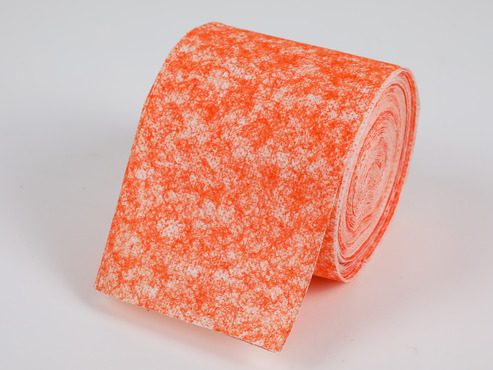
To understand melt blown fabric, you have to forget everything you know about traditional textiles. Your t-shirt is woven; it has a pattern, a structure, and predictable gaps. Melt blown fabric is the rebel of the textile family. It is a “non-woven” material, meaning there are no knots, no weaves, and no order.
Imagine a machine that acts like a high-tech, industrial-grade cotton candy maker. It takes solid polypropylene beads (a common plastic) and melts them down. Then, it blasts this molten goo with high-velocity hot air. This explosion of air stretches the plastic into incredibly fine filaments—far thinner than a human hair—and sprays them onto a moving belt.
The fibers land in a random, hot mess. They are still sticky enough to bond together without any glue. The result is a web of chaos. And in the world of filtration, chaos is exactly what we want.
Why is randomness better than order? If you build a fence with perfectly spaced slats (like a woven fabric), anything smaller than the gap gets through. But if you pile up a chaotic thicket of brambles (melt blown fabric), there is no straight path through.
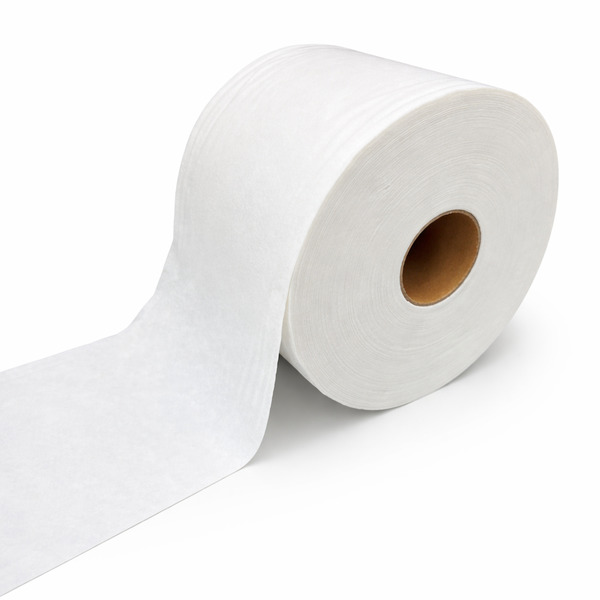
The fibers in a Meltblown Nonwoven Filter Fabric are typically 1 to 5 microns in diameter. For context, a human hair is about 75 microns thick. To a dust particle or a bacterium, entering this filter is like walking into a dense, impenetrable forest.
This creates a “tortuous path.” A particle can’t just fly straight through; it has to dodge and weave around thousands of fibers. Eventually, it crashes into one and gets stuck. This is mechanical filtration at its finest—a physical trap created by density and disorder.

But here is the catch: if you make the forest too dense, air can’t get through either. You would be safe, but you would suffocate. Engineers solved this paradox with a brilliant trick: they electrified the forest.
High-quality melt blown filters are “electrets.” During manufacturing, they are given a permanent electrostatic charge.
Think of rubbing a balloon on your hair. The static electricity makes your hair stick to the balloon. This filter works the same way. It acts like a magnet for microscopic particles. Viruses, smoke, and fine dust are often too light to be caught by the physical web alone, but they cannot escape the static pull. They are sucked out of the air stream and locked onto the fibers.
This is why a thin, breathable mask can block 95% or 99% of tiny particles. It’s not just a net; it’s a force field.
As the chart above illustrates, the “electret” effect is a game-changer. While a standard mechanical web struggles to catch the tiniest viral particles (0.1 µm), the charged melt blown layer captures them with near-perfect efficiency.
Like any engineered material, melt blown fabric has its kryptonite. It is effective, but it is fragile.
The Weakness: It has very little physical strength. You can tear it apart with your hands easily. That is why it is almost always sandwiched between two layers of stronger “spunbond” fabric (the scratchy outer layers of a mask) to protect it.
The Enemy: Liquid. Alcohol, soap, and water are the enemies of the electrostatic charge. If you wash an N95 mask, you aren’t just cleaning it; you are neutralizing its static “magnet.” It turns from a high-tech shield back into a simple plastic net, drastically reducing its efficiency.
The Environmental Cost: It is made of polypropylene, which is a plastic. While it saves lives and protects machinery, we must be clear-eyed about the waste it generates. The industry is currently racing to develop biodegradable alternatives, but for now, responsible disposal is our only option.
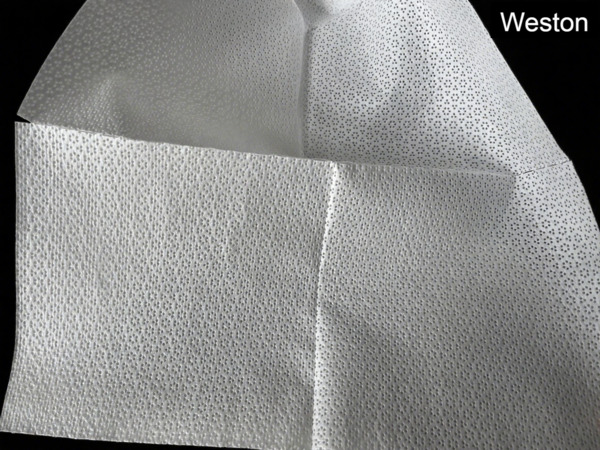
While masks made it famous, this material is working silently in corners of your life you rarely see.
Because manufacturing this material requires such precise control over air velocity and temperature, not all melt blown fabric is created equal. Consistency is key. A filter with “holes” in its randomness is useless.
This is where specialized manufacturers come into play. Factories like Weston Manufacturing have refined the “spunlace” and meltblown processes to an industrial art. Whether it is for medical-grade protection or industrial filtration, sourcing high-quality Meltblown Nonwoven Filter Fabric ensures that the “chaos” is uniform, the electrostatic charge is stable, and the protection is real. When you are dealing with microns, there is no margin for error.
Next time you change the filter in your AC or slip on a fresh mask, take a second to appreciate the technology in your hands. It isn’t just a piece of paper. It is a charged, engineered, microscopic labyrinth designed to bring order to a chaotic world. It’s simple, it’s effective, and it’s protecting you right now.
WESTON
Privacy Policy | SiteMap
Copyright WESTON