- Email: [email protected]


Clean water systems depend on simple components that quietly do essential work. One of the most overlooked is the melt blown sediment filter. It does not change water chemically. It does not sterilize. Its role is more fundamental: it removes solid particles. Without it, downstream systems clog faster, wear out sooner, and perform less reliably.
This article explains what a melt blown sediment filter is, how it works, and why its material structure makes it effective.
Conclusion:
A melt blown sediment filter removes suspended particles such as rust, sand, and dirt using a thick, porous fiber structure that captures contaminants throughout the filter body, not just on the surface.
Data and structural facts:
Typical particle removal range: 1 to 50 microns
Common target contaminants:
Rust particles from aging pipes (5–100 microns)
Sand and silt (10–200 microns)
Pipe scale fragments (20–500 microns)
Filter structure thickness: typically 10–40 mm radial depth
Material: usually 100% polypropylene meltblown fibers
Unlike screen filters, which block particles at one layer, melt blown filters use depth filtration. This means particles are captured progressively as water flows inward.

Conclusion:
The melt blown manufacturing process produces ultrafine fibers with controlled density, allowing precise filtration performance and high particle retention capacity.
Data and process characteristics:
Fiber diameter range: 1 to 10 microns
Random fiber orientation increases capture probability
Porosity typically ranges from 70% to 90%
Density gradient design:
Outer layer: captures larger particles
Inner layer: captures finer particles
Why this matters:
This gradient density structure improves dirt-holding capacity. Instead of clogging at the surface, particles are distributed throughout the filter thickness.
Case comparison:
Surface filter: clogs quickly once outer layer is blocked
Melt blown depth filter: distributes particles across full volume
Result: up to 2–4× longer service life under similar sediment load conditions
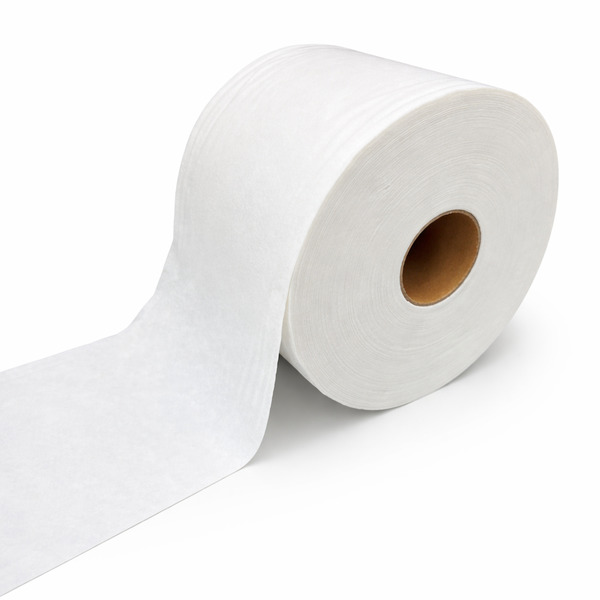
The performance of these filters depends directly on the quality of the underlying Meltblown Nonwoven Filter Fabric. Fiber diameter consistency and structural uniformity determine how predictably the filter performs.
Conclusion:
Micron rating is the most important technical specification because it determines filtration precision.
Data reference table:
| Micron Rating | Particle Removal Capability | Typical Use Case |
| 50 micron | Visible sand, coarse debris | Well water pre-filtration |
| 25 micron | Fine sand, pipe scale | Whole house pre-filtration |
| 10 micron | Rust, fine sediment | Residential protection |
| 5 micron | Fine particulate matter | Reverse osmosis pre-filtration |
| 1 micron | Very fine suspended solids | Industrial process protection |
Case example: Reverse osmosis system protection
Reverse osmosis membranes contain microscopic pores typically below 0.001 microns. However, sediment particles larger than 5 microns can accumulate on membrane surfaces and reduce efficiency.
Installing a 5-micron melt blown sediment filter upstream significantly reduces fouling and extends membrane service life.
Conclusion:
Polypropylene is used because it is chemically inert, structurally stable, and compatible with water filtration environments.
Material performance facts:
Operating temperature range: typically up to 80°C
Resistant to:
Does not release fibers under normal operating conditions
Case example: municipal water pre-filtration
Municipal water often contains residual corrosion particles from distribution pipes. Polypropylene melt blown filters maintain structural integrity under continuous exposure and do not degrade or dissolve.
This stability is why Meltblown Nonwoven Fabric manufacturer production quality directly affects filter reliability. Uniform fiber bonding ensures predictable filtration behavior.
Conclusion:
Depth filtration allows melt blown sediment filters to hold more contaminants before flow restriction occurs.
Performance data:
Dirt holding capacity: typically 10 to 50 grams per 10-inch cartridge
Pressure drop increase occurs gradually, not suddenly
Flow rate stability improves system reliability
Case example: commercial building water system
In a medium-size office building using 10-micron melt blown filters:
Without sediment filtration: valve maintenance every 3 months
With sediment filtration: maintenance interval extended to 9–12 months
This reduces labor and replacement costs while improving system reliability.
Conclusion:
These filters act as a protective barrier, preventing physical contaminants from damaging more sensitive components.
Systems commonly protected:
Reverse osmosis membranes
UV sterilization units
Carbon filters
Pumps and valves
Industrial processing equipment
Case example: industrial cooling system
Cooling systems circulate large volumes of water continuously. Sediment accumulation reduces heat transfer efficiency and increases wear.
Installing melt blown sediment filters reduces particulate concentration and improves long-term equipment performance.
Conclusion:
Filter effectiveness depends on the consistency and engineering quality of the meltblown nonwoven fabric used.
Key manufacturing variables:
Inconsistent fabric leads to uneven filtration and unpredictable lifespan.
Companies such as Weston Manufacturing produce engineered Meltblown Nonwoven Filter Fabric designed for industrial and water filtration applications. Controlled meltblown production ensures stable pore structure and consistent filtration behavior.
This material is also used in applications such as:
The same fiber engineering principles apply across these filtration environments.
Conclusion:
These filters remove solid particles but do not remove dissolved chemicals or microorganisms effectively.
What they remove:
Sediment
Rust
Sand
Suspended solids
What they do not remove:
Viruses and bacteria (unless extremely fine-rated and combined with other technologies)
Case clarification:
A melt blown filter improves water clarity but does not make chemically contaminated water safe. It is one stage within a multi-stage filtration system.
Conclusion:
Filter lifespan varies based on water quality and usage conditions.
Typical replacement intervals:
Residential use: 3–6 months
Industrial use: depends on sediment concentration and flow volume
Operational indicator:
Increasing pressure drop across the filter indicates sediment accumulation.
Case example: well water vs municipal water
Well water: higher sediment load → shorter filter life
Municipal water: lower sediment load → longer filter life
This variability reflects actual operating conditions rather than manufacturing defects.
Their strength lies in structural engineering rather than complexity. Melt blown fibers create a controlled filtration pathway that removes sediment efficiently while maintaining stable water flow. This makes them a foundational component in modern water filtration systems.
Behind every effective sediment filter is a precisely engineered meltblown nonwoven structure. Advances in Meltblown Nonwoven Filter Fabric production continue to improve consistency, reliability, and filtration accuracy, reinforcing the role of melt blown technology as a practical and scalable solution in both residential and industrial water treatment.

WESTON
Privacy Policy | SiteMap
Copyright WESTON