- Email: [email protected]


Medical grade tape is a deceptively simple material with an extraordinarily complex design purpose: to secure, protect, and support the human body without causing harm. Though it might appear as just another adhesive strip, it represents a synthesis of chemistry, biomedical engineering, and material science. Understanding what makes a tape “medical grade” requires exploring not only its structure and performance but also the principles of safety, skin biology, and precision manufacturing that define it.
At its core, medical grade tape is a pressure-sensitive adhesive system designed for contact with skin or medical devices. Its adhesive must be strong enough to stay in place, yet gentle enough to avoid damaging the skin barrier upon removal.
Unlike industrial tapes, medical grade versions are engineered for biocompatibility — meaning they can maintain prolonged skin contact without triggering allergic or inflammatory responses. This is achieved through the careful balance of polymer selection, coating uniformity, and surface energy control.
Scientifically, the key lies in adhesive rheology: the way a material deforms under stress. Medical-grade adhesives are formulated to be viscoelastic, allowing them to conform to micro skin contours and move with the body’s natural motion. This flexibility is essential in wound care, surgical dressing, and wearable sensors.
(Suggested figure: Rheology curve showing peel strength vs. contact time for medical vs. general-purpose tape.)
A typical medical grade tape consists of several functional layers:
Backing substrate — provides structural support (e.g., polyurethane film, paper, or spunlace nonwoven).
Adhesive layer — determines tack, peel, and repositioning properties.
Release liner — protects the adhesive before use.
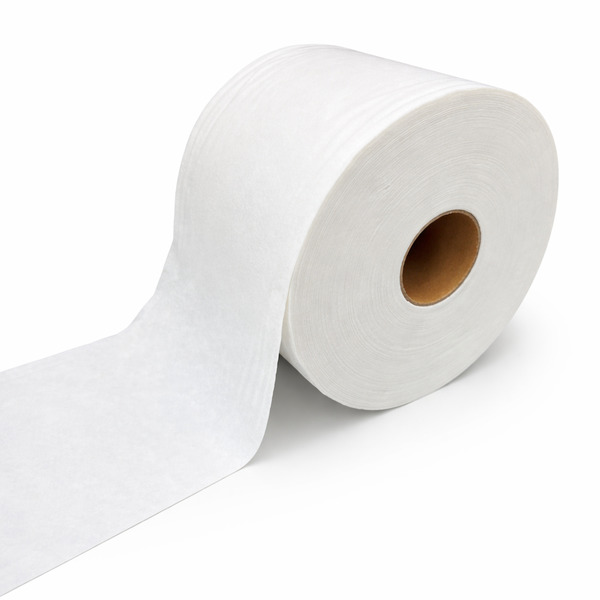
Each layer is precisely engineered. The backing must be soft, breathable, and durable under stress. Nonwoven substrates, particularly spunlace, have become dominant in this field due to their unique combination of softness, tensile stability, and moisture control.
At Weston Manufacturing, the integration of Medical Grade Spunlace Tape technology demonstrates how advanced nonwoven fiber bonding can achieve both strength and comfort. These materials allow oxygen and vapor to pass while maintaining excellent adhesive anchoring, ensuring patient comfort even under extended wear.
(Suggested table: Comparison of substrate types — film, woven, nonwoven — in terms of breathability, elasticity, and biocompatibility.)
The term “medical grade” extends far beyond mere material purity. It reflects an entire ecosystem of scientific and manufacturing standards:
Biocompatibility – The tape must not irritate, sensitize, or damage living tissue.
Controlled Cleanroom Production – Particle and microbial contamination must be minimized.
Consistent Adhesive Strength – Small variations can lead to failure in wound closure or device fixation.
Sterilization Compatibility – The tape should withstand common sterilization methods without degradation.
In addition, the surface energy of the substrate determines how the adhesive interacts with both skin oils and moisture. Advanced surface treatments, such as plasma or corona modification, are often used to optimize bonding while keeping the skin’s microenvironment stable.
Weston Manufacturing’s expertise in Nonwoven Fabric For Medical Protective Clothing contributes to this process. The same scientific control over fiber cleanliness, hydrophilic balance, and mechanical integrity ensures that medical tapes perform reliably across surgical and clinical applications.

Medical grade tapes must perform under demanding physiological conditions. Human skin is flexible, moist, and continuously regenerating. Therefore, the tape must be:
Elastic enough to adapt to skin movement.
Breathable enough to prevent sweat accumulation.
Strong enough to maintain adhesion through mechanical friction and perspiration.
A common design challenge is to maintain adhesive performance over curved or mobile areas — such as joints or facial regions — without wrinkling or edge lifting. Here, spunlace nonwoven backings excel. Their fiber entanglement creates a soft, cloth-like structure with superior drapability and air permeability.
Meanwhile, the adhesive’s hydrophobic balance determines its resistance to water exposure. Formulators often blend acrylic or silicone polymers to fine-tune this property, ensuring that the tape can remain intact during washing, sweating, or sterilization.
(Suggested figure: Skin microenvironment model showing vapor transmission and adhesion performance.)
Originally intended for wound dressing and surgical draping, medical tapes are now integral to modern healthcare systems. Key applications include:
Wound Care: Fixation of dressings, gauze, and compression pads.
Surgical Use: Holding drapes and securing equipment in sterile zones.
Wearable Devices: Attaching biosensors, transdermal patches, and monitoring electrodes.
Post-Operative Support: Securing tubing, catheters, or protective films.
The growing trend of wearable health technology has created new demand for tapes that can flex, stretch, and breathe for several days without irritation. This evolution pushes adhesive science into a frontier where biochemistry meets electronics.
Weston Manufacturing’s Medical Grade Polypropylene Meltblown Fabric is part of this progression. With its ultrafine fiber structure and uniform web density, meltblown nonwovens deliver high filtration efficiency, clean surface texture, and excellent compatibility with medical-grade adhesives — a crucial factor for both tape and protective equipment applications.
High biocompatibility: Safe for direct skin contact, minimizing irritation.
Superior breathability: Maintains skin microclimate for comfort and faster healing.
Flexibility: Adapts to human motion without loss of adhesion.
Versatility: Compatible with multiple substrates and sterilization methods.
Precision engineering: Designed to meet clinical performance requirements under variable humidity and temperature.
Sensitivity to environment: Extreme temperature or moisture can affect adhesive stability.
Production complexity: Requires controlled environments and specialized materials.
Sustainability challenge: Synthetic polymers used in adhesives may require improved recyclability.
Future research is already addressing these challenges through biodegradable nonwovens, solvent-free coatings, and natural polymer adhesives that combine performance with ecological responsibility.
(Suggested table: Pros and Cons comparison between medical grade and industrial adhesive tapes.)
Emerging technologies are reshaping the future of medical-grade materials.
Bio-responsive adhesives adapt adhesion strength based on temperature or moisture.
Nanofiber-reinforced nonwovens enhance strength and breathability simultaneously.
Sustainable polymer systems replace petrochemical bases with plant-derived or compostable options.
Integration with electronics allows real-time monitoring of skin health via conductive fibers.
Weston Manufacturing continues to explore these innovations through the refinement of Medical Grade Spunlace Tape and other advanced nonwoven materials. Its research combines traditional spunlace web formation with precision coating and fiber surface engineering, pushing medical-grade performance into new territories of safety, softness, and sustainability.
What seems like a simple strip of tape represents decades of interdisciplinary research. Every layer, from the Nonwoven Fabric For Medical Protective Clothing to the Medical Grade Polypropylene Meltblown Fabric, contributes to the integrity of patient care and safety.
Medical grade tape stands as a quiet testament to how engineering and empathy can coexist — where material precision serves human well-being. Behind every sterile dressing and secure sensor lies a web of fibers, polymers, and science meticulously woven together.
For further technical consultation or free sample requests, contact Weston Manufacturing at
[email protected].
WESTON
Privacy Policy | SiteMap
Copyright WESTON