- Email: [email protected]


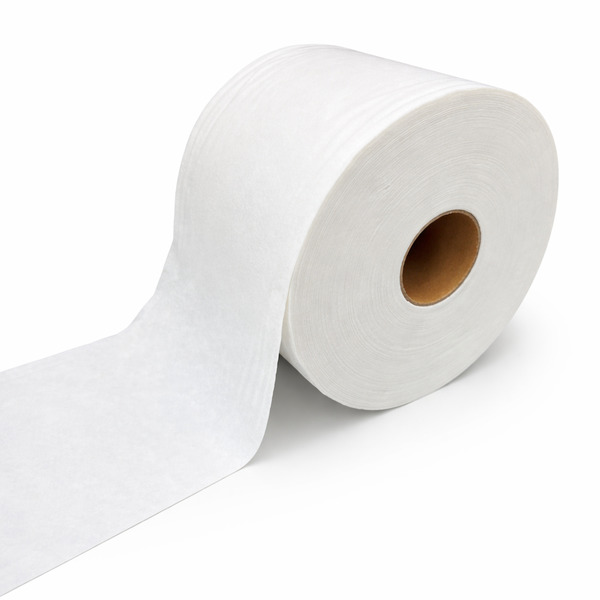
Meltblown nonwoven is one of those materials we all depend on without realizing it. It sits quietly inside air purifiers, medical masks, oil-absorbent pads, and even some disposable wet wipes—working hard behind the scenes while staying practically invisible. At its core, meltblown is a sheet of ultrafine microfibers, produced by blowing molten polymer through tiny nozzles using high-velocity hot air.
The result is a delicate, cloud-like fiber web with a huge surface area, tiny interconnected pores, and an almost magical ability to trap particles, absorb oil, and maintain lightweight softness. In the world of nonwovens, meltblown is the specialist—the one you call when you need precision filtration, fine particle control, or efficient absorption.
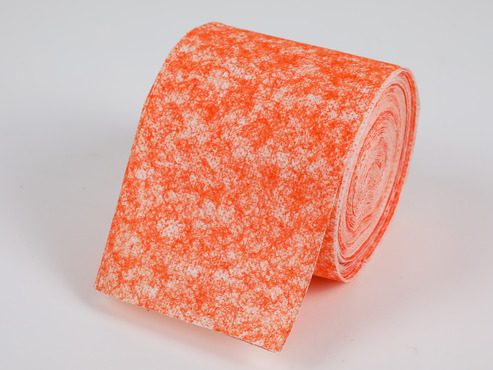
Even though the technology looks sophisticated, the process itself follows a simple, powerful idea: stretch melted polymer into extremely thin fibers before they land on a collector.
Here’s the flow in plain, science-friendly terms:
Polymer pellets—most commonly polypropylene—are melted into a viscous fluid.
The molten polymer is pushed through a series of microscopic spinneret nozzles.
Jets of hot, high-speed air hit the polymer as it exits, blowing it outward into microfibers that can be thinner than 1 micron.
These fibers drift downward and form a random web on a moving mesh belt.
The web bonds naturally through thermal adhesion, or receives additional bonding depending on the final performance requirements.
Because meltblown fibers are so thin and loosely arranged, the resulting fabric has exceptional porosity. This pore structure is the secret to why meltblown works so well in filtration, oil control, and moisture management.
Meltblown isn’t just technical—it’s practical. Its structure gives it a collection of advantages that many other nonwovens can’t match.
High filtration efficiency: The fine fiber diameter creates a dense network capable of capturing dust, droplets, bacteria, and even aerosols.
Electrostatic charge capability: Meltblown can be treated to hold a strong electret charge, improving its ability to trap particles without restricting airflow.
Lightweight softness: Despite its strong filtration power, meltblown remains soft and smooth.
Excellent oil absorption: The structure allows fast wicking and high uptake capacity, making it ideal for spill control.
Uniform micro-pore structure: Delivers predictable and consistent performance, especially valuable in regulated industries such as medical and HVAC filtration.
Customizable basis weight: From ultra-light 15 gsm layers to heavy industrial grades, meltblown can be engineered for very different jobs.
No material is perfect, and meltblown has trade-offs worth noting:
Lower mechanical strength compared with spunbond or spunlace, especially when wet.
Higher production cost due to complex equipment and fine fiber control.
Sensitive to humidity when used as electret meltblown, which can reduce filtration efficiency over time.
Not designed for reusable applications, since repeated washing collapses the fiber network.
Understanding these pros and cons is key to selecting meltblown for the right jobs—and switching to other nonwovens when durability or strength matters more than filtration.
Because of its unique microstructure, meltblown material shows up in an impressive range of fields:
The middle filtering layer of surgical masks and respirators often comes from meltblown. Its ability to trap airborne particles with minimal breathing resistance is unmatched.
Oil absorbent rolls, chemical wipes, and spill-response pads rely on meltblown’s fast uptake and high absorption capacity. Some factories also use meltblown-based cloths for machine maintenance, especially when precision cleaning matters.
From home air purifiers to industrial dust collectors, meltblown is central to the filtration system. Its tiny fibers create countless pathways for trapping fine particles.
Meltblown can be engineered to work inside disposable cleaning cloths—especially wipes designed to trap grease, fine dust, or cosmetic residues. Innovative producers like Weston Manufacturing also use meltblown layers in Meltblown Nonwoven For Disposable Wet Wipes, improving pick-up efficiency without adding weight.

Battery separators and certain fuel filtration media incorporate meltblown thanks to its stability and fine pore control.
These diverse applications show how meltblown quietly supports modern life by doing precision work where it matters most.
To understand meltblown’s role, it helps to see how it stacks up against common alternatives:
Spunbond: Much stronger and more durable but lacks fine filtration capability.
Spunlace: Cloth-like, soft, and absorbent—great for wipes, not ideal for filtration.
Airlaid: Excellent in bulk absorption but too coarse for fine particle control.
Meltblown stands out when filtration efficiency or oil absorption is the top priority. It becomes even more effective when combined with other nonwovens in multilayer structures, such as SMS (spunbond–meltblown–spunbond) fabrics or hybrid wipes.
If you hold meltblown up to the light, a few things help you judge its quality:
A uniform web with minimal fiber clumping
Stable GSM and consistent thickness
Clean pore distribution without large holes
Adequate mechanical strength for the intended use
Reliable filtration efficiency testing data
Strong and stable electret charge (for filtration grades)
Producers focusing on filtration, cleaning, and industrial uses invest heavily in consistency. Some manufacturers—such as Weston Manufacturing—supply specialized grades like High Efficiency Meltblown Nonwoven Fabric, tested for precision filtration and optimized for uniformity. Free samples for testing can be requested at [email protected].
The global spotlight during recent years reminded everyone how essential meltblown really is. But its importance goes far beyond respirators and medical supplies. Industries now rely on meltblown for clean air systems, cleaner production lines, safer industrial operations, and more hygienic everyday products.
Its power lies in understated science: microfibers arranged in a way that gives them capabilities far greater than their weight. Meltblown may not look impressive at first glance, but its impact is quietly woven into the systems and materials that keep daily life running smoothly.

WESTON
Privacy Policy | SiteMap
Copyright WESTON