- Email: [email protected]


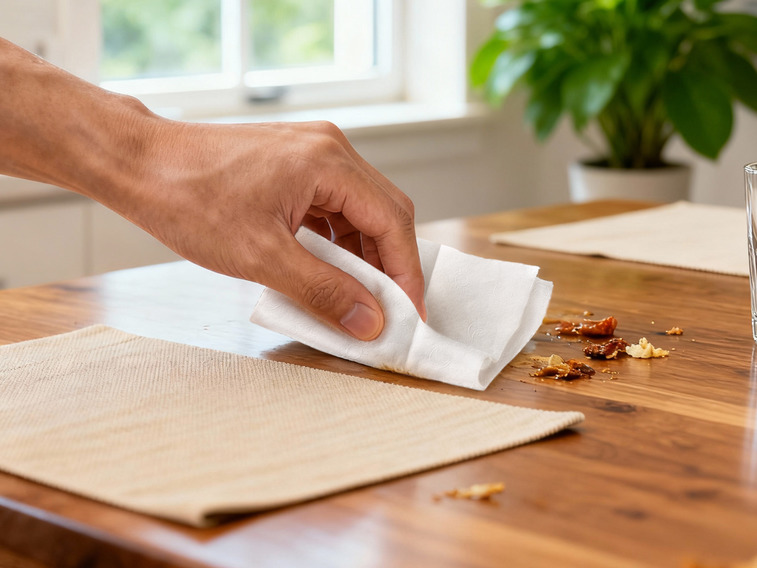
You grab whatever is nearby—an old t-shirt, a paper towel, a rag from under the sink. You spray, you wipe, and… you’re just smearing dirt around. Sound familiar?
Most people blame the cleaner. But here’s the truth: the cloth matters more than the spray.
Walk down any store aisle and you’ll see microfiber, cotton, terry cloth, sponges, disposable wipes. It’s overwhelming. And the marketing labels don’t help—”premium,” “ultra-soft,” “heavy-duty”—they tell you nothing about what actually works.
Let’s cut through the noise. This isn’t about brand names or fancy packaging. This is about how different materials actually behave on your surfaces—the science of lift, grab, and absorption. By the end, you’ll know exactly which cloth to grab for every single job.
Before comparing materials, you need to understand what a cleaning cloth actually does. It’s not complicated. Three things matter.
Look at a paper towel touching a puddle of water. The water climbs upward, right? That’s capillary action—liquid traveling through tiny channels in the fibers. A good cleaning cloth creates thousands of these microscopic channels that pull liquid off your counter and trap it inside the fabric.
No capillary action means you’re just pushing water around.
Ever wonder why dust sticks to some cloths and flies off others?
Static electricity.
Certain materials generate a charge when they move across a surface. This charge acts like a magnet, pulling dust particles toward the fibers and holding them there. Without it, you’re just launching dust into the air.
Dirt sticks to surfaces. Grease bonds.
You need physical grip to break that bond. But there’s a fine line between lifting grime and scratching your phone screen.
The ideal cloth has fibers firm enough to grab onto dirt particles but soft enough that they won’t damage what’s underneath.
The perfect cleaning cloth balances all three:
it pulls liquid in, grabs dust magnetically, and lifts grime without scratching.
Let’s look at the actual contenders. No fluff. Just what each material does well and where it fails.
Cotton is everywhere. Old t-shirts, dish towels, rags cut from bedsheets. It’s natural, soft, and absorbent.
Where it shines
Cotton drinks up water. Those natural fibers create strong capillary action, so spills disappear quickly. It’s also gentle—you won’t scratch most surfaces with cotton.
Where it fails
Cotton leaves lint. Wipe a mirror with an old cotton rag and you’ll see tiny fibers everywhere.
It also has almost no static charge, so dust just moves around rather than getting trapped. And when cotton gets wet, it tends to stay wet, which means you’re sometimes smearing instead of lifting dirt.
Bottom line
Cotton works well for drying hands or wiping counters with soap. For glass, mirrors, or dusting, it’s not the best option.
Microfiber isn’t natural. It’s synthetic—usually polyester and polyamide (nylon) split into ultra-fine strands.
We’re talking fibers about 1/100th the diameter of a human hair.
Where it shines
Those split fibers create a star-shaped profile with microscopic “hooks” that grab dirt at the particle level.
The electrostatic charge pulls dust in like a magnet. The capillary action is also impressive—microfiber can absorb up to seven times its weight in water.
Where it fails
Cheap microfiber is often disappointing. Low-quality versions don’t split the fibers properly, so you’re essentially wiping with smooth plastic.
Another common mistake: using fabric softener. The waxy coating clogs the fiber structure and destroys the static charge.
Bottom line
High-quality microfiber often cleans better with just water than cotton does with chemicals. But quality matters enormously.
These are nonwoven fabrics—engineered sheets rather than woven cloth.
They combine wood pulp (cellulose) for absorption with polyester for structural strength.
Where it shines
These blends hit a practical sweet spot. The cellulose rapidly pulls in liquids—often up to 185% of the fabric’s weight.
The polyester adds tear resistance, even when wet. Because the fabric is nonwoven, it typically produces far less lint than traditional cotton cloths.
Where it fails
They are usually disposable or designed for limited reuse. They’re not as durable as premium microfiber.
They also lack the electrostatic dust-grabbing ability that microfiber has.
Bottom line
For workshops, garages, kitchens, or facility cleaning where durability and cost matter, these are a very practical choice.
Terry cloth is easy to recognize—it has loops. Lots of them.
Think bath towels.
Where it shines
Those loops dramatically increase surface area. That makes terry cloth good for scrubbing without applying much pressure.
It also holds a lot of water and feels substantial in the hand.
Where it fails
Like cotton, terry cloth sheds lint. The loops can also snag on rough surfaces.
Because it’s bulky, it isn’t ideal for detailed cleaning or tight spaces.
Bottom line
Terry cloth works well for drying dishes or wiping down cars, but it’s not designed for streak-free finishes.

Let’s be honest—almost everyone uses paper towels.
Where it shines
Convenience. You use it once and throw it away.
It’s also hygienic for messes you don’t want to touch twice.
Where it fails
The cost adds up quickly, and the environmental impact is real.
Most paper towels break down when wet, leaving lint and small paper fragments. They also lack electrostatic attraction, so dust and dirt often get pushed around instead of captured.
Bottom line
Paper towels are useful for biohazards or unpleasant spills. But for everyday cleaning performance, they’re usually the least effective option.
Here’s the reality, simplified.
| Material | Absorbency | Lint? | Scratch Risk | Static Grab | Best For | Avoid For |
| Cotton | High | Yes | Low | None | Spills, drying, applying polish | Glass, mirrors, electronics |
| Microfiber (Quality) | Very High | No | Very Low | Excellent | Glass, dusting, screens, stainless steel | Heavy grease |
| Cellulose/Polyester Blend | High | Very Low | Low | None | Workshops, grease, industrial cleaning | Delicate surfaces |
| Terry Cloth | High | Yes | Low–Medium | None | Drying, scrubbing, automotive | Streak-free finishes |
| Paper Towel | Medium | Yes | Low–Medium | None | Biohazards, one-off messes | Daily cleaning |
The key takeaway is simple:
No single cloth does everything well.
The best results come from using the right material for the job.
For glass and mirrors
Use quality microfiber. Lightly dampen the cloth, wipe in one direction, then buff dry with a second microfiber cloth.
For dusting
Use dry microfiber. The static charge pulls dust into the fibers rather than pushing it around the room.
For kitchens and grease
Cellulose/polyester blends or disposable wipes work better. Grease can clog microfiber fibers permanently.
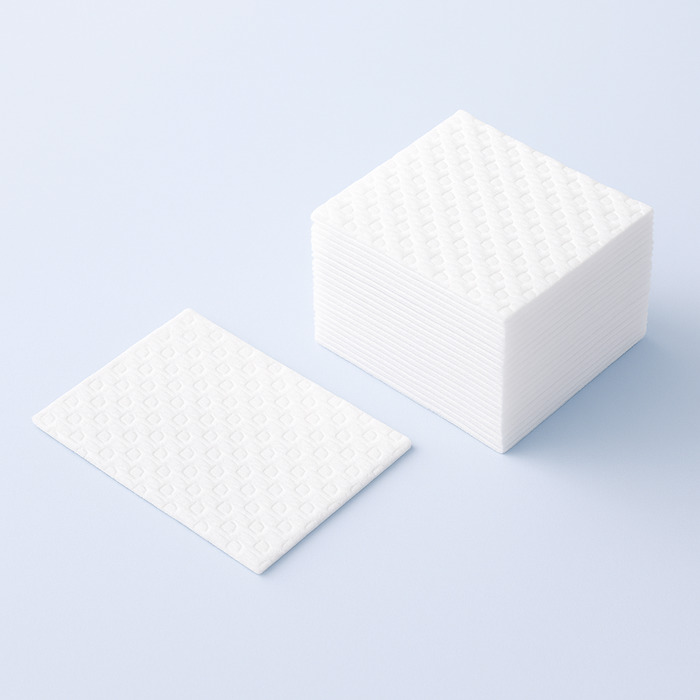
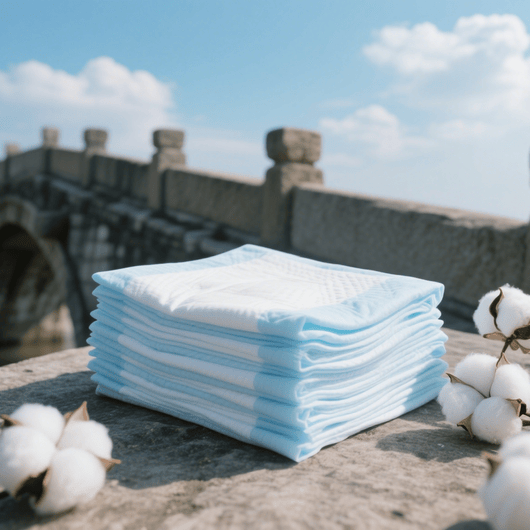
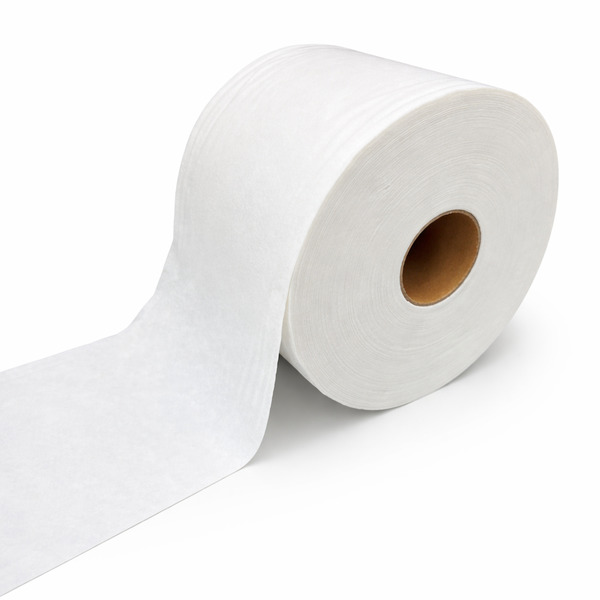
Industrial wipes such as Weston Manufacturing’s General Purpose Cleaning Fabric are designed to absorb grease while maintaining structural strength.
For bathrooms
Microfiber works well with disinfectant cleaners for tiles, sinks, and chrome.
For heavily contaminated areas, disposable wipes remain the safer option.
For electronics
Low-lint nonwoven fabrics are safest for screens and delicate equipment.
Products like Weston Manufacturing’s Interfold Nonwoven Industrial Cleaning Cloths are designed for controlled environments and sensitive surfaces.
For workshops and heavy grease
Cellulose/polyester blends or heavy-duty nonwoven wipes perform best. They tolerate solvents, oil, and repeated scrubbing without falling apart.
Let’s talk about fabric softener.
Fabric softener coats fibers with a waxy layer to make them feel smooth.
On cotton, this mostly affects absorbency.
On microfiber, it’s much worse.
That wax fills the microscopic structure of the fibers and destroys the electrostatic charge that allows microfiber to grab dust.
Your high-performance cloth instantly becomes a regular rag.
Better cleaning cloth care
Wash with hot water
Avoid fabric softener
Avoid excessive bleach
Air dry or tumble dry on low heat
If microfiber stops absorbing water, it’s often because the fibers were coated or overheated.
There isn’t a single “best” cleaning cloth material. The best choice always depends on the surface and the type of mess you’re dealing with.
For streak-free shine on glass, mirrors, and screens, high-quality microfiber remains the most effective option.
For grease, workshops, and industrial cleaning, cellulose/polyester blends provide the durability and absorption needed for tough jobs.
For general wet cleaning, microfiber or cotton both work, depending on how delicate the surface is.
For dusting, dry microfiber stands out because its static charge actually captures dust instead of spreading it.
And when disposable convenience matters—especially for unpleasant or hygienic cleanup—paper towels or nonwoven wipes are still useful.
In practice, you don’t need a cabinet full of cleaning tools. Most homes and facilities can handle nearly every task with just two or three well-chosen cloth materials.
Pick the right cloth, and cleaning becomes faster, easier, and far more effective.
WESTON
Privacy Policy | SiteMap
Copyright WESTON