- Email: [email protected]


Breathability is one of the most discussed qualities of cotton fabric, yet also one of the most misunderstood. Many people assume that if a fabric is made from cotton, it must automatically allow air to flow and heat to escape. In practice, breathability depends on far more than fiber type alone.
Understanding what makes cotton truly breathable requires looking beyond labels and into structure, density, and real-world performance. This article breaks down the science behind breathable cotton fabrics, compares their strengths and limitations, and explains how modern material engineering improves breathability without sacrificing reliability.
In technical terms, breathability refers to a fabric’s ability to allow air and moisture vapor to pass through its structure. A breathable fabric supports three essential functions:
Continuous air circulation
Efficient release of moisture vapor
Reduction of heat buildup near the skin
A fabric can absorb moisture yet still feel uncomfortable if it cannot release that moisture efficiently. True breathability is not just about absorption, but about controlled movement of air and vapor through the fabric over time.

Cotton fibers have a naturally twisted, ribbon-like structure with internal voids. This gives cotton several inherent advantages:
Good moisture absorption
Natural air retention between fibers
Lower surface heat buildup compared to many synthetic fibers
These properties explain why cotton has been used for centuries in clothing, bedding, and skin-contact products. However, cotton fiber alone does not define how breathable the final fabric will be.
Cotton loses much of its breathable advantage when fabric structure works against airflow. This commonly happens when:
Yarn spacing is too tight
Fabric density is too high
Finishing treatments block air channels
A tightly packed cotton fabric can trap heat and moisture just as easily as non-breathable materials. This is why some cotton products feel heavy, warm, or damp during extended use.
From a functional perspective, fabric structure matters more than fiber content. Breathability is shaped by:
Weave or bonding method
Pore size and pore distribution
Thickness and compression behavior
Air does not move through fibers themselves; it moves through the spaces between them. Fabrics with evenly distributed, stable pores allow consistent airflow even when bent, folded, or lightly compressed.
Cotton gauze is often regarded as the most breathable cotton fabric due to its open structure. The loose weave creates visible gaps that allow air to pass freely.
Advantages
Exceptional airflow
Rapid heat release
Lightweight feel
Limitations
Lower tensile strength
Reduced durability under stress
Limited dimensional stability
Gauze works best where ventilation is the primary requirement and structural strength is secondary.
Muslin uses a plain weave that balances openness and stability. Its pores are smaller than gauze but more evenly distributed.
Advantages
Stable, consistent airflow
Better strength than gauze
Reliable performance across applications
Limitations
Less immediate airflow than very open fabrics
Moderate moisture retention when saturated
Muslin remains a reference point for breathable cotton in hygiene and skin-contact uses.
Cotton voile relies on very fine yarns rather than wide spacing to create breathability. Its structure is light but controlled.
Advantages
Smooth surface with good air exchange
Comfortable against skin
Lightweight without being fragile
Limitations
Lower abrasion resistance
Requires precise manufacturing control
Voile demonstrates that breathability can be achieved through precision, not just openness.
Cotton lawn appears tightly woven, yet it performs well due to extremely fine yarns and uniform structure.
Advantages
Predictable airflow
Clean surface and dimensional stability
Reduced friction during wear
Limitations
Less ventilation than open weaves
Higher dependence on yarn quality
Lawn is suitable when breathability must coexist with structure and surface consistency.

One of the most persistent myths is that thinner fabrics always breathe better. In reality, ultra-thin fabrics can collapse under moisture or pressure, blocking airflow.
Effective breathability depends on:
Pore consistency
Structural recovery after compression
Three-dimensional air pathways
In many cases, mid-weight cotton fabrics outperform thinner ones because they maintain airflow under real use conditions.
Breathability is critical wherever fabric remains in close contact with skin or moisture.
Apparel and personal use
Breathable cotton reduces heat accumulation and improves comfort during long wear.
Medical and hygiene products
In wipes, dressings, and disposable textiles, breathability helps manage moisture and reduce skin stress.
Industrial and home applications
Bedding, liners, and protective layers rely on breathable materials to avoid heat and humidity buildup.
In all these cases, breathability affects functional performance, not just comfort perception.
Despite its advantages, woven cotton has structural limits. When fully saturated, it can:
Retain moisture for extended periods
Lose airflow under compression
Feel heavy against the skin
These limitations become more noticeable in disposable or high-frequency use products.
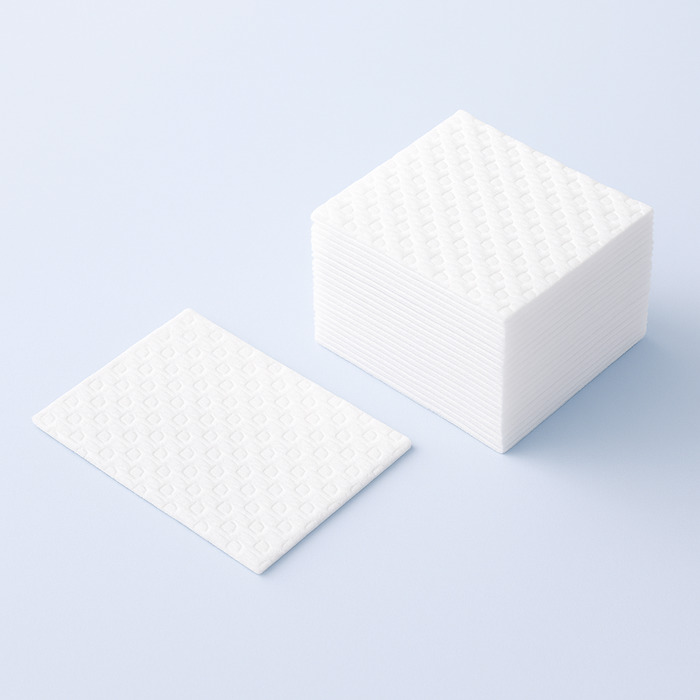
Modern manufacturing approaches focus on engineering structure rather than changing fiber identity. Cotton-based nonwoven technologies allow fibers to be entangled in three dimensions rather than locked into fixed weave patterns.
This is where Breathable Cotton Nonwoven Fabric becomes particularly relevant. By controlling fiber distribution, bonding density, and thickness, nonwoven structures can deliver:
More stable airflow
Faster moisture release
Consistent breathability even when wet
Weston Manufacturing develops cotton-based spunlace materials using this approach, focusing on structural breathability rather than surface treatments.
Beyond 100% cotton solutions, Weston Manufacturing also produces composite structures that combine cotton with other functional fibers. As a composite nonwoven manufacturer, Weston designs these materials to improve strength, moisture control, or durability while preserving breathable performance.
Without laboratory data, several practical indicators help identify breathable cotton fabrics:
Even light transmission across the surface
Quick recovery after hand compression
Reduced damp feeling after brief moisture exposure
For professional buyers, evaluating structure, density, and manufacturing control is far more reliable than relying on fiber labels alone.
Highly breathable cotton fabrics are often:
Less heavily coated
Less chemically treated
More mechanically open
This structural approach aligns well with sustainability goals by relying on material design rather than additive barriers. Fabrics that breathe naturally tend to perform more consistently across their usable life.
The most breathable cotton fabric is not defined by a single name or weave. It is defined by how well fiber properties and structure work together.
Gauze maximizes airflow.
Muslin balances breathability and control.
Voile and lawn show the value of fine engineering.
Nonwoven cotton structures extend breathability into modern applications.
Understanding these differences allows designers, manufacturers, and buyers to choose cotton fabrics based on performance reality rather than assumptions—keeping breathability where it belongs: at the center of material function.
WESTON
Privacy Policy | SiteMap
Copyright WESTON