- Email: [email protected]


When we ask what makes a towel dry quickly, we’re not simply discussing how much water it can hold—we’re investigating the fundamental mechanisms of moisture transport and evaporation. The quickest drying towel is fundamentally engineered to address two distinct physical processes: rapid water uptake and efficient moisture release. Traditional towels excel at one but often fail at the other, creating a bottleneck that prevents true quick-drying performance. The breakthrough emerges from understanding that drying speed depends critically on capillary action, air permeability, and fiber surface chemistry. When water sits trapped within densely woven fibers, evaporation becomes desperately slow because moisture remains locked in the internal structure, away from circulating air. The quickest drying towels reverse this paradigm by deliberately creating porous architectures that release water into the air column where evaporation can occur at vastly accelerated rates.
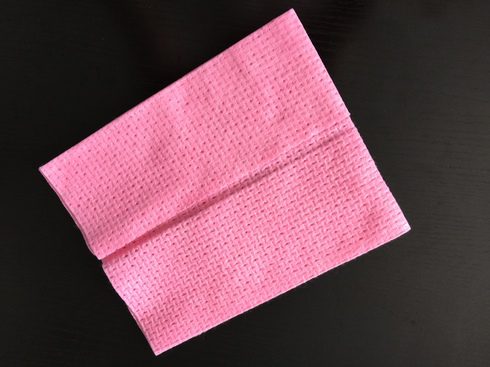
Hydroentanglement represents a revolutionary departure from traditional weaving methods. Instead of mechanical looms intertwining fibers, this process uses high-pressure water jets—precisely calibrated and directed—to entangle individual fibers into an interconnected matrix. The result is a fabric with engineered porosity that functions almost like a three-dimensional network of moisture highways. When water contacts a hydroentangled towel, it doesn’t penetrate deeply into dense fiber walls; instead, it spreads across the expansive internal surface area created by this porous structure. This design principle is scientifically superior because it maximizes capillary flow distribution—the water molecules move laterally across countless fiber-to-fiber contact points rather than soaking straight downward into a dense mass.
Consider the physics: capillary oscillation within a zig-zag porous structure actually enhances moisture permeability by creating natural frequency patterns that facilitate lateral water transport. A hydroentangled towel’s architecture establishes precisely these conditions. The fabric becomes increasingly effective at moisture transport because water can flow through multiple pathways simultaneously, and crucially, moisture-laden air can readily escape through the abundant void spaces. This is why hydroentangled towels achieve drying times measured in minutes rather than hours—the capillary network distributes water broadly across the fabric surface, exposing it to ambient air throughout the entire volume rather than concentrating it deep within fiber bundles.
The fiber material itself profoundly influences drying speed through distinct chemical and physical properties. Viscose fibers, derived from regenerated cellulose, possess exceptional hygroscopic capacity—they can absorb up to 400 percent of their own weight in moisture. This extreme hydrophilicity makes viscose ideal for initial water uptake. However, viscose alone would create a drying problem: its affinity for water means moisture clings tenaciously to the fiber surface, resisting release into the air. Polyester fibers, conversely, are hydrophobic—they resist water absorption but readily allow moisture to move across their surface without adhesive bonding. This is the critical difference: water on polyester fibers remains mobile, perpetually seeking lower-energy states through evaporation.
When viscose and polyester fibers are blended through hydroentanglement, they create complementary moisture dynamics. The viscose component rapidly absorbs moisture, pulling it from your skin or the wet surface through its hydrophilic character. Simultaneously, the polyester network facilitates lateral moisture transport across the fabric without the moisture becoming firmly bound. The moisture essentially cascades across the polyester fibers while the viscose components maintain the gradient that drives this lateral flow. This synergistic pairing in a hydroentangled structure creates dramatically faster drying than either fiber alone could achieve. The viscose “captures” moisture efficiently; the polyester “transports” it; the porous architecture “exposes” it to air.
The quickest drying towels exploit capillary action as a primary driver of moisture distribution, but they also engineer exceptional air permeability—the ability of air to flow freely through the fabric matrix. These work in concert through a two-phase drying system.
Capillary forces distribute absorbed water laterally across the fabric’s vast internal surface area.
Air circulating through the abundant void spaces removes moisture through evaporation.
Traditional cotton terry towels fail at Phase Two. While their looped fibers create surface area for water uptake, the dense structure beneath those loops traps moisture in interior regions where air circulation is minimal. The fabric becomes a closed system; water evaporates slowly because stagnant air becomes saturated with moisture vapor, slowing further evaporation. In contrast, a hydroentangled quick-dry towel maintains continuous air exchange throughout its depth. The porous structure acts as a passive ventilation system—air naturally flows through as water evaporates from all surfaces simultaneously.
This distinction is quantifiable: moisture transmission rates and air permeability are directly correlated with drying speed. Hydroentangled fabrics engineered for quick-drying demonstrate significantly higher air permeability measurements than conventional towel materials. The fabric literally “breathes” in a way that dense weaves cannot.
Understanding what makes the quickest drying towel requires examining why other towel categories fall short. Microfiber towels, while absorbent, often struggle with Phase Two—the release phase. Their extremely fine fibers create high capillary forces that initially pull water in rapidly, but these same forces also create strong adhesive bonds between water and fiber, making moisture reluctant to evaporate. Microfiber excels at absorption; it’s problematic for quick drying because water clings stubbornly to the fiber surface.
Traditional cotton and cotton-blend towels present a different limitation: their woven structure is too dense for efficient air circulation combined with excessive capillary hold. A cotton bath towel can remain damp for 24 hours or longer in humid conditions because moisture becomes trapped in the interior fiber matrix, isolated from air currents that would facilitate evaporation.
Bamboo-derived viscose towels demonstrate high absorbency but similarly suffer from moisture retention—the pure viscose character means water adhesion remains strong. While they perform better than cotton, they don’t achieve truly quick-drying speeds without architectural optimization.
The quickest drying towels solve these problems through the integrated system: hydroentangled architecture (for distributed moisture exposure) + viscose-polyester blend (for capillary-driven transport without strong adhesive hold) + engineered porosity (for continuous air access). No single element alone creates the effect; the system succeeds through orchestration of physics at multiple scales.

The scientific principles translate into measurable practical advantages. When used on wet skin, a quick-dry towel can become dry enough for reuse within 5-10 minutes, compared to 12-24 hours for traditional towels. This isn’t merely convenient—it addresses fundamental hygiene concerns. Wet towels develop bacterial and fungal growth because moisture duration enables microbial colonization. By eliminating the wet period, quick-dry towels naturally resist odor and pathogenic growth without requiring chemical treatments.
For athletes and swimmers, this rapid turnaround enables multi-use scenarios impossible with traditional towels. Imagine using the same towel to dry off after gym sessions throughout a single day—something only feasible with technology that genuinely dries within minutes. For travelers and outdoor adventurers, the compact nature combined with quick-drying capacity eliminates the burden of carrying heavy, wet textiles that take days to dry properly.
The engineering also provides durability advantages. Because water doesn’t become trapped, the fabric experiences fewer stress cycles from water saturation and drying. This means the towel maintains its structural integrity through far more wash cycles than conventional towels, improving long-term cost-effectiveness.
Acknowledging limitations strengthens rather than undermines this analysis. Quick-dry towels, despite their advantages, have genuine constraints. They typically feel different texturally than plush traditional towels—the porous structure that enables speed creates a slightly different tactile experience. For users accustomed to dense, ultra-soft terry cloth, this difference requires adjustment, though most find it acceptable after brief habituation.
Environmental considerations deserve examination. Polyester, while functionally superior for quick-drying, is petroleum-derived. Producing quick-dry towels involves processing steps that carry environmental costs. However, because quick-dry towels last longer and don’t require replacement as frequently, their lifecycle environmental impact may actually be lower than the perpetual purchasing cycles of rapidly degrading traditional towels. Additionally, the reduced need for bleach or antimicrobial treatments (since the towel naturally resists bacterial growth through rapid drying) partially offsets manufacturing impacts.
Cost represents another legitimate consideration, though this reflects engineering sophistication rather than exploitation. The hydroentanglement process requires specialized equipment and technical expertise. Creating the optimal viscose-polyester blend demands precise fiber characterization. These legitimate production costs mean quick-dry towels command higher initial prices than basic cotton towels.
There are also application constraints. Some uses—such as general household cleaning requiring high absorbency without emphasis on rapid drying—don’t particularly benefit from quick-dry engineering. A conventional towel works adequately for sitting in a linen closet for weeks. The sophisticated engineering of quick-dry towels optimizes for specific scenarios: personal drying, athletic use, travel, or situations where wet towels accumulate rapidly.
The superiority of quick-dry engineering rests on measurable physical properties. Standardized testing (such as GB/T 21655.1-2008 for moisture permeability) establishes objective criteria. Quick-dry nonwoven towels typically demonstrate water absorption rates exceeding 100-200 percent of their dry weight, combined with evaporation rates of 0.18 g/hour or higher—performance metrics conventional towels rarely achieve simultaneously.
Air permeability measurements for quick-dry towels consistently exceed 500-1000 liters per square meter per second, while dense cotton terry typically measures 100-300 liters per square meter per second. These aren’t abstract numbers; they translate directly into drying speed through fundamental fluid dynamics. Higher air permeability means moisture vapor has clear pathways to escape into ambient air, where evaporation continues unobstructed.
Weston Manufacturing has engineered its Quick-Dry Spunlace Towel specifically around these physical principles. Their hydroentanglement process deliberately creates the porous architecture described above. Their fiber blend optimization—balancing viscose’s absorptive capacity with polyester’s transport properties—exemplifies the dual-fiber strategy that modern quick-dry engineering requires. Their commitment to systematic customization options (thickness adjustment, texture variation, blending ratios) demonstrates understanding that quick-drying performance isn’t a fixed property but a spectrum, with different applications benefiting from different optimizations along that spectrum.
The Quick-Dry Spunlace Towel represents the engineering principles discussed throughout this article translated into commercial form. It succeeds because it orchestrates multiple physical phenomena simultaneously rather than optimizing for one factor while neglecting others.
As demand for quick-dry towels grows, several evolutionary directions merit attention. Researchers are exploring blends incorporating hemp and other botanical fibers—materials combining hydrophilicity with natural durability. Some investigations focus on incorporating hydrophobic surface coatings that maintain quick-drying benefits while addressing textile industry waste reduction. Others explore gradient structures where fiber blend composition varies through the towel thickness, potentially optimizing both phases of drying simultaneously.
Sustainability remains an active frontier. While petroleum-based polyester raises valid concerns, developing bio-based polyester alternatives or discovering novel plant-derived fibers with polyester-like transport properties could preserve quick-dry advantages while reducing environmental footprint. The engineering challenge remains: finding materials that absorb water readily yet release it willingly—a combination that chemistry is still optimizing.
The quickest drying towel succeeds not through revolutionary material science but through intelligent orchestration of physical principles. Hydroentanglement creates favorable geometry. Viscose provides absorptive capacity. Polyester enables transport without adhesion. Air permeability allows evaporation. Together, these elements overcome the fundamental limitation of traditional towels: water trapped beyond the reach of air. By exposing moisture to circulating air while maintaining capillary gradients that distribute moisture broadly rather than concentrate it, quick-dry engineering achieves a genuine advance in textile function. Understanding this mechanism reveals why quick-dry towels aren’t luxury products but rather practical solutions addressing real physical constraints that have limited towel performance since textiles were first invented.
WESTON
Privacy Policy | SiteMap
Copyright WESTON