- Email: [email protected]


Nonwoven fabrics rarely draw attention. They don’t appear in fashion shows or interior design magazines, yet they quietly support many parts of modern life. From hygiene products to agriculture, their importance comes from how reliably they perform simple but critical tasks. Understanding why nonwoven fabrics matter begins with how they are made and how they are used.

Most people interact with nonwoven fabrics daily without realizing it. They appear as wipes, filters, protective layers, or functional sheets rather than “fabric” in the traditional sense. Their success lies in doing their job efficiently and disappearing from awareness once that job is done.
Unlike woven textiles, nonwovens are rarely designed to last decades. They are engineered for specific purposes—absorb, protect, filter, support—and then be replaced. This practical mindset explains why they are so widely adopted across industries.
Nonwoven fabrics are made by bonding fibers together without weaving or knitting. Fibers can be entangled with water jets, bonded with heat, or combined using mechanical methods. The result is a fabric whose performance depends more on structure than pattern.
This approach allows manufacturers to control thickness, density, strength, and absorbency with high precision. Instead of adapting a traditional fabric to a new use, nonwovens are built from the ground up for one function or a defined set of functions.
The structure of a nonwoven fabric determines how it behaves in real-world use. A loose structure improves softness and absorbency. A denser structure improves strength and filtration. Fiber choice also plays a role, affecting breathability, durability, and interaction with liquids.
This flexibility explains why nonwovens appear in both delicate applications, such as skincare wipes, and demanding environments, such as industrial filtration or agricultural protection. Performance is engineered rather than inherited.
Nonwoven fabrics support daily routines in ways people rarely think about. Personal care products rely on them for softness and hygiene. Household cleaning products use them for absorbency and strength. Medical settings depend on their consistency and cleanliness.
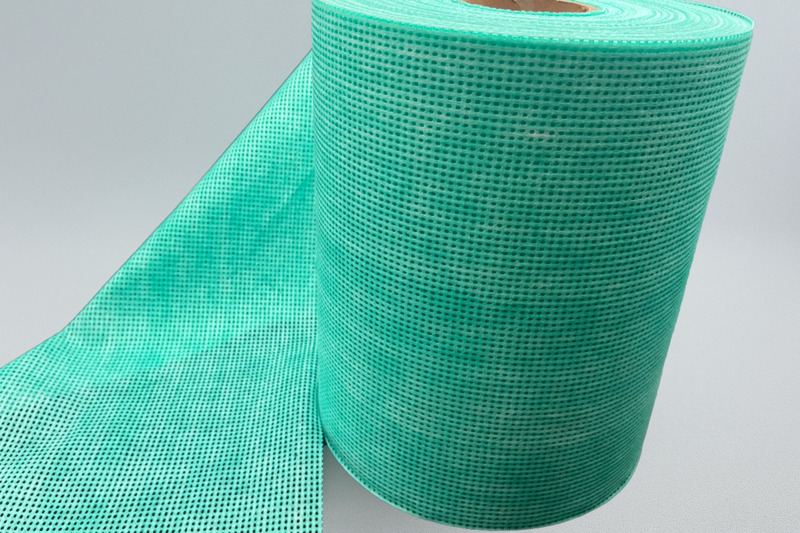
In agriculture and horticulture, nonwoven fabrics serve as ground covers, protective layers, and growth-support materials. Products like Nonwoven Fabric Rolls For Horticulture help manage soil moisture, suppress weeds, and protect crops while allowing air and water to pass through.
One of the strongest advantages of nonwoven fabrics is hygiene. Single-use design reduces the risk of cross-contamination, which is especially important in healthcare, food handling, and personal care.
Unlike reusable textiles, nonwovens are produced under controlled conditions and delivered ready for use. This consistency supports safety standards where washing and reuse are impractical or risky. However, single-use also raises environmental questions that must be considered realistically.
Nonwoven fabrics can feel soft without sacrificing strength. This balance is critical for products that touch the skin. Advances in fiber blending and bonding methods allow nonwovens to remain lightweight while resisting tearing or linting.
That said, not all nonwovens feel the same. Poorly designed structures may feel stiff or abrasive. Comfort depends on material selection and manufacturing control rather than the category itself.
Nonwoven production is faster and more scalable than traditional textile manufacturing. Fewer processing steps mean higher output and more consistent quality. This efficiency supports stable supply chains, especially during periods of high demand.
The downside is that speed can encourage overuse if products are not thoughtfully designed or responsibly sourced. Efficiency is most valuable when paired with purpose-driven design.
Nonwoven fabrics are often criticized for being disposable, but the reality is more complex. Some applications genuinely benefit from single-use materials for health or efficiency reasons. Others are evolving toward biodegradable fibers or reusable designs.
Material choice matters. Plant-based fibers, reduced chemical processing, and optimized fabric weight all contribute to lowering environmental impact. In agriculture, nonwovens used correctly can reduce water usage and chemical inputs, especially when applied as Nonwoven Fabric Rolls For Horticulture.
Nonwoven technology advances incrementally. Small changes in fiber composition or bonding methods can significantly improve performance. These improvements are rarely visible but often noticeable in use—better absorbency, less residue, more uniform strength.
Manufacturers specializing in spunlace and technical nonwovens continue refining these details. In some cases, suppliers like Weston Manufacturing contribute by developing consistent, application-specific solutions such as Nonwoven Fabric Rolls For Horticulture, designed to meet real operational needs rather than marketing trends.
Modern life demands materials that work reliably, safely, and efficiently. Nonwoven fabrics meet these demands by prioritizing function over appearance. They solve practical problems with minimal complexity.
Their role may remain largely invisible, but their impact is not. As industries continue to balance performance, cost, and sustainability, nonwoven fabrics will continue evolving—not as a replacement for traditional textiles, but as an essential complement shaped by everyday needs.
WESTON
Privacy Policy | SiteMap
Copyright WESTON