- Email: [email protected]


In today’s highly regulated food environment, cleanliness is not simply an expectation — it is a scientific requirement. Whether in large-scale food processing plants or commercial kitchens, ensuring that every surface in contact with food remains uncontaminated is essential for consumer safety. At the center of this practice lies an often-overlooked tool: food safe wipes.
To understand what makes a wipe “food safe,” one must first consider both material science and microbiological control. A food safe wipe refers to a cleaning or sanitizing material specifically designed so that its fibers, binders, and any applied agents do not release harmful chemicals or residues when used on surfaces that come into direct or indirect contact with food. Beyond this simple definition lies a complex interplay between chemistry, manufacturing precision, and hygiene validation.
Food safety in wiping materials is determined by their chemical inertness, structural purity, and hygienic performance. Unlike general cleaning wipes, food safe wipes must be free from dyes, fragrances, and preservatives that could transfer to edible goods. The fiber matrix must resist shedding and chemical leaching, ensuring that no particles, colorants, or additives migrate onto food-contact surfaces.
Scientific evaluation focuses on three major parameters:
Chemical composition — the absence of harmful plasticizers or surfactants that could contaminate food.
Microbial control — low bioburden levels and resistance to microbial growth in moist environments.
Physical integrity — lint-free construction to prevent fiber release and ensure surface uniformity.
These attributes make food safe wipes ideal for use in restaurants, packaging facilities, dairy operations, and high-sensitivity food preparation zones.
Modern nonwoven technology has enabled manufacturers to produce wiping fabrics that are both effective and food compatible. The foundation lies in fiber engineering — where selection of raw materials directly impacts safety. Cellulose, viscose, and bamboo-derived fibers are often preferred for their natural absorbency and biodegradability, while polypropylene or polyester may be used where durability and solvent resistance are required.
Among innovative developments are Biodegradable Bamboo Food Residue Cleaning Cloths, which combine sustainability with safety. The bamboo fibers offer natural antibacterial properties and high absorbency without the use of chemical additives. Their smooth, lint-free surface makes them suitable for wiping cutting boards, food trays, and preparation counters without leaving debris or residues.
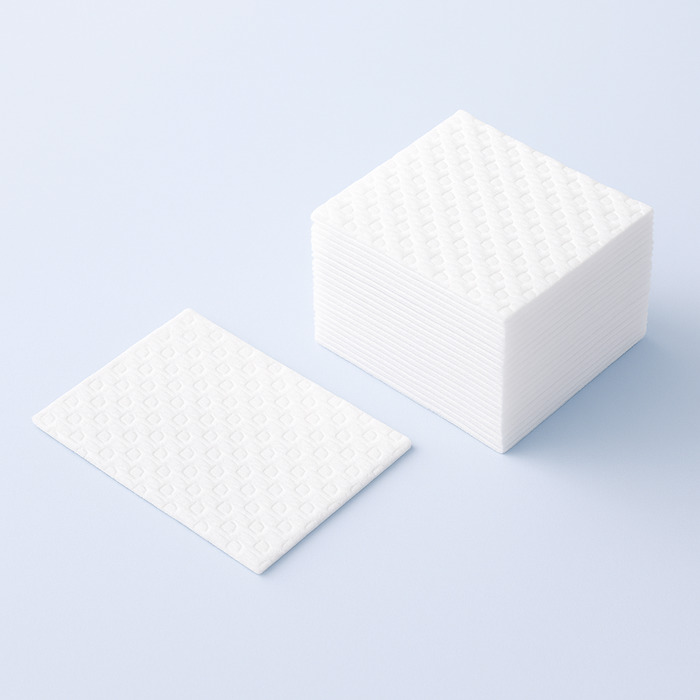
From a manufacturing perspective, hydroentanglement (spunlace) technology plays a critical role. This water-jet bonding process interlocks fibers mechanically — not chemically — minimizing the need for synthetic binders that could compromise safety. The resulting fabrics, such as Microfiber Nonwoven Spunlace Wipes For Food Prep, exhibit exceptional purity, softness, and tensile strength, making them ideal for food-contact applications.
The interaction between wipes and food-contact surfaces is not purely mechanical; it involves complex chemical and biological dynamics. For instance, any residual surfactant or cleaning solvent left in the wipe can potentially alter food pH or introduce foreign compounds. Similarly, wipes that retain excessive moisture can become microbial breeding grounds if not properly designed or stored.
To counter these risks, high-quality food safe wipes are produced in controlled environments where contamination, static, and airborne particles are strictly managed. The fibers are processed through multiple filtration stages to ensure they are free from residues and manufacturing dust.
Some applications require sanitizing ability without harsh chemicals. In such cases, Food Grade Disinfectant Wipes provide an ideal solution. These wipes are engineered to deliver cleaning efficacy through safe, non-toxic ingredients that rapidly break down contaminants while leaving no residual film on surfaces. Their controlled moisture content ensures consistent hygiene performance without promoting microbial growth.
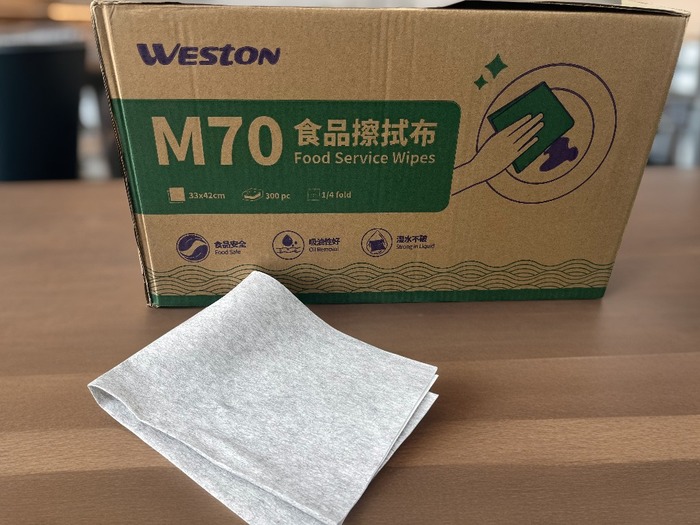
Food-safe wipes are integral to maintaining hygiene across the food industry’s entire chain — from ingredient handling to packaging. Their use extends far beyond surface cleaning.
Food Processing Facilities: Used to maintain equipment hygiene between production runs, reducing the risk of cross-contamination.
Commercial Kitchens: Applied for quick wipe-downs of countertops, cutting surfaces, and tools between food types (e.g., meat to vegetables).
Food Service Operations: Bulk packs such as Bulk Pack Food Service Wipes allow easy distribution among staff and reduce contamination from shared cloths.
Packaging Lines: Ideal for precision cleaning of conveyor belts, dispensers, and filling machines.
In all these settings, a well-engineered wipe ensures that the act of cleaning itself does not introduce new risks — achieving what can be called a closed-loop hygiene system.
As sustainability becomes an integral part of food safety strategy, biodegradable materials have gained attention. Traditional synthetic wipes, though durable, can contribute to long-term waste accumulation. This has driven research into bio-based fibers that combine food-grade safety with environmental responsibility.
Weston Manufacturing has been at the forefront of this transition, engineering materials that maintain high absorbency, strength, and cleanliness while minimizing environmental impact. Its line of Biodegradable Bamboo Food Residue Cleaning Cloths and Microfiber Nonwoven Spunlace Wipes For Food Prep exemplify this balance — offering both technical performance and eco-conscious design.
Moreover, by adopting closed-loop water filtration systems and solvent-free finishing processes, Weston demonstrates how responsible manufacturing directly enhances the quality and reliability of food-safe materials.
Selecting the correct type of wipe depends on the intended application:
For dry wiping of surfaces or utensil drying — opt for soft, lint-free spunlace wipes with no chemical coatings.
For wet cleaning or sanitizing — choose food-grade disinfectant wipes with stable, low-residue formulations.
For environmentally focused operations — biodegradable or bamboo-based cloths are preferable for single-use tasks.
Regardless of the type, always store wipes in clean, sealed dispensers and replace them regularly to prevent contamination. Avoid reusing disposable wipes or mixing them between raw and cooked food zones.
While the science of cleanliness continues to evolve, Weston Manufacturing’s focus remains consistent: designing wiping solutions that align with the highest standards of material safety, hygiene, and sustainability. Each wipe is engineered to minimize risk at the microscopic level — from fiber purity to particle control — ensuring that surfaces remain safe for food preparation and handling.
Through continuous innovation in spunlace and bamboo fiber technology, Weston’s products represent the next generation of food-safe materials — durable, sustainable, and trusted by industries worldwide. For organizations seeking to evaluate or test such wipes, Weston offers free samples for professional review.
To request your free sample contact [email protected].
The concept of “food safe” goes beyond a label or compliance checkbox — it is a science-driven commitment to purity, precision, and environmental stewardship. Each innovation in nonwoven technology brings the food industry closer to a world where cleanliness and sustainability coexist.
By bridging material engineering with hygiene science, Weston Manufacturing continues to shape what it truly means for a wipe to be food safe — not just today, but for the safer, cleaner industries of tomorrow.
WESTON
Privacy Policy | SiteMap
Copyright WESTON