- Email: [email protected]


Cleaning a CPU is not a cosmetic task — it is a precision surface operation.
The surface of a CPU heat spreader is engineered for thermal conductivity, not durability. Microscopic scratches, invisible fibers, and chemical residues can all interfere with heat transfer, thermal paste bonding, and long-term system stability.
This is why CPU cleaning should be treated as surface preparation, not simple wiping.
This article explains, in practical and scientific terms:
what wipes are suitable for CPU cleaning
what materials cause hidden risks
what professionals use
and how nonwoven materials solve real technical problems
No exaggerated claims. No consumer marketing language. Just material behavior, structure, and real-world logic.
A CPU heat spreader has three critical characteristics:
Micro-flatness sensitivity
Even micro-scratches affect thermal paste spread and contact efficiency.
Particle sensitivity
Dust, fibers, and lint act as micro-insulators between surfaces.
Chemical sensitivity
Residues interfere with thermal interface materials (TIMs).
This makes CPU cleaning closer to electronics surface prep than household cleaning.
Fiber shedding
Micro-abrasion
Particle residue
Technical outcome: fiber contamination + surface damage risk
High lint release
Weak fiber bonding
Technical outcome: visible and invisible residue
Loose fiber structure
Uneven solvent release
Technical outcome: streaking + fiber transfer
Designed for macro-surfaces
Trap particles
Inconsistent lint control
Technical outcome: inconsistent cleaning quality
These materials are optimized for comfort and convenience, not surface integrity.
In electronics manufacturing, repair labs, semiconductor assembly, and precision maintenance, technicians rely on:
Lint-controlled nonwoven wipes
These are engineered materials, not household textiles.
They are selected based on:
fiber bonding structure
particle release control
solvent compatibility
surface smoothness
static behavior
absorbency stability
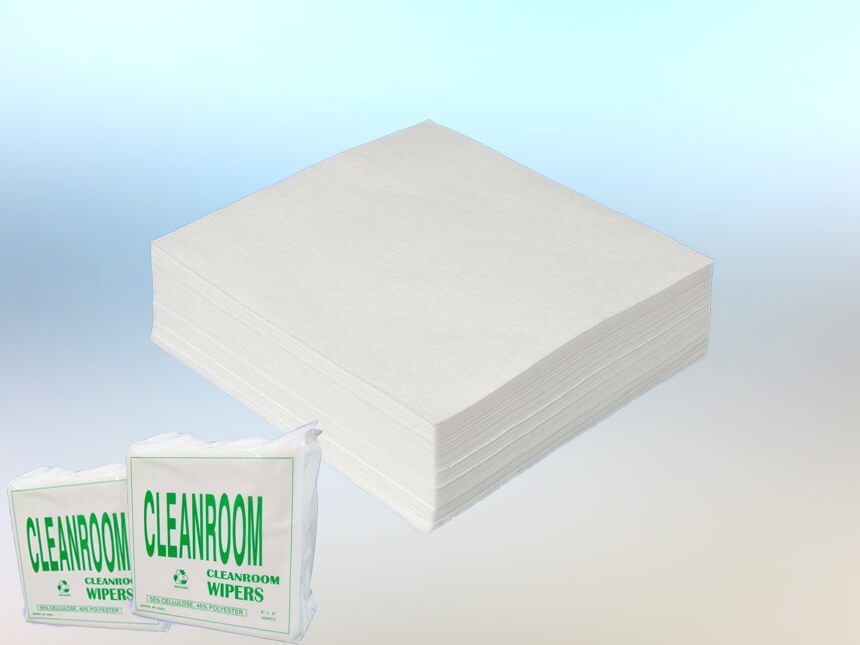
This category includes what industry commonly refers to as Lint Free Cleanroom Wipes — materials designed to clean sensitive surfaces without introducing new contaminants.
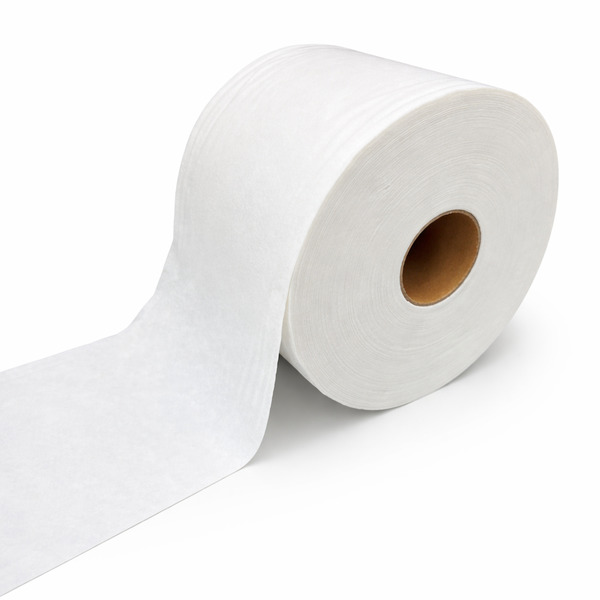
Nonwoven wipes are not woven or knitted.
Their fibers are bonded through mechanical, hydroentanglement (spunlace), thermal, or chemical processes.
This structure creates measurable advantages:
Fewer loose fiber ends → lower lint release
Smoother contact → lower scratch risk
Even solvent distribution → no streaking
Reduced micro-debris generation
Stable with IPA and electronics cleaners
This is material engineering, not branding.
Studies in electronics assembly environments show that fiber contamination above 50 microns can interfere with thermal interface layer uniformity and heat transfer efficiency.
Implication: lint is not cosmetic — it is functional contamination.
Microscopic abrasion on metal heat spreaders increases thermal interface resistance, reducing effective heat dissipation.
Implication: surface roughness matters at the micro level.
Electronics repair benches that switched from paper/cotton wipes to lint-controlled nonwoven wipes report:
lower rework rates
cleaner thermal paste application
reduced inspection failures
fewer contamination complaints
Pattern: cleaner materials = more stable outcomes.
Nonwoven wipes are standard consumables in:
PCB assembly lines
optics cleaning
semiconductor prep
cleanroom environments
electronics maintenance stations
This adoption is driven by material behavior, not marketing preference.
Power off and unplug the system
Use a lint-controlled nonwoven wipe
Apply high-purity isopropyl alcohol (IPA ≥90%)
Wipe in a single direction
Use fresh wipe per pass
Allow full evaporation
Apply thermal paste on a clean, dry surface
This method minimizes recontamination and surface interference.
Weston Manufacturing produces spunlace (hydroentangled) nonwoven fabrics used in industrial wiping, technical cleaning, and precision maintenance applications.
These materials are engineered for:
low-lint structure
stable fiber bonding
smooth surface texture
controlled absorbency
solvent compatibility
consistent production quality
This makes them suitable as base materials for Lint Free Cleanroom Wipes, including electronics-safe cleaning applications such as CPU surface preparation, PCB cleaning, and precision maintenance workflows.
Not consumer wipes.
Not cosmetic wipes.
Technical materials for technical tasks.
WESTON
Privacy Policy | SiteMap
Copyright WESTON