- Email: [email protected]


Surgical gowns and drapes are critical barriers in operating rooms, directly influencing infection control and patient safety. Their material selection demands a rare balance of microbial resistance, breathability, mechanical durability, and skin compatibility—requirements that have long challenged traditional textiles. In recent decades, spunlace nonwoven has emerged as a game-changer in this field, not by chance, but due to its unique structural design and performance characteristics rooted in material science. This article explores why spunlace nonwoven is the ideal choice for surgical gowns and drapes, from scientific mechanisms to practical applications.
Spunlace nonwoven, also known as hydroentangled nonwoven, differs fundamentally from other nonwoven types (e.g., spunbond, meltblown) in its manufacturing process—and this difference is key to its medical suitability.
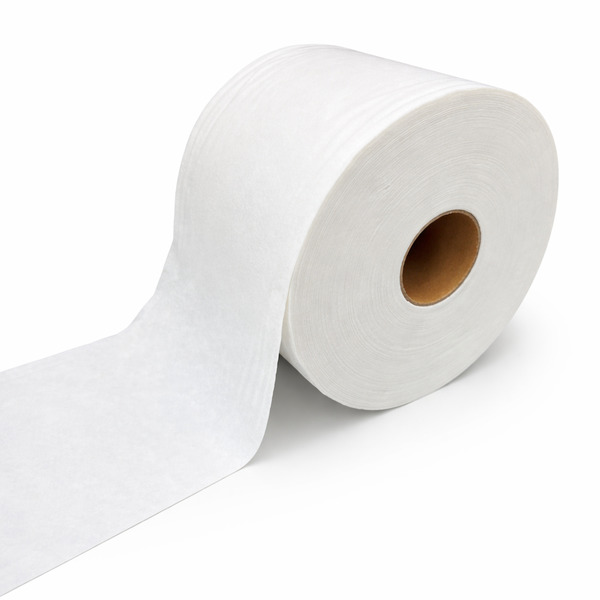
The production of spunlace nonwoven begins with staple fibers (e.g., wood pulp, polyester, viscose) being carded into a loose fiber web. High-pressure water jets (20–200 MPa) are then directed at the web, forcing fibers to entangle with one another at multiple points. This “hydroentanglement” creates a three-dimensional, interconnected fibrous network—no chemical binders or heat bonding are required.
This binder-free, physically entangled structure offers two critical advantages for surgical use:
Biocompatibility: Without residual adhesives or melted polymer byproducts, the material minimizes the risk of skin irritation or allergic reactions—a non-negotiable for surgical gowns (worn for hours) and drapes (in direct contact with patient skin).
Controllable porosity: The density of fiber entanglement can be precisely adjusted by modifying water jet pressure and pattern. For surgical applications, this means creating a structure with pores (typically 2–10 μm) that block microbial penetration (most bacteria are 0.5–5 μm; viruses, though smaller, are often carried in droplets >5 μm) while allowing air and moisture vapor to pass through—solving the long-standing conflict between “barrier protection” and “breathability” in traditional materials.
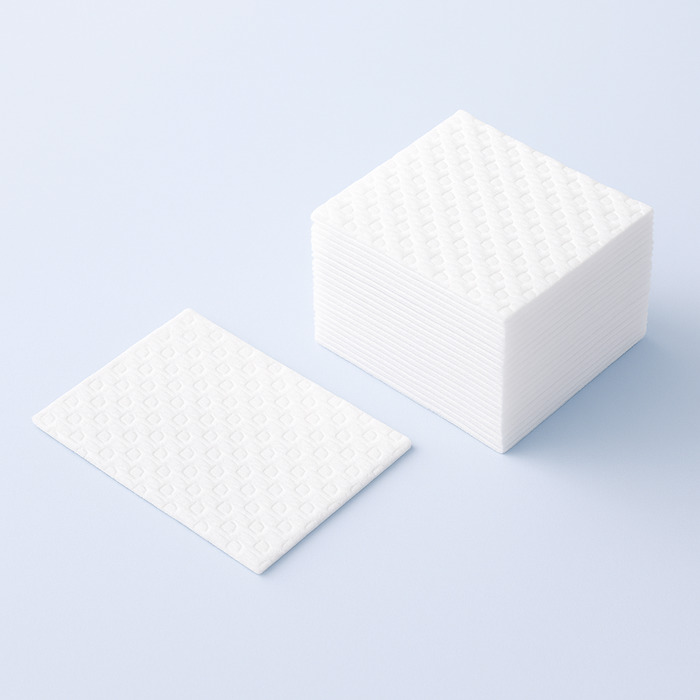
Weston Manufacturing leverages this science in its Wood Pulp Spunlace as surgical gown materials, where wood pulp fibers (known for high moisture absorption and softness) are hydroentangled with polyester (for mechanical strength), creating a material that balances protection, comfort, and durability.

Surgical environments impose strict, multidimensional demands on gowns and drapes. Spunlace nonwoven’s performance profile aligns with these needs at every level, as illustrated by the comparative analysis below.
| Performance Metric | Spunlace Nonwoven | Spunbond Nonwoven | Meltblown Nonwoven |
| Microbial Barrier (1–5*) | 4 | 3 | 5 |
| Breathability (g/m²·24h) | 3,000–5,000 | 1,500–2,500 | 800–1,200 |
| Liquid Barrier (kPa·s/m²) | 500–800 | 1,000–1,500 | 2,000–3,000 |
| Mechanical Strength (N/5cm) | 15–25 | 30–40 | 5–10 |
| Skin Compatibility (1–5*) | 5 | 3 | 2 |
*Note: 5 = highest performance; Breathability: higher value = better; Liquid Barrier: higher value = better resistance to liquid penetration.
In surgical settings, gowns and drapes must block two primary threats: microorganisms (bacteria, fungi) and bodily fluids (blood, saline, tissue fluids). Spunlace nonwoven achieves this through two mechanisms:
Physical filtration: The entangled fiber network acts as a sieve, trapping microbes and large droplets. When treated with a hydrophobic coating (a standard process for medical-grade spunlace), it repels liquids, preventing them from soaking through to the wearer or patient.
Moisture management: Unlike meltblown nonwoven (which traps moisture, creating a humid environment for microbial growth), spunlace nonwoven’s breathability keeps the material dry—reducing the risk of microbial colonization on the gown/drape surface.
Surgeons and nurses often wear gowns for 4–8 hours during long procedures. Poorly breathable materials cause sweating, discomfort, and even cognitive fatigue. Spunlace nonwoven’s high moisture vapor transmission rate (MVTR, 3,000–5,000 g/m²·24h) allows sweat to evaporate, maintaining a dry microclimate next to the skin. This is particularly critical for Skin Friendly Obstetric Drapes (a product of Weston Manufacturing), where drapes remain in contact with mothers’ sensitive skin for extended periods—softness and breathability directly reduce post-surgical irritation.
Surgical gowns and drapes endure repeated movements (e.g., arm stretches, instrument placement) and minor abrasions. Spunlace nonwoven’s fiber entanglement structure provides sufficient tensile strength (15–25 N/5cm) to resist tearing during use—outperforming meltblown nonwoven (too fragile) while remaining more flexible than spunbond nonwoven (stiff and uncomfortable). Weston’s wood pulp-spunlace blend further enhances durability by combining the elasticity of polyester with the tear resistance of wood pulp fibers.
No material is perfect, and spunlace nonwoven’s suitability for surgical use requires an objective assessment of its strengths and weaknesses.
Integrated protection and comfort: As shown in Table 1, spunlace nonwoven is the only nonwoven type that scores highly in both barrier performance (microbial/liquid) and user-centric metrics (breathability, skin compatibility). This “all-around” performance eliminates trade-offs that plague other materials (e.g., meltblown’s poor strength, spunbond’s low breathability).
Customizability: Fiber type (wood pulp, polyester, etc.), entanglement density, and surface treatments (hydrophobic, antistatic) can be tailored to specific surgical needs. For example, obstetric drapes require extra softness (achieved with more wood pulp), while orthopedic gowns need enhanced liquid resistance (achieved with a thicker fiber web).
Sustainability potential: Unlike single-use plastic-based materials, spunlace nonwoven made with natural fibers (e.g., wood pulp) is biodegradable under industrial composting conditions—aligning with the healthcare industry’s shift toward eco-friendly practices.
Lower abrasion resistance: Compared to woven textiles, spunlace nonwoven may show signs of wear after prolonged friction (e.g., against surgical tables). Weston Manufacturing addresses this by adding a thin, lightweight spunbond layer to the outer surface of its surgical gowns—boosting abrasion resistance without compromising breathability.
Moisture-induced strength loss: In extremely wet conditions (e.g., large-volume blood loss), natural fibers like wood pulp may absorb moisture and slightly reduce tensile strength. To mitigate this, Weston’s Wood Pulp Spunlace as Surgical Gown Materials uses a 60/40 polyester/wood pulp blend—polyester’s hydrophobicity limits moisture absorption, preserving strength.
Spunlace nonwoven’s versatility makes it ideal for specialized surgical scenarios where standard materials fall short.
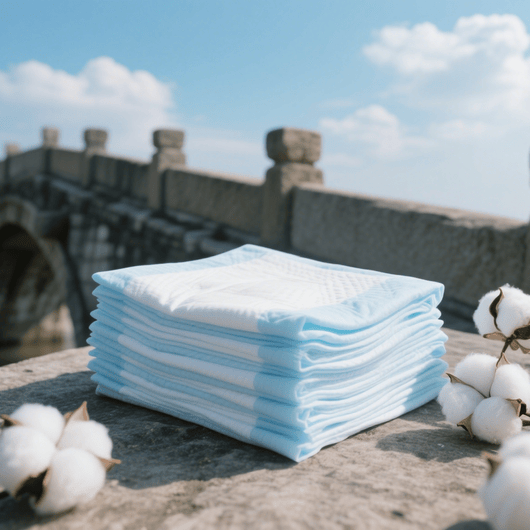
Obstetric drapes must cover large areas of the mother’s body (abdomen, thighs) and remain in place during labor or cesarean sections. Traditional drapes (e.g., woven cotton or spunbond nonwoven) often cause redness or itching due to friction and poor breathability. Weston’s Skin Friendly Obstetric Drapes use ultra-soft wood pulp spunlace nonwoven, which reduces friction coefficient by 30% compared to spunbond materials. Additionally, the material’s low linting property prevents loose fibers from entering the surgical site—critical for avoiding post-partum infections.
MIS (e.g., laparoscopy) requires surgeons to move their arms in narrow, repetitive motions. Stiff gowns restrict movement, while fragile materials risk tearing. Spunlace nonwoven’s flexibility (elongation at break: 15–20%) allows unrestricted movement, while its barrier performance blocks aerosols generated during tissue ablation—a common source of cross-infection in MIS.
While spunlace nonwoven’s scientific advantages make it ideal for surgical gowns and drapes, the quality of manufacturing determines whether these advantages are fully realized. Weston Manufacturing focuses on refining every step of the production process to deliver medical-grade spunlace products that meet surgical demands.
Beyond Wood Pulp Spunlace as surgical gown materials and Skin Friendly Obstetric Drapes, Weston also offers Wholesale Meltblown Material Masks—a complementary product that leverages similar barrier science, ensuring consistency in infection control across surgical teams. All products undergo rigorous testing for microbial penetration, liquid resistance, and skin irritation, with a focus on maintaining spunlace nonwoven’s core strengths of protection and comfort.
For healthcare facilities seeking to evaluate the performance of spunlace-based surgical gowns and drapes, Weston Manufacturing provides free samples upon request. Interested parties can contact [email protected] to learn more and request a sample.
The suitability of spunlace nonwoven for surgical gowns and drapes is not a matter of preference, but of science. Its unique hydroentangled structure resolves the inherent conflicts between protection, comfort, and durability—addressing the most pressing needs of surgical environments. As material science advances, spunlace nonwoven will continue to evolve, and manufacturers like Weston Manufacturing will play a key role in translating these innovations into safer, more effective medical solutions.
WESTON
Privacy Policy | SiteMap
Copyright WESTON