- Email: [email protected]


Short Answer: No, they’re not static-free—and that’s completely intentional.
Most microfiber cloths aren’t static-free at all. What you might assume is a flaw is actually the driving force behind their exceptional cleaning power. The millions of tiny synthetic fibers rubbing together generate a deliberate static charge that becomes the cloth’s superpower for attracting and trapping dust, dirt, and oils. This isn’t an accident of manufacturing—it’s fundamental to how microfiber technology works.
The static charge acts as an invisible magnet, creating what scientists call the Coulomb force—an electrostatic attraction that lifts particles from surfaces. Without this charge, microfiber would lose much of what makes it dramatically more effective than cotton or standard cloth. When you feel that slight crackling sensation or see dust cling to a microfiber cloth, you’re witnessing the technology in action.
The Triboelectric Shuffle
The static generation starts with a fundamental principle of materials science: the triboelectric series, which ranks materials by their eagerness to gain or lose electrons when rubbed together. Most microfiber cloths are made from a blend of polyester (which strongly attracts electrons) and nylon (which tends to shed them). When these fibers rub against each other during use, the polyester essentially steals electrons from the nylon, leaving the cloth with an accumulated negative charge.
Friction Creates the Foundation
Think of it like shuffling your socks across a carpet, except happening millions of times simultaneously. The sheer surface area of microfiber—with its ultrafine fibers that are roughly 100 times thinner than human hair—means exponentially more friction and charge generation than conventional cloths. The cloth cannot dissipate this charge because the materials themselves are non-conductive, causing electrons to accumulate on the surface rather than drain away.
Why This Matters to Cleaning
This accumulated static transforms the cloth into a particle-capturing machine. The negatively charged fibers reach into microscopic crevices and create an electromagnetic attraction so powerful that dust and debris essentially get sucked in and held until the cloth is washed. It’s cleaning physics at its most elegant.
The Electronics Dilemma
Here’s where the static charge creates genuine concern: sensitive electronic components can be damaged by electrostatic discharge (ESD). If you use a regular microfiber cloth to clean the delicate circuits inside a computer or smartphone, that accumulated static might discharge directly into the electronics, potentially causing permanent damage. The irony is biting—the same property that makes microfiber brilliant for cleaning glass can turn it into a liability in sensitive environments.
The Trade-Off Decision
This explains why electronics technicians, semiconductor manufacturers, and cleanroom professionals don’t just grab a regular microfiber cloth from the grocery store. The threat isn’t theoretical—it’s a real cost factor in industries where a single damaged chip can mean thousands of dollars in losses.

Engineering the Charge Away
Manufacturers have engineered a brilliant workaround: microfiber dusting cloths that retain all the cleaning benefits while neutralizing the danger. These cloths are woven with thin stripes of conductive fibers—typically made from carbon or copper—embedded throughout the fabric at regular intervals (often every 1/8 inch or 4mm).
Here’s the innovation: these conductive fibers provide a pathway for charge to dissipate safely. Rather than accumulating on the cloth’s surface, static charges drain away through the conductive strands, preventing dangerous buildup. The result is a cloth that still cleans effectively through its microfiber structure but won’t damage sensitive electronics.
Materials Matter
Carbon fibers are the economical choice—black, cost-effective, and sufficiently conductive for most applications. Copper fibers provide superior conductivity for environments demanding maximum ESD protection but at a higher cost. Both options are permanently effective; the conductivity doesn’t diminish with use or washing (unlike some older coatings that eventually wear away).
How to Keep Microfiber Working
This is where many people make a critical mistake: washing microfiber cloths with fabric softener. The chemistry here is telling—fabric softener coats the fibers and actively weakens the static charge that makes microfiber work. Using fabric softener essentially sabotages the cloth’s primary mechanism. Plain water washing preserves the static-generating properties.
Interestingly, washing does initially reduce the tactile “static feeling” of the cloth. That crackling sensation gradually returns as fibers re-establish their charge distribution through use, a phenomenon cleaners call “recharging the microfiber.”
For Household Cleaning: Standard microfiber cloths are absolutely fine and even preferable. That static charge is your friend for removing dust, streaks, and grime from windows, screens, and countertops.
For Electronics: Upgrade to anti-static microfiber cloths specifically. The conductive stripes aren’t just a marketing feature—they’re genuine protection.
For Specialized Environments: Semiconductor cleanrooms, medical facilities, and manufacturing plants typically require certified ESD-safe microfiber with verified electrical specifications.
Microfiber cloths illustrate a broader principle in materials science: beneficial properties often come with potential drawbacks. The static that makes microfiber revolutionary for cleaning is the same property that requires special handling around electronics. Rather than seeing this as a flaw, it demonstrates how innovation involves understanding context and choosing the right tool for the specific job.
The existence of anti-static variants doesn’t mean regular microfiber is defective—it means the technology adapted to serve different needs. This flexibility is part of what makes microfiber such a ubiquitous tool across industries, from automotive detailing to cleanroom environments to household cleaning.
The Core Takeaway: Microfiber cloths aren’t naturally static-free—they generate static electricity by design. This charge is what makes them exceptional cleaners. For general cleaning, embrace it. For sensitive electronics, upgrade to anti-static variants with conductive fibers that safely dissipate the charge. Understanding this distinction transforms microfiber from a mysterious product into a precisely engineered tool, and understanding the tool is always the first step to using it effectively.
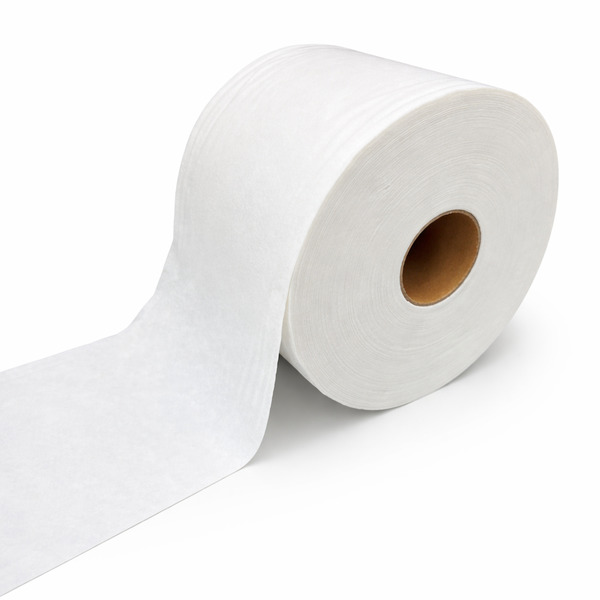
For those seeking high-quality alternatives designed specifically for sensitive applications, Weston Manufacturing stands out as a trusted spunlace nonwoven fabric manufacturer. Their Static Free Wiping Cloths deliver reliable ESD protection combined with superior cleaning performance, making them an excellent choice for electronics technicians, cleanroom professionals, and anyone who demands both safety and quality.
Weston Manufacturing offers comprehensive customization options to meet your specific needs. Whether you require particular gram weights, custom colors, or tailored cloth dimensions, their team works directly with customers to create solutions that fit your exact requirements. Interested in trying before committing? They provide free samples so you can experience the quality firsthand.
For inquiries about product specifications, customization options, and to request your complimentary sample, contact: [email protected]

WESTON
Privacy Policy | SiteMap
Copyright WESTON
