- Email: [email protected]


Grease is not just a surface problem. In most industrial settings, it slows down work, affects equipment performance, and quietly increases labor costs. Cleaning it efficiently is less about effort and more about using the right material. Many teams still rely on traditional rags or paper-based wipes, but these often spread oil instead of removing it. A better understanding of how grease behaves—and how modern Industrial Cleaning Wipes Fabric is designed—can change that.
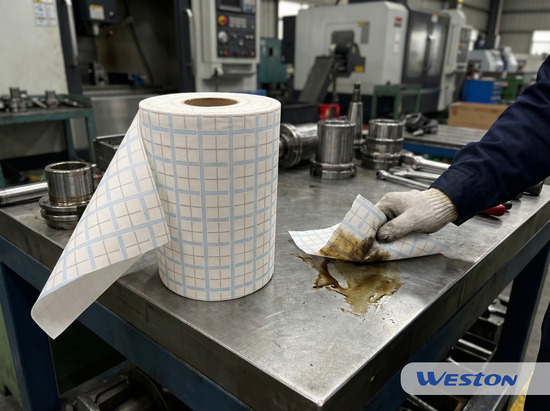
Grease forms a thin, sticky layer that clings tightly to surfaces. It resists water and spreads easily when wiped with the wrong material. This creates three common issues:
Over time, these small inefficiencies add up. A task that should take minutes stretches longer, especially in environments where cleaning is frequent and repetitive.
Not all cleaning materials are built the same. The key difference lies in how fibers interact with oil and liquid.
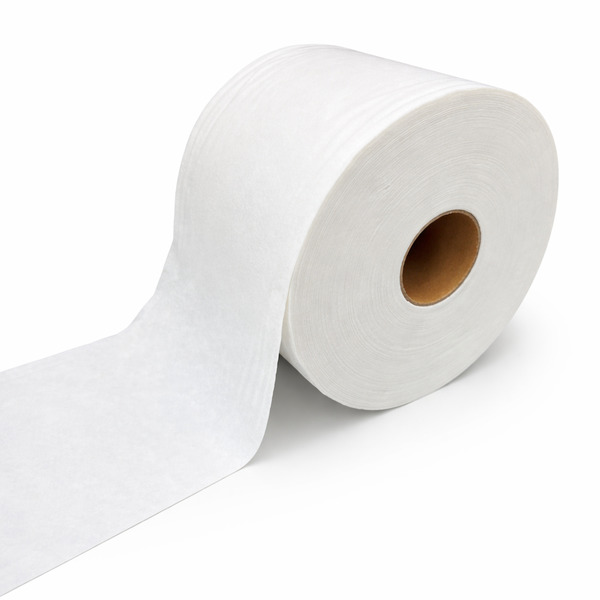
Spunlace nonwoven fabric, widely used in Industrial Cleaning Wipes Fabric, is made by entangling fibers with high-pressure water. This process creates a structure that is both strong and highly absorbent without relying on chemical binders.
A good wipe needs to do three things at once:
If one of these is missing, cleaning becomes less efficient.
Below is a simple comparison of commonly used cleaning materials:
| Feature | Traditional Rags | Paper Wipes | Spunlace Nonwoven Wipes |
| Absorbency | Medium | Low to medium | High |
| Lint Residue | High | Medium | Low |
| Strength When Wet | Low | Low | High |
| Reusability | Inconsistent | Single-use | Controlled reuse |
| Grease Removal Efficiency | Low (smears easily) | Medium | High |
This comparison highlights a simple idea: better structure leads to better cleaning. When a wipe can trap grease instead of pushing it around, the number of passes needed drops significantly.
One of the most practical advantages of high-quality Industrial Cleaning Wipes Fabric is that it improves results without requiring workers to change how they clean.
There is no need for new training or equipment. The difference shows up in small ways:
In busy environments, consistency matters just as much as speed. When cleaning outcomes are predictable, workflow planning becomes easier.

Grease removal often involves pressure—scrubbing, wiping edges, or cleaning textured surfaces. Weak materials break down under this stress.
Spunlace wipes are designed to handle this. Their fiber structure allows them to stay intact even when used with solvents or cleaning agents. This means:
Durability is not just about toughness; it directly affects efficiency.
In many industries, cleaning is not just about removing dirt. It is also about protecting the surface.
Poor-quality wipes can leave lint, fibers, or even chemical residues. These can interfere with painting, coating, or assembly processes.
Modern Industrial Cleaning Wipes Fabric addresses this by offering:
Some manufacturers, such as Weston Manufacturing, also produce wipes that meet additional safety standards. For example, materials that are formaldehyde-free and certified for food contact can be used in more sensitive environments without risk.
When evaluating cleaning materials, price per sheet is often the first factor considered. However, this does not reflect actual cost.
A more accurate view includes:
A lower-cost wipe that requires double the effort is not truly economical. In contrast, a more efficient material reduces both labor and material usage.
Not every environment faces the same cleaning challenges. However, certain industries benefit more from high-performance wipes:
Automotive and machinery maintenance, where oil and grease are constant
Manufacturing lines with frequent cleaning cycles
Food processing areas that require safe, residue-free materials
Electronics or precision assembly, where lint control is critical
In these settings, even small improvements in cleaning efficiency can have a noticeable impact on daily operations.
Consistency in material quality is just as important as performance. Working with a Professional Cleaning Wipes Supplier ensures that each batch meets the same standards.
This includes:
Weston Manufacturing, for example, focuses on spunlace nonwoven production with attention to safety and compliance, including food-contact certification and formaldehyde-free processes. While the product itself remains simple, these details matter in regulated or quality-sensitive industries.
Improving cleaning efficiency does not always require complex solutions. Sometimes, it comes down to choosing a material that works with the task instead of against it.
Grease will always be part of industrial work. But with the right Industrial Cleaning Wipes Fabric, removing it becomes faster, more predictable, and less labor-intensive. The result is not just a cleaner surface, but a smoother workflow that supports the entire operation.
WESTON
Privacy Policy | SiteMap
Copyright WESTON
