- Email: [email protected]


If you’ve ever used a wet wipe, a medical mask, or one of those reusable shopping bags at the supermarket, you’ve already touched non-woven cloth. It’s a material that looks and feels like fabric — yet it’s not woven or knitted in the traditional sense.
Instead of threads crossing over and under each other, non-woven cloth is made by bonding fibers directly together through heat, pressure, or water jets. You can think of it like paper made from fibers — but stronger, softer, and far more versatile.
This simple difference in how it’s made changes everything about how the material performs. Non-woven fabric can be incredibly soft for baby wipes, extremely strong for industrial use, or engineered for precise filtration. It’s a quiet technology behind everyday essentials — practical, reliable, and often overlooked.
The beauty of non-woven technology lies in its flexibility. There isn’t just one way to make it. Depending on what it’s meant to do, the production process changes:
Spunlace (Hydroentangling): High-pressure water jets twist and knot fibers together to form a cloth that feels textile-like yet has no weaving. It’s soft, durable, and perfect for wipes, beauty pads, or cleaning towels.
Meltblown: Here, melted polymer is blown into fine fibers that create dense layers ideal for filtration — the core of most medical masks.
Needlepunch: Mechanical needles punch and entangle fibers for a thicker, stronger fabric often used in construction or geotextiles.
Some factories use blends of viscose, polyester, or PLA (polylactic acid) to balance softness, strength, and sustainability. Modern eco-nonwovens made from wood pulp and PLA are even biodegradable, reducing the plastic footprint of everyday disposables.

Non-woven materials are quietly everywhere — from your bathroom to your car engine. Their versatility is the reason behind their widespread use.
Hygiene and Healthcare: Non-wovens are crucial in medical and hygiene products like masks, surgical gowns, baby wipes, and disinfectant cloths. They offer safety, absorbency, and comfort without the cost or complexity of traditional fabrics.
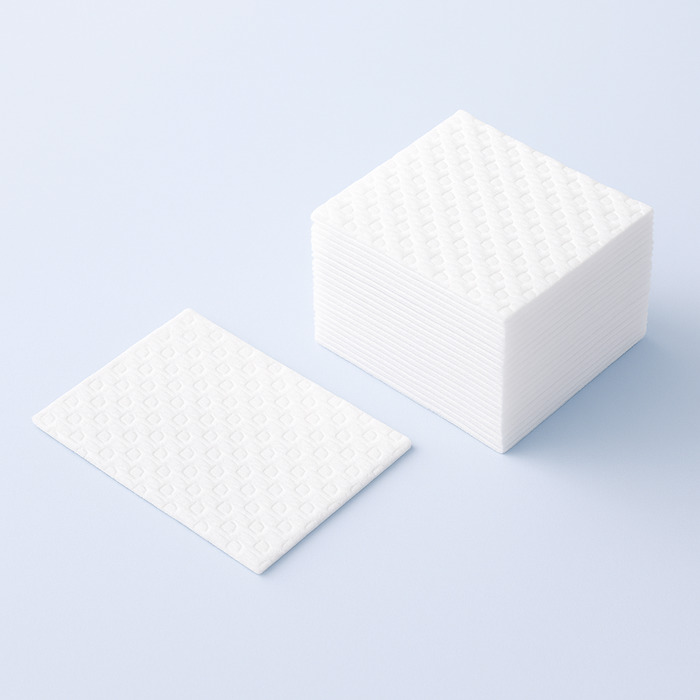
Home and Kitchen: Cleaning wipes made from Stiff Apertured Nonwoven Fabric are designed for high absorbency and oil removal, making them ideal for messy kitchens or workshops.
Agriculture and Packaging: Non-woven bags and grow bags are replacing plastic packaging, offering breathability and reusability.
Industry and Automotive: Heavy-duty wipes and Durable Stitch Bonded Nonwoven Cloth handle oils, greases, and machinery maintenance where strength truly matters.
Each use case is about solving real problems — cleanliness, efficiency, safety, and sustainability — all through engineered fibers.
Non-woven fabrics owe their popularity to the balance of performance and practicality. Here’s why manufacturers and consumers keep choosing them:
Strong Yet Lightweight: A high-strength structure that doesn’t feel bulky.
Customizable Texture: Smooth, embossed, or perforated patterns for better grip and absorption.
Low Lint & High Absorbency: Perfect for delicate cleaning tasks or medical use.
Breathable & Soft: Comfortable for direct contact with skin.
Cost-Efficient: Lower production waste compared to weaving or knitting.
Eco Options Rising: Increasing availability of biodegradable versions using PLA, viscose, and bamboo fiber.
In short, non-wovens can be engineered to behave exactly as needed — strong where pressure matters, soft where comfort counts.
Of course, no material is perfect. Non-wovens have their own set of limits — though many are being addressed with new technology.
Durability: Some non-wovens tear more easily than woven textiles after repeated washing.
Recycling Complexity: Mixed fiber content (like PP + viscose) makes recycling harder.
Environmental Impact: Petroleum-based non-wovens can contribute to microplastic waste if not managed properly.
However, companies like Weston Manufacturing are pushing the category forward with biodegradable fiber blends and recyclable production methods. Their latest developments in Stiff Apertured Nonwoven Fabric and Durable Stitch Bonded Nonwoven Cloth show how the industry is evolving — combining practicality with responsibility.
There are still a few common misconceptions that keep people from recognizing how advanced non-wovens have become.
❌ “It’s just cheap plastic.”
✅ Many modern non-wovens use plant-based or biodegradable fibers — quality doesn’t mean synthetic.
❌ “It’s always single-use.”
✅ Many cloth-grade non-wovens are washable and reusable several times without losing strength.
❌ “They all feel the same.”
✅ Fiber composition, embossing pattern, and bonding method completely change the texture and performance.
Non-wovens aren’t disposable by definition — they’re adaptable by design.
As consumers demand greener materials, non-woven technology is undergoing a quiet revolution. Factories are testing renewable fibers, recycled inputs, and low-energy bonding processes.
Weston Manufacturing, a professional spunlace nonwoven factory, is among those leading this transformation. The company develops performance materials ranging from eco-friendly wipes and packaging fabrics to industrial-grade cloths that combine strength with sustainability. Their focus on PLA-based spunlace, Stiff Apertured Nonwoven Fabric, and Durable Stitch Bonded Nonwoven Cloth shows how engineering and environmental goals can align.
This shift isn’t marketing — it’s necessity. The world needs materials that perform well without compromising the planet.

Non-woven cloth is more than a behind-the-scenes material — it’s a smart solution to real-world needs. It’s in your bag, your car, your cleaning routine, and your healthcare system. It’s in the products that make daily life easier, cleaner, and safer.
And while most people don’t think twice about what their wipes or bags are made of, the innovation inside them is changing how the world uses fabric. Whether spunlace, meltblown, or stitch-bonded, non-wovens prove that practicality and performance can coexist.
Next time you pick up a cleaning cloth or tote bag, take a closer look — chances are, it’s non-woven. And that quiet layer of engineered fibers? It’s the fabric of modern living, built for strength, purpose, and progress.
WESTON
Privacy Policy | SiteMap
Copyright WESTON