- Email: [email protected]


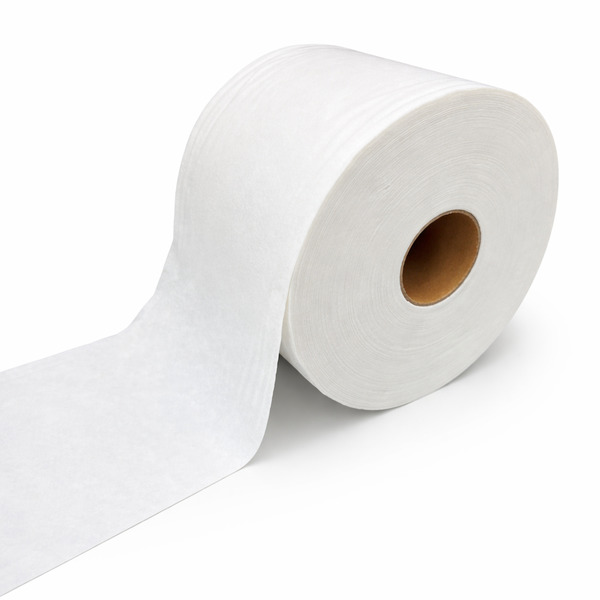
A roll of seemingly ordinary nonwoven polyester fabric holds the key to a complex global trade classification system—the critical code that enables its smooth passage across international borders.
When a roll of nonwoven polyester fabric prepares to ship overseas from Weston Manufacturing’s facility, it requires a special “passport” to clear customs successfully. This document is the HS Code (Harmonized System Code), a universally adopted product classification system.
From medical protective equipment to high-performance outdoor gear materials, every product carries its unique identity marker. Understanding the HS code for nonwoven polyester—a modern marvel of materials engineering—isn’t just about regulatory compliance; it’s the key to unlocking global market access.

Nonwoven polyester fabric, as the name implies, is a textile formed without traditional spinning or weaving processes. It utilizes polyester fibers bonded together through mechanical, thermal, or chemical methods into a consolidated web.
Scientifically, nonwoven structures consist of fibers arranged randomly or oriented in a three-dimensional network. This architecture grants them unique properties: high breathability, moisture resistance, light weight, and non-toxicity—with customizable biodegradability or durability.
Polyester nonwovens exhibit exceptional stability and durability compared to polypropylene variants. They withstand temperatures up to 230°C, whereas polypropylene nonwovens begin degrading around 140°C.
The Harmonized System is a multipurpose international product nomenclature managed by the World Customs Organization. It standardizes trade classification through 6-digit codes, with countries adding national subdivisions as needed.
This system provides a universal language for international trade, streamlining cross-border transactions. Importers, exporters, customs officials, and statisticians all rely on HS codes for clear product identification.
For textiles, HS codes encapsulate critical information: raw material composition, processing methods, fabric structure, and application. For polyester nonwovens, the code reflects “nonwoven,” “polyester,” “weight,” and other defining characteristics.
While search results often show woven polyester fabrics under HS codes like 5407610000, nonwoven classifications differ significantly. Nonwovens typically fall under HS Chapter 56, specifically covering “nonwovens.”
Key classification parameters include: fiber type, weight per unit area, manufacturing process, and end-use. These determine the product’s final categorization.
Nonwovens incorporate various fibers including polyester (PET), polypropylene (PP), and nylon (PA). Polyester nonwovens offer superior stability and abrasion resistance, making them ideal for industrial applications.
Weight per square meter is a decisive classification factor. Some HS codes specifically differentiate products weighing “≤170 g/m².” This parameter directly influences durability and suitability for specific applications.
Production methods (needle-punching, spunlacing, thermal bonding, spunbond) further refine classification. Different processes create distinct structures and properties, as seen in Weston Manufacturing’s Polyester Spunlace Nonwoven Rolls For Outdoor Gear utilizing hydroentanglement technology.
The most frequent error in nonwoven HS classification involves confusing “nonwovens” with “woven fabrics.” As search results indicate, woven polyester codes (e.g., 5407610000) differ entirely from nonwoven classifications.
Another common pitfall is underestimating the importance of weight and dimensional parameters. Even identical compositions may yield different HS codes if weight specifications vary.
Specially treated products (coated, laminated) present greater complexity. For instance, fabrics combining waterproof and breathable characteristics require analysis of their primary function for accurate classification.

The table below illustrates key distinctions between nonwoven and woven fabric classifications:
| Parameter | Nonwoven Fabrics | Woven Fabrics |
| HS Chapter | Chapter 56 | Chapters 50-55 |
| Production Principle | Fiber web consolidation | Yarn interlacing |
| Classification Focus | Web formation, bonding method | Weaving technique, structure |
| Typical Codes | 5603 series | 5407 series |
| Example Product | Polyester Viscose Blend Low Lint Nonwoven Fabric | Polyester filament woven fabric |
This comparison reveals fundamental differences in production principles and classification systems between nonwovens and woven textiles, directly reflected in their HS codes.
Accurate HS coding impacts not only compliance but also tariff rates, export rebates, and trade restriction policies.
Certain countries may apply preferential tariffs or duty exemptions to nonwovens under specific codes. Misclassification can result in penalties or customs delays.
With growing sustainability initiatives, some eco-friendly nonwovens may qualify for tariff advantages. Precise classification helps businesses maximize these trade benefits.
Advancements in materials science continuously introduce new nonwoven variants that challenge existing HS frameworks. Multi-functional composite materials like agricultural protection products such as Color Coded Hdpe Nonwoven Fruit Covers defy simple categorization.
Emerging technologies like flash-spun nonwovens blur traditional classification boundaries by combining characteristics of paper, film, and cloth.
Global customs organizations gradually adapt HS codes to accommodate innovations, but manufacturers must participate actively by providing precise product descriptions.
Follow these steps for accurate nonwoven polyester HS classification:
Regular monitoring of HS updates is essential, as international trade agreements and classifications evolve continuously. For instance, RCEP implementation altered tariff rates for numerous textile products.
Customers requiring classification verification can request free samples from Weston Manufacturing to test product characteristics and determine accurate codes. Contact: [email protected].
Correct HS coding provides nonwoven polyester fabrics with their global market access credentials. As technology and trade regulations co-evolve, this classification system will continue adapting—reflecting the deepening integration between materials science and international commerce.
For Weston Manufacturing, precise classification demonstrates professionalism and reliability to global partners, extending beyond mere compliance to underscore a commitment to quality and accuracy in every product shipment.
WESTON
Privacy Policy | SiteMap
Copyright WESTON