- Email: [email protected]


You’ve been dusting your home the same way for years. You reach for a feather duster or grab a disposable cloth, wipe down your furniture, and think you’re done. But here’s an uncomfortable truth: you’re probably not actually removing dust—you’re just moving it around.
Research from hospitals and professional cleaning organizations confirms what many people don’t realize: standard feather dusters and single-use wipes push dust into the air, where it resettles within hours on the same surfaces you just cleaned. This isn’t just an annoyance—accumulated dust harbors allergens, dust mites, bacteria, and can damage electronics and furniture over time.
The dust in your home isn’t random dirt. It’s a mixture of dead skin cells, fabric fibers, dust mite droppings, pet hair, pollen, and microscopic particles. When traditional dusters move this around instead of capturing it, you create a cycle where dust never actually leaves your home.
This is where microfiber changes everything.
Microfiber isn’t just another cleaning cloth; it’s engineered at the molecular level to work fundamentally differently than anything else on the market.
Microfiber is made from two materials: polyester and polyamide (nylon), typically blended in ratios like 80/20 or 70/30. The innovation lies in the manufacturing process, where these materials are forced through microscopic openings that split them into even finer fibers, creating strands 200 times thinner than a human hair.
To understand the scale: a human hair is about 75 micrometers wide, while a microfiber strand measures about 0.4 micrometers wide. This isn’t just thinner; it’s an entirely different order of magnitude.

When fibers become this fine, their behavior changes. A microfiber cloth contains approximately 200 million fibers per square inch. This dense network works in two ways simultaneously:
Physical Capture: The microscopic fibers act like thousands of tiny plows. When you wipe a surface, these fibers physically dislodge dust particles and trap them within the fiber matrix. Dust doesn’t sit on top of microfiber—it becomes trapped deep within the cloth’s structure.
Electrostatic Attraction: This is the critical part. When microfiber is manufactured, the splitting of fibers creates both positive and negative electrical charges. Dust particles naturally carry negative charges. The result: dust is attracted to microfiber like a magnet, independent of any chemical treatment. This electrostatic property remains effective even after dozens of washings, causing microfiber to become more effective over time—after about 7 more washes, it reaches peak performance.
High-quality microfiber cloths can absorb 7-8 times their weight in liquid, compared to cotton, which absorbs about 3 times its weight. This absorbency means microfiber doesn’t just capture dry dust; it can trap moisture, oils, and fine particles simultaneously.
The evidence is clear. A multi-institution study tested nine different microfiber cloth brands for effectiveness in hospital environments. The results were consistent: all microfiber cloths achieved at least a 99% reduction in bacterial contamination on standard surfaces.
In contrast, bacterial removal using feather dusters ranged from 40-50%. The dust didn’t disappear; it simply transferred somewhere else, often back into the air.
| Tool | Dust Removal | Bacterial Removal | Reusable? | Cost Over 5 Years |
| Microfiber Cloths | 99% | 99% | Yes (10+ washes) | Low |
| Feather Dusters | 65-75% | 40-50% | Limited (1-2 uses) | High |
| Disposable Wipes | 80-85% | 60-70% | No (single use) | Very High |
The data speaks clearly: microfiber doesn’t just clean better—it cleans in a fundamentally different way.
When shopping for microfiber, you’ll see numbers like “100 GSM” or “200 GSM.” This stands for Grams Per Square Meter and directly impacts the cloth’s performance.
GSM measures the density—the amount of material packed into each square meter of cloth. A 50 GSM cloth is thin and lightweight, while a 200 GSM cloth is dense and fibrous.
The critical insight: higher GSM doesn’t always mean better. A cloth that is too thin (under 100 GSM) won’t trap enough dust, while a cloth that is too thick can become clogged and leave lint behind. For most household cleaning, 100-120 GSM represents the optimal balance.
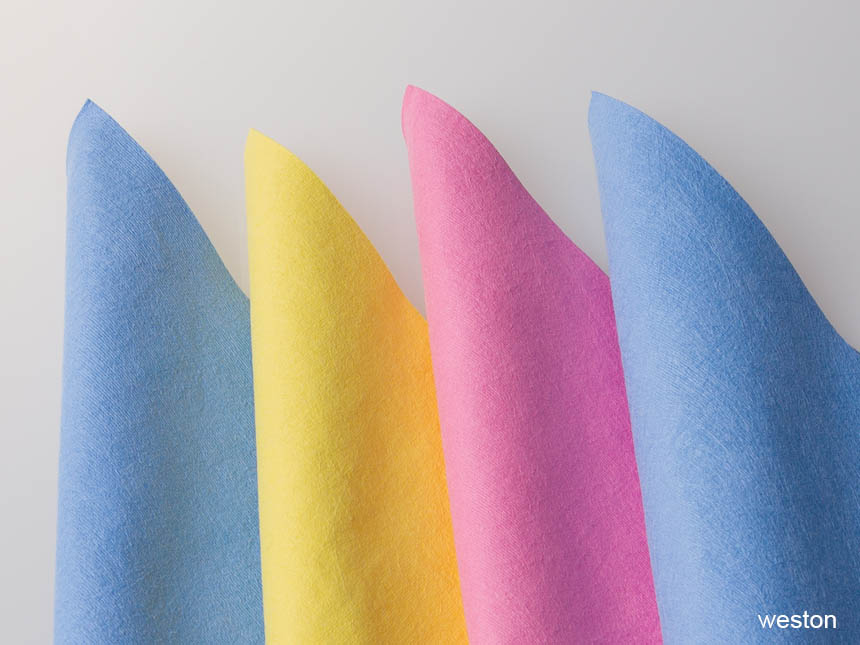
Not all microfiber is created equal. The polyester-polyamide ratio significantly affects how the cloth performs.
Polyester provides strength and durability. This blend is best for heavy-duty cleaning, floors, and surfaces that require aggressive scrubbing. It lasts longer under frequent washing, but it is slightly less absorbent than other blends.
Polyamide enhances absorbency and fine particle attraction. This blend offers superior absorbency, is softer to the touch, and is better for delicate surfaces such as glass, mirrors, and electronics. Though more expensive, it delivers better overall cleaning performance for household use.
Used for specialized applications, this blend is less absorbent but sometimes preferred for specific tasks where pure polyester properties matter.
For general household use, the 70/30 microfiber blend provides better all-around performance than the 80/20 blend, justifying its slightly higher cost through improved cleaning results.
This doesn’t mean feather dusters are without value; they are genuinely useful in specific situations.
Authentic ostrich feather dusters possess natural electrostatic properties that attract dust to some degree. They are exceptionally gentle on fragile items—delicate figurines, ornate picture frames, and vintage collectibles. If your priority is protecting fragile objects, feather dusters offer a safer option than cloths.
They are also convenient for quick maintenance. If your home is already relatively clean, a feather duster can perform adequate maintenance dusting without requiring washing or setup.
Cheap feather dusters (made from synthetic fibers or chicken feathers) simply don’t work. They push dust around without capturing it. Even quality ostrich feather dusters can only trap 65-75% of dust, with the rest going airborne.
Feather dusters are ineffective for accumulated dust. If the dust has built up to visible layers, feather dusters become useless. They can’t handle heavier contamination, pet hair, or sticky residues.
From an economic standpoint, quality feather dusters cost $20-40 upfront but only last 1-2 years with regular use. A single microfiber cloth costs similarly but lasts for 10+ washes—effectively 5-10 years. Over time, you’d need multiple feather dusters while a few microfiber cloths handle the job.

Disposable dusters are the worst environmental choice among common options. A disposable duster wipe gets used for a few days and becomes landfill waste. Multiply this across households for a year: 50+ wipes in the trash. Across millions of homes, that’s hundreds of millions of wipes annually that never decompose.
Microfiber changes this equation entirely. A single quality microfiber cloth eliminates the need for hundreds of disposable wipes over its lifetime. Research indicates that the microfiber cleaning cloth market is projected to grow at 24% annually through 2030, reflecting consumer recognition of its sustainability advantage.
From a chemical perspective, microfiber also excels. Traditional cleaning methods often require multiple chemical sprays and solvents to achieve what microfiber accomplishes with just water. For most household dusting, a dry or slightly damp microfiber cloth outperforms a feather duster, even with chemical assistance.
The advantage of microfiber extends beyond cleaning power; it also involves longevity if properly maintained.
Wash microfiber cloths in cool to warm water with mild detergent. Never use fabric softener or bleach—both damage the electrostatic properties that make microfiber effective. Properly maintained microfiber can improve after about 75 washes. This isn’t marketing; it’s documented in research from multiple institutions. The repeated washing action slightly opens the fiber structure, increasing capture efficiency.
Air-drying or low-heat machine drying is ideal. Microfiber dries quickly, so there’s no delay. Avoid high-heat settings, which can permanently alter the fiber structure.
Fold your microfiber cloth in half twice. This creates eight usable cleaning surfaces. Use each surface before washing to maximize the cloth’s working life.
Use different colored cloths for various tasks—one for kitchen surfaces, one for bathrooms, and one for electronics. This prevents cross-contamination and makes your cleaning routine more systematic. Microfiber cloths are affordable enough that purchasing specialized versions for different rooms or tasks makes practical sense.
The global microfiber cleaning cloth market tells an important story. Valued at 2.45billionin2023,it′sprojectedtoreach2.45 billion in 2023, it’s projected to reach 2.45billionin2023,it′sprojectedtoreach11.04 billion by 2030. This growth reflects the choices of professional organizations, hospitals, and millions of households actively selecting microfiber over traditional dusting methods.
The American Cleaning Institute reports that 78% of commercial cleaning companies improved cleaning times and reduced chemical usage after switching to microfiber systems. That’s not opinion—it’s a documented operational change.
Are microfiber cloths better than dusters?
Yes. Not sometimes. Not in certain situations. Yes, generally, across all essential metrics: cleaning effectiveness, allergen removal, bacterial reduction, sustainability, and long-term cost.
This isn’t a close comparison. Microfiber achieves a 99% dust removal rate. Feather dusters achieve only 65-75%. That’s a significant performance gap. For bacterial removal, the difference is similar: 99% versus 40-50%.
The only scenario where traditional dusters may outperform is when cleaning extremely delicate items where the risk of scratching outweighs the cleaning benefit. In every other situation—which encompasses the vast majority of household dusting—microfiber performs measurably better.
Look for 100-200 GSM microfiber cloths in a 70/30 polyester-polyamide blend. This provides excellent absorption, durability, and all-around performance without being overly thick. Brands offering Microfiber Dusting Cloths in this specification deliver reliable household cleaning results.
Choose 70/30 blend cloths specifically designed for electronics. These are softer and won’t scratch screens or delicate finishes. The higher polyamide content allows these cloths to absorb dust more effectively while remaining gentle.
Investing in colorful microfiber cleaning cloths allows you to designate specific colors for specific tasks—blue for bathrooms, yellow for kitchens, green for living areas. This helps prevent cross-contamination and creates a more organized cleaning routine.
Purchase quality microfiber from manufacturers committed to proper specifications. Cheaper microfiber (under 100 GSM or made with low-quality blends) tends to underperform significantly. Premium microfiber costs more initially but provides years of superior performance, justifying the investment.
When you switch to quality microfiber, several immediate benefits occur:
These aren’t theoretical benefits—they are practical results documented across millions of households and professional cleaning operations worldwide.
For households and businesses seeking reliable, high-performance dusting solutions, Weston Manufacturing produces premium microfiber cloths engineered for superior dust capture and durability. Their 50-200 GSM microfiber dusting cloths combine optimal fiber density with precision engineering to deliver consistent, measurable cleaning results.
For varied household applications, their colorful microfiber cleaning cloths facilitate room-specific organization while maintaining professional-grade performance specifications. Each cloth is designed to maintain effectiveness through 10+ wash cycles, providing years of reliable service.
These products embody the scientific principles outlined in this article—proper GSM specifications, high-quality polyester-polyamide blends, and rigorous quality control that ensures genuine cleaning performance rather than mere marketing claims.
If you’re interested in experiencing the difference that genuine, well-engineered microfiber can deliver, consider reaching out for product samples and detailed specifications. Discover how upgrading your dusting approach leads to faster cleaning times, better indoor air quality, and years of reliable performance.
WESTON
Privacy Policy | SiteMap
Copyright WESTON