- Email: [email protected]


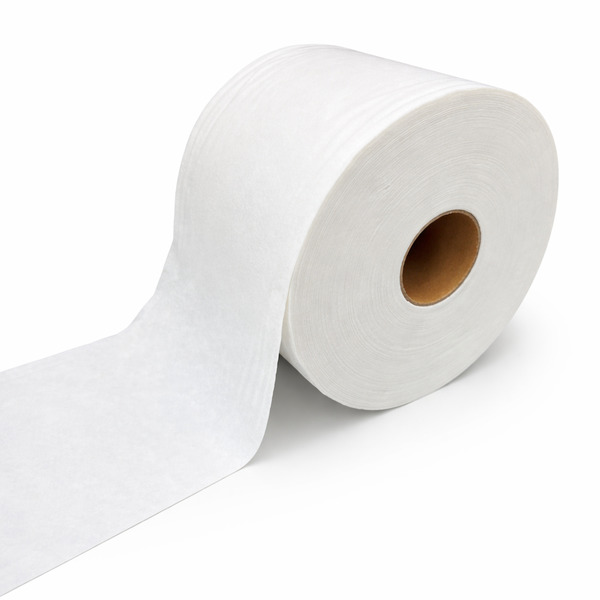
Needle-punched nonwoven is a type of engineered fabric made by mechanically interlocking fibers using thousands of barbed needles. Unlike traditional textiles, it is neither woven nor knitted. Instead of relying on yarn structure, it depends on fiber entanglement to form a stable and functional material.
This difference in construction leads to distinct performance characteristics, making needle-punched nonwoven widely used in both industrial and everyday applications.
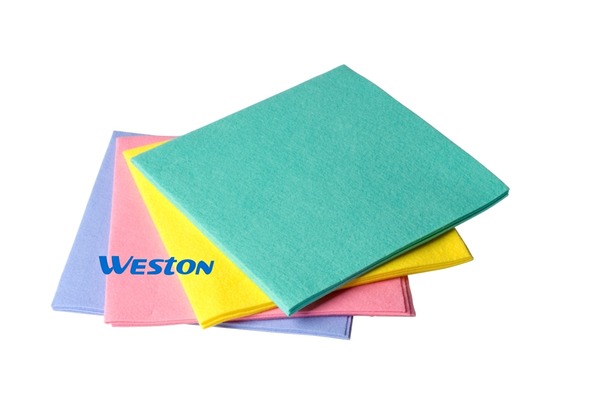
The process begins with loose fibers—such as polyester, polypropylene, or blended materials—being opened and laid into a uniform web.
This web then passes through a needle-punching machine, where:
Unlike chemical bonding or thermal bonding, this is a purely mechanical process. No adhesives are required, which can be important for applications that demand purity or specific compliance standards.
Woven and knitted fabrics rely on interlaced yarns. Their strength comes from the structure created by threads crossing or looping together.
Needle-punched nonwoven takes a different approach:
This results in a material that often resembles felt. It typically has:
Greater bulk and thickness
More uniform isotropic strength (less directional dependence)
A softer or denser hand feel depending on processing
Because the structure is not constrained by weaving rules, manufacturers can adjust properties more freely.
Needle-punched nonwoven is valued for a combination of mechanical and functional properties.
Fiber type
Web weight
Needle density
Punch depth
This allows precise tuning of softness, rigidity, absorbency, and durability.
The versatility of needle-punched nonwoven explains its presence across multiple industries.
Filtration
Used in air and liquid filtration systems due to its controlled pore structure.
Automotive
Applied in insulation layers, trunk liners, and interior panels where durability and sound absorption are required.
Construction and Geotextiles
Functions as separation, drainage, and reinforcement layers in civil engineering projects.
Flooring and Carpets
Provides backing materials and structural support.
Cleaning and Industrial Use
Used in polishing pads, heavy-duty wipes, and absorbent layers where strength and lint control matter.
From a production and application standpoint, needle-punched nonwoven offers a practical balance:
Cost efficiency: Fewer processing steps compared to traditional textiles
Material efficiency: Direct use of fibers without spinning into yarn
Performance adaptability: Can be engineered for both rigid and soft applications
Scalability: Suitable for high-volume industrial manufacturing
It is one of the most adaptable nonwoven technologies for applications that require both structure and permeability.
A useful analogy is to think of needle-punched nonwoven as a fabric “stitched” without thread.
Instead of threads holding the structure together:
The needles act as the bonding mechanism
Fibers themselves become the structure
The final material is formed through repeated mechanical action—pressure, motion, and fiber interlocking—rather than weaving or knitting.

Although not always visible, needle-punched nonwoven appears in many daily-use products.
It is especially valuable where a material must:
Maintain shape under stress
Handle repeated use
Remain breathable or absorbent
For example, in cleaning applications, it can provide the durability needed for scrubbing while still allowing liquid absorption.
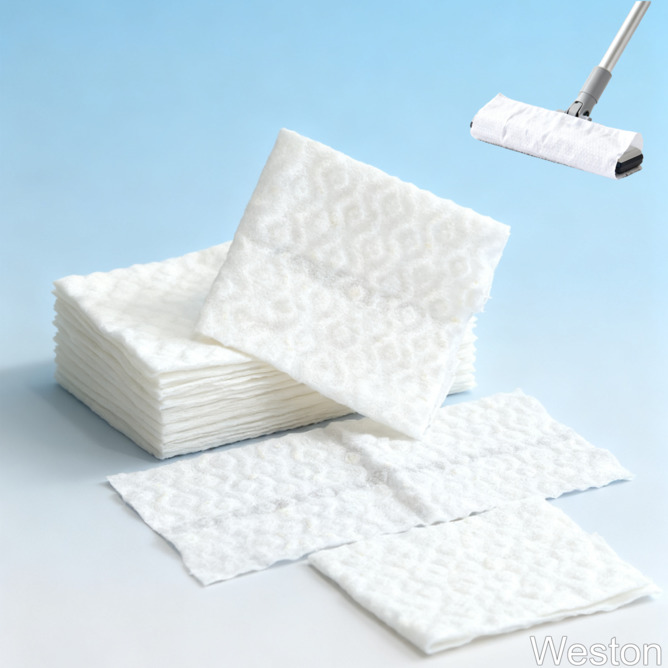
Needle-punching is only one category within the broader nonwoven industry. Another widely used method is spunlace (hydroentanglement), where high-pressure water jets entangle fibers.
Each method has its strengths:
Needle-punched: better for thickness, rigidity, and heavy-duty applications
Spunlace: better for softness, low linting, and skin-contact products
In some cases, these technologies are combined. For instance, a Needle Punched Laminated Polyester Nonwoven structure can integrate multiple layers to achieve both strength and surface performance.
For applications involving hygiene, food contact, or sensitive environments, material safety becomes critical.
High-quality nonwoven manufacturers now focus on:
Formaldehyde-free production
Controlled fiber sourcing
Compliance with food-contact standards
For example, Weston Manufacturing produces spunlace nonwoven materials designed to meet food contact requirements while remaining free from added formaldehyde. This aligns with increasing global demand for safer, cleaner material solutions in wipes and cleaning products.
Needle-punched nonwoven stands out because it replaces traditional textile structure with engineered fiber entanglement. This shift enables a wide range of performance profiles—from rigid industrial layers to flexible, absorbent materials.
Its continued use across filtration, construction, automotive, and cleaning industries reflects one core advantage: it delivers strength, porosity, and adaptability in a single material system.
As manufacturing demands become more specialized, this ability to fine-tune structure without complex weaving processes keeps needle-punched nonwoven highly relevant in modern production.
WESTON
Privacy Policy | SiteMap
Copyright WESTON