- Email: [email protected]


You might not notice that the “invisible protagonists” of daily items like supermarket shopping bags, the inner layer of medical masks, and even the backing of disposable diapers are all spunbond nonwoven fabric. Unlike traditional woven fabrics made by interlacing yarns, spunbond nonwoven fabric is a revolutionary material formed by melting, drawing, and bonding polymer fibers (mostly polypropylene) in one continuous process. Its unique scientific structure determines its diverse applications—from safeguarding agricultural ecology to protecting human health, and even optimizing industrial efficiency. To truly understand its uses, we must first delve into its scientific foundation, then explore its multi-scenario applications, and finally weigh its advantages and disadvantages comprehensively.

The core of spunbond nonwoven fabric’s functionality lies in its fiber formation mechanism and polymer material properties. During production, polypropylene pellets are melted at 230-250°C into a viscous fluid, which is then extruded through tiny spinnerets (with hole diameters as small as 0.2-0.5mm) to form continuous filaments. These filaments are instantly stretched 5-10 times by high-speed hot air (wind speed up to 500m/s), making the polymer molecular chains highly oriented—this gives the fabric excellent tensile strength (2-3 times that of traditional nonwovens). Finally, the filaments are laid into a web and bonded by thermal rolling or chemical agents, forming a fabric with uniform thickness and controllable porosity.
This structure endows it with three key properties that drive its wide use:
It is these scientific properties that allow spunbond nonwoven fabric to break through the limitations of traditional materials and penetrate multiple industries.
Agriculture is one of the earliest and most important application fields of spunbond nonwoven fabric, mainly used as mulch, seedling covers, and crop protection nets. The traditional plastic mulch has long plagued farmers: it is difficult to degrade, leading to soil compaction and “white pollution” after use. Spunbond nonwoven fabric solves this problem with its controllable degradation and environmentally friendly properties.
| Use Case | Proportion | Core Advantage |
| Biodegradable Mulch | 65% | Degrades naturally, retains soil moisture |
| Seedling Protection Cover | 20% | Blocks cold air, allows light penetration |
| Pest-Resistant Net | 15% | Prevents insects, maintains air circulation |
Weston Manufacturing’s Biodegradable Nonwoven Mulch Fabric is a typical representative of this application. Made of modified polypropylene blended with plant-based fibers, this fabric can maintain structural integrity for 3-6 months (enough to cover the entire growth cycle of crops like tomatoes and cucumbers) and then degrade into carbon dioxide and water in the soil within 12-18 months, leaving no toxic residues. Compared with traditional plastic mulch, it not only avoids soil pollution but also improves soil aeration by 20%-30%, reducing the risk of root rot in crops. In addition, its uniform porosity can effectively block weeds (by blocking 90% of sunlight) while allowing rainwater to seep through, reducing the need for manual weeding and irrigation.
The medical field has strict requirements for materials—sterility, barrier properties, and biocompatibility are essential. Spunbond nonwoven fabric meets these requirements with its closed-fiber structure and easy sterilization characteristics, becoming a core material for disposable medical supplies.
Medical Protective Apparel: The outer layer of surgical gowns and isolation suits is usually made of spunbond nonwoven fabric. Its dense fiber web can block droplets and dust (filter efficiency ≥95% for particles ≥5μm) while remaining breathable (air permeability ≥100L/m²·s), avoiding stuffiness for medical staff during long-term work.
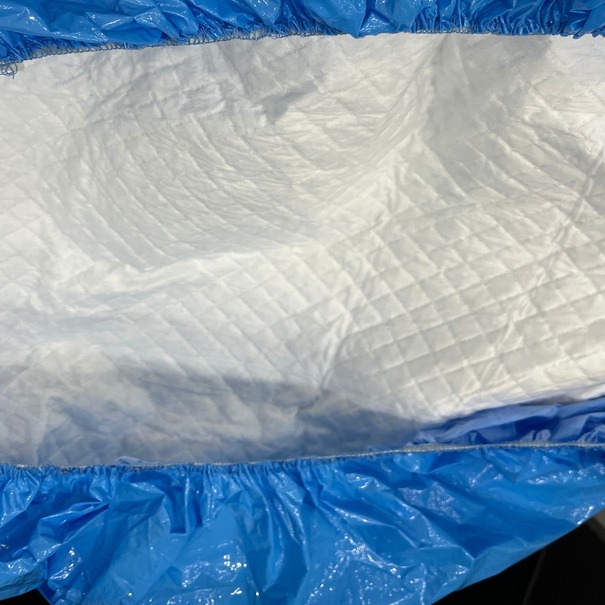
Disposable Medical Bed Sheets: Weston Manufacturing’s Disposable Spunbond Pp Medical Bed Sheet is designed for hospitals and nursing homes. It uses three-layer spunbond technology: the inner layer is soft to the touch (reducing skin friction for patients), the middle layer has a waterproof coating (preventing liquid penetration), and the outer layer is wear-resistant. After gamma ray sterilization, it can effectively reduce cross-infection caused by bed sheet reuse, and its biodegradable version (consistent with the mulch fabric’s material concept) also reduces medical waste pressure.
High-Grade Filtration Materials: Combined with meltblown fabric, spunbond nonwoven fabric forms the “spunbond-meltblown-spunbond (SMS)” composite structure—this is the core material of N95 masks and medical respirators. Weston Manufacturing’s Medical Grade Polypropylene Meltblown Fabric is matched with spunbond fabric to form a composite material with high filtration efficiency (≥99% for particles ≥0.3μm) and low air resistance (≤30Pa), which is widely used in critical care departments and infectious disease wards.
The reason why spunbond nonwoven fabric is favored in the medical field is not only its performance but also its cost-effectiveness: compared with woven cotton fabrics that require repeated cleaning and sterilization, disposable spunbond products reduce the risk of cross-contamination and save the labor and energy costs of cleaning.
Beyond agriculture and medical care, spunbond nonwoven fabric has become an “invisible assistant” in industrial production and daily life, solving practical problems with its diverse processing properties (e.g., coating, lamination, printing).
Home Textiles: The backing of sofas, carpets, and curtains uses spunbond nonwoven fabric. It has good dimensional stability (shrinkage rate ≤1% after washing) and can enhance the durability of home textiles without increasing thickness.
Packaging Materials: The inner lining of gift boxes, the wrapping of electronic products (e.g., mobile phones, laptops) uses spunbond nonwoven fabric. It is soft and anti-static (surface resistance ≤10¹¹Ω), avoiding scratches and electrostatic damage to products.
Hygiene Products: The outer layer of disposable diapers, sanitary napkins, and wet wipes uses spunbond nonwoven fabric. Its breathable and water-repellent properties (water pressure resistance ≥200mmH₂O) keep the skin dry while preventing liquid leakage.

To understand the uses of spunbond nonwoven fabric thoroughly, we must objectively evaluate its advantages and disadvantages.
💡 High Efficiency in Production: The spunbond process is continuous, with a production speed of up to 1000m/min (10 times that of woven fabric), which can meet large-scale demand (e.g., medical supplies during a pandemic).
💡 Diversified Customization: By adjusting fiber thickness (1-50μm), fabric weight (10-200g/m²), and surface treatment (coating, printing), it can be customized for different uses (e.g., thin fabric for masks, thick fabric for packaging).
💡 Environmental Friendliness (for biodegradable types): As represented by Weston Manufacturing’s Biodegradable Nonwoven Mulch Fabric, biodegradable spunbond products solve the “white pollution” problem of traditional nonwovens, conforming to the global trend of environmental protection.
⚠️ Poor High-Temperature Resistance: Polypropylene has a melting point of about 160°C, so spunbond nonwoven fabric cannot be used in high-temperature scenarios (e.g., above 120°C, such as oven liners).
⚠️ Low Wear Resistance: Compared with woven fabric (e.g., cotton, polyester), its fiber bonding points are prone to wear and tear, so it is not suitable for long-term friction scenarios (e.g., clothing that needs frequent washing).
⚠️ Non-Biodegradable for Traditional Types: Traditional spunbond nonwoven fabric (without modified materials) takes 200-400 years to degrade in the natural environment, which may cause environmental pollution if not properly recycled.
Weston Manufacturing has been committed to optimizing the performance of spunbond nonwoven fabric for years, and its Biodegradable Nonwoven Mulch Fabric, Anti Skid Dot Coated Nonwoven Fabric, Medical Grade Polypropylene Meltblown Fabric, and Disposable Spunbond Pp Medical Bed Sheet are all examples of combining scientific research with practical needs. If you want to learn more about the technical parameters of these products or apply for free samples, you can contact us via [email protected].
From the soil nurturing crops to the operating room protecting lives, spunbond nonwoven fabric is constantly expanding the boundaries of material applications with its scientific properties. As environmental protection and high-performance requirements continue to increase, this “invisible material” will play an even more important role in our future lives.
WESTON
Privacy Policy | SiteMap
Copyright WESTON