- Email: [email protected]


A scientific exploration of the unseen foundation that supports modern materials.
Behind every modern textile—whether it’s the base of a sofa, the lining of a medical mask, or the soil cover in agriculture—there exists an engineered layer of quiet strength: non-woven backing.
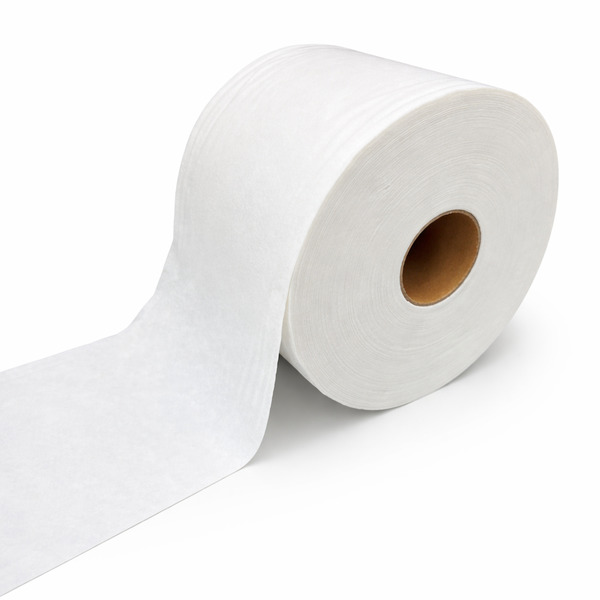
Unlike traditional woven or knitted fabrics, non-woven materials are not made by interlacing yarns. Instead, they are created by bonding fibers directly through mechanical, thermal, or chemical means. This innovative approach transforms loose fibers into a stable, functional, and high-performance sheet — the “backing” that provides structure, resilience, and dimensional stability to countless products we use every day.
Non-woven backing is not just a background material; it is the scientific foundation of modern performance fabrics.
At its core, non-woven backing is a fiber-based composite. The individual filaments—such as viscose, polyester, polypropylene, bamboo fiber, or PLA—are randomly distributed, layered, and bonded into a coherent sheet.
This randomness, paradoxically, creates structural uniformity. The absence of traditional weaving enables engineers to precisely tune porosity, tensile strength, absorbency, and elasticity through fiber selection and bonding method.
The result: a material that combines lightweight form with heavy-duty function.

Non-woven backings are produced through several advanced processes:
Spunbond – fibers are extruded and thermally bonded for strength and durability.
Meltblown – microfibers are formed for exceptional filtration and softness.
Needle-punched – fibers are mechanically entangled, enhancing texture and resilience.
Chemical bonded – adhesive agents link fibers for dimensional stability.
Thermal bonded – heat and pressure fuse fibers without additional chemicals.
Each method yields distinct structural properties, which determine the final application of the backing layer.
In multi-layered constructions, non-woven backing acts as the stabilizing core.
It supports the outer fabric, enhances breathability, and prevents deformation. In industries such as upholstery, footwear, agriculture, and filtration, the backing layer ensures performance longevity by maintaining structural integrity under stress, moisture, and temperature variations.
On a microscopic level, the interlaced network of fibers forms thousands of micro-channels that regulate airflow and moisture. The porosity of non-woven backing can be engineered precisely — allowing materials to breathe without compromising strength.
This duality of softness and strength explains why non-woven structures outperform traditional woven fabrics in applications where both flexibility and durability are required.
| Property | Woven Fabric | Knitted Fabric | Non-Woven Backing |
| Structure | Interlaced yarns in 2D grid | Interlooped yarns | Random fiber web bonded |
| Manufacturing Speed | Moderate | High | Very high |
| Dimensional Stability | Excellent | Good | Tunable via bonding |
| Breathability | Moderate | High | Adjustable by fiber density |
| Customization | Limited | Medium | Extremely flexible |
| Cost Efficiency | Medium | Medium | High scalability |
| Recyclability | Depends on yarn type | Moderate | Increasing with bio-based fibers |
| Key Application | Apparel, upholstery | Sportswear | Backing, filtration, hygiene, composites |
Table 1. Comparative properties of different textile structures.
This table reveals why non-woven backing has emerged as a material of choice for performance-driven industries—it offers engineering control unmatched by conventional textiles.
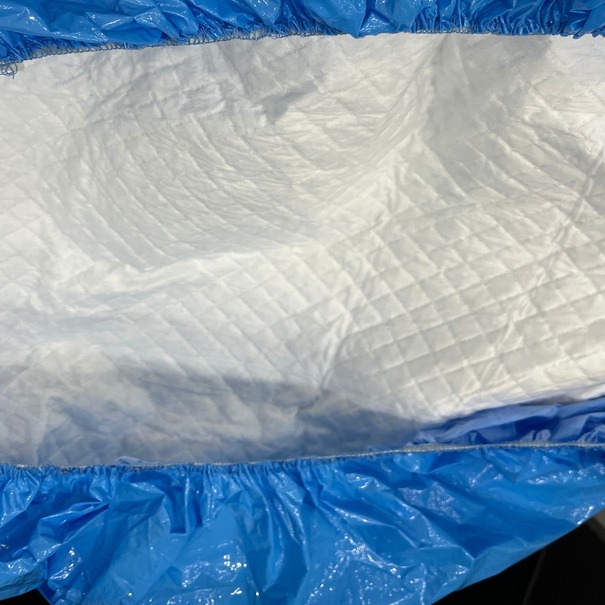
One of the most common applications of non-woven backing lies in sofa and furniture manufacturing, where the backing layer supports outer fabrics, prevents sagging, and enhances form retention over time.
This is where the expertise of Weston Manufacturing, a professional Spunlace Nonwoven Manufacturer, plays a key role.
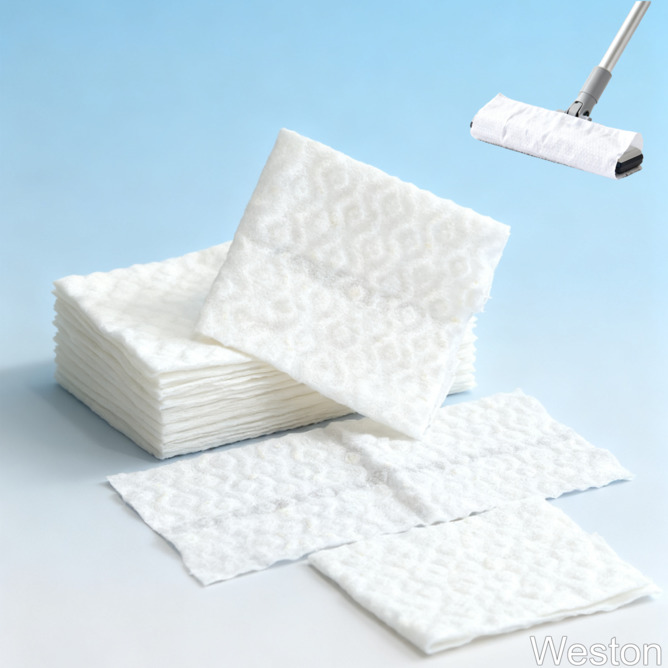
The company’s advanced spunlace technology allows for the creation of Nonwoven Fabric For Sofa Backing with precise control over weight, density, and thickness. Through optimized fiber entanglement, these fabrics provide both durability and softness—qualities essential to high-end upholstery and long-term structural support.
But beyond upholstery, the same scientific principles apply to other sectors: automotive interiors, medical disposables, filtration systems, and even agriculture. Everywhere a stable, breathable, and reliable foundation is needed, non-woven backing silently performs its role.
Non-woven backing demonstrates how material science turns randomness into reliability.
The process of bonding loose fibers creates an entropic structure that paradoxically enhances consistency.
From a materials-engineering perspective, the strength of non-woven backing lies in:
Isotropic strength distribution – strength is equal in all directions, unlike woven fabrics.
Customizable fiber blend – combining viscose and polyester, for instance, tailors softness and tensile strength.
Precision layering – multiple non-woven layers can be laminated to achieve filtration, absorption, or reinforcement.
In short, the engineering of non-woven backing embodies a new philosophy in materials science: design from the fiber upward.
The next frontier for non-woven materials is eco-conscious innovation.
The integration of biodegradable and renewable fibers such as bamboo, viscose, and PLA is redefining how non-woven backings are perceived—not as disposable layers but as responsible components of a circular manufacturing ecosystem.
Future research in polymer chemistry and nanofiber design is likely to produce smarter backings — with adaptive porosity, thermal regulation, and even antimicrobial capabilities.
As digital manufacturing evolves, predictive modeling will allow precise fiber control at the micro level, enabling unprecedented balance between strength, softness, and sustainability.
At the intersection of engineering and application, Weston Manufacturing stands out as an innovator dedicated to the science of non-woven materials.
With a fully integrated production system and high daily capacity, the company provides reliable support for industries that depend on consistent non-woven performance.
Its product range—spanning Spunlace Nonwoven Manufacturer expertise to Nonwoven Fabric For Sofa Backing—reflects a commitment to both functionality and customization.
OEM and ODM solutions are available, with diverse specifications and rapid fulfillment.
For businesses and designers seeking technical samples or customized structures,
free samples are available upon request at [email protected].
Non-woven backing is a triumph of applied science — a material that redefines what it means to build from the fiber level.
It embodies a balance of engineering precision, material adaptability, and ecological responsibility.
While it may never be the visible star of a finished product, it remains the invisible backbone that ensures strength, comfort, and consistency across modern industries.
In a world increasingly shaped by sustainable design and scientific control, non-woven backing is not merely a support layer — it is the structural philosophy behind the fabrics of the future.
WESTON
Privacy Policy | SiteMap
Copyright WESTON