- Email: [email protected]


In many industries, materials are not judged by how advanced they sound, but by how well they perform in daily use. Woodpulp spunlace fabric is one of those materials. It is not flashy, but it solves real problems—absorbing liquids, staying strong when wet, and keeping surfaces clean without leaving residue.
This article explains what woodpulp spunlace fabric is, how it works, and how to choose the right type for practical use.
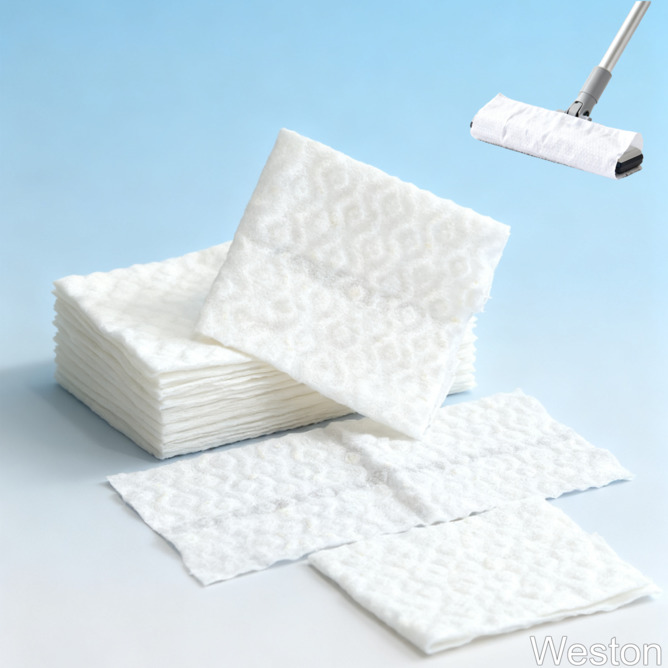
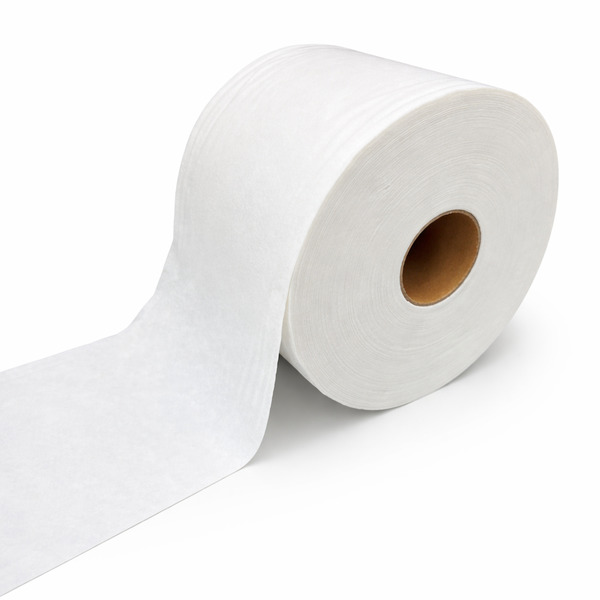
Woodpulp spunlace is a nonwoven fabric made by combining natural wood pulp fibers with synthetic fibers such as polyester or viscose. Instead of using glue, the fibers are bonded together using high-pressure water jets.
This process creates a fabric that sits between paper and cloth. It is soft enough for skin contact, but strong enough for industrial wiping.
A simple way to understand it:
It behaves like a stronger, more reliable version of paper towels, with better durability and less lint.

The spunlace process is direct and efficient:
Because no chemical binders are used, the material remains cleaner and safer for applications like food contact or medical use.
Woodpulp spunlace fabric is widely used because of a balanced set of properties:
These features make it reliable in both industrial and personal care settings.
Different applications require different structures. Weston Manufacturing, as a spunlace fabric manufacturer in China, offers several practical variations.
Below is a simple comparison:
| Type | Surface Style | Typical Use | Key Benefit |
| Plain (Flat) | Smooth surface | Medical wipes, personal care | Gentle on skin |
| Embossed | Patterned texture | Cleaning wipes, industrial use | Better dirt pickup |
| Full Dyed | Colored fabric | Branding, specific applications | Visual identification |
Additional practical options include:
Weight range: 30–120 gsm depending on strength needed
Single-layer or double-layer structures
Custom packaging with logo support
OEM and ODM production flexibility
These variations allow the same base material—Woodpulp Spunlace—to adapt to very different tasks.

This material is not limited to one industry. Its value comes from flexibility.
For example, in a factory setting, workers need wipes that will not fall apart when cleaning grease. In a hospital, staff need soft, low-lint materials that are safe for skin. Woodpulp spunlace meets both needs with small adjustments in design.
Material choice today is not only about performance, but also about safety and compliance.
Woodpulp spunlace fabric has several practical advantages:
However, it is important to note that not all spunlace fabrics are flushable. This depends on fiber composition and structure, so real testing data matters more than assumptions.
Selecting the right material is often more important than choosing the highest specification.
Here are a few practical guidelines:
For delicate skin use: choose softer, lower-weight fabric
For heavy cleaning: choose higher gsm and embossed texture
For cost control: avoid over-specifying strength that is not needed
For branding: consider dyed or custom-packaged options
Testing samples in real conditions is always more reliable than reading specifications alone.
Consistency is often the biggest challenge in nonwoven materials. Small variations in fiber blend or processing can affect performance.
Manufacturers like Weston Manufacturing focus on stable production of Woodpulp Spunlace fabrics, offering:
This kind of approach is less about marketing claims and more about meeting repeatable, real-world needs.
Woodpulp spunlace fabric is a working material. It does not try to do everything, but it does a few things very well—absorb, clean, and stay intact when it matters.
In industries where hygiene, efficiency, and reliability are essential, that is often enough.
WESTON
Privacy Policy | SiteMap
Copyright WESTON