- Email: [email protected]


When people talk about “lint-free fabrics,” they usually do so with a kind of blind certainty—this cloth sheds, that cloth doesn’t, end of story. But materials science rarely deals in absolutes, and polyester is a perfect example. It’s widely used in skincare pads, industrial wipes, cleanroom materials, apparel, and filtration—but is it actually lint-free?
Let’s unpack this honestly, using what the science says instead of what marketing slogans repeat.
Before asking whether polyester sheds lint, we need to understand lint itself. Lint is not a “material problem”; it’s a fiber integrity problem. In scientific terms, lint is the result of:
Detachment of short fibers
Friction between the fabric and external surfaces
Weak inter-fiber bonding
Fiber breakage under mechanical stress
Lint shows up when fibers detach from the matrix of the fabric. It has nothing to do with color, softness, “natural vs synthetic,” or whether a cloth feels premium. It is about structure and bonding.
This means the question is not simply “Does polyester shed?” The more accurate question is:
Under what structural and manufacturing conditions does polyester shed more or less lint?
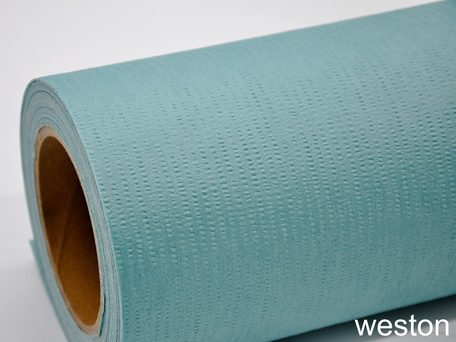
Polyester is a synthetic polymer, and its molecular structure gives it several advantages:
High tensile strength
Smooth surface, reducing frictional snagging
Strong internal bonding between polymer chains
Ability to be formed into long, continuous filaments
These features make polyester inherently more resistant to unwanted fiber detachment when compared with short-staple natural fibers like cotton or rayon.
In other words, polyester begins its life as a low-lint material. But what happens afterward depends entirely on how it’s turned into a fabric.
This is where most misconceptions come from. Polyester fibers can be shaped into different types of fabrics, and each method behaves differently:
Strong but prone to edge fraying and thread abrasion. Good for garments, not ideal where lint control is critical.
Flexible but more open-structured, meaning fibers can loosen over time.
Bond strength varies widely. Adhesive-based systems may weaken under rubbing or moisture.
This is the game changer.
High-pressure water jets force fibers to intertwine physically, creating a dense, cohesive network with significantly reduced shedding. No adhesives, no thermal distortion—just mechanical entanglement.
This is why spunlace polyester is frequently used in industrial wipes, medical consumables, and skincare pads where low-lint behavior is essential.
Lint isn’t measured by guesswork. Laboratories use specific, repeatable tests to quantify fiber shedding:
IEST RP-CC003 airborne particle release
TAPPI T437/T476 rub and abrasion shedding
Wet vs dry friction testing
Optical or gravimetric particle count measurements
These tests reveal something important:
A polyester fabric is only as lint-free as its formation method allows.
A weakly bonded polyester nonwoven can shed far more lint than a high-quality cotton hydroentangled fabric.
So “polyester = lint-free” is not accurate.
“High-quality, hydroentangled polyester = low lint” is much closer to the truth.
When made with continuous fibers and strong mechanical entanglement, polyester offers several performance benefits:
Low lint in wet and dry states
Excellent dimensional stability
Resistance to tearing and abrasion
Uniform surface texture for predictable wiping behavior
Compatibility with skincare formulations and cleaning agents
These features are why polyester is favored in:
precision cleaning
cosmetic and skincare pads
industrial wipes
electronics manufacturing
food-processing environments
In high-purity spaces, lint isn’t a cosmetic issue—it’s a contamination risk. Polyester’s structural stability makes it a go-to.

No material is perfect. Even polyester has limitations:
Not naturally biodegradable
Heat-sensitive at high temperatures
Can feel less soft unless blended or surface-finished
Shedding risk increases if using low-grade recycled fibers with mixed lengths
Again, quality of manufacturing defines performance.
The real answer is nuanced:
Polyester fibers are low-lint by nature.
Polyester fabrics are not automatically lint-free.
Fabrication method, fiber length, entanglement strength, and quality control determine actual performance.
Hydroentangled (spunlace) polyester and polyester-viscose blends can achieve very low lint release, making them suitable for sensitive applications.
Simplified:
Polyester is one of the best low-lint materials available—when properly engineered.
Materials science makes one thing clear: lint control is not a promise but a process. The companies that consistently produce low-lint polyester nonwovens are the ones that invest in:
uniform entanglement
long, stable fibers
clean production environments
continuous particle testing
consistent blends and mesh structures
And this is the same principle followed by manufacturers specializing in stabilized, low-lint spunlace polyester systems.
In case you are researching suppliers or technical references, the following terms may guide your search toward more specialized product categories:
Starch Sized Polyester Nonwoven Fabric
8 Mesh Viscose Polyester Spunlace Nonwoven
Most companies in this domain can also provide free material evaluations.
For technical samples, the contact is: [email protected]

WESTON
Privacy Policy | SiteMap
Copyright WESTON