- Email: [email protected]


Demand for wiping materials with a lower environmental footprint has increased across household, industrial, and personal care markets. This shift is driven by regulatory pressure on single-use plastics, retailer sustainability requirements, and end-user preference for products that combine functional performance with reduced environmental impact.
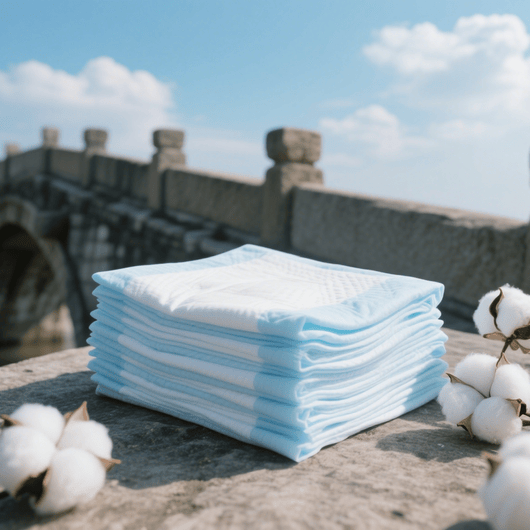
Waterlaid nonwoven fabric is one material response to this demand. It is produced using a wet-laid process similar to papermaking, combined with nonwoven bonding techniques, which allows manufacturers to control fiber composition, basis weight, and absorbency without relying solely on synthetic staple fiber inputs typical of some other nonwoven processes.
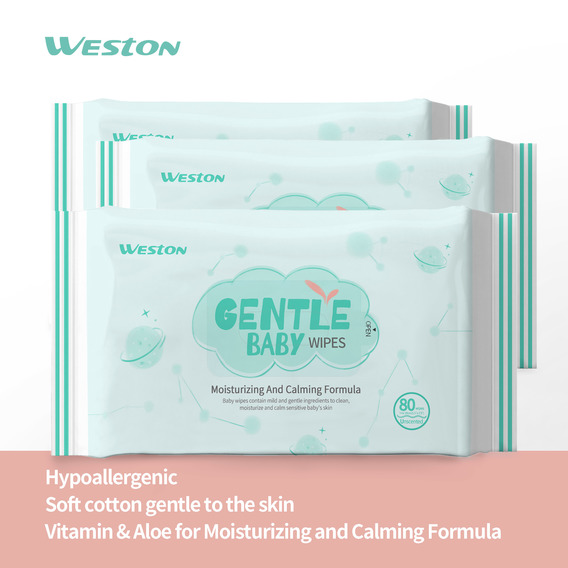
Weston Manufacturing supplies waterlaid nonwoven fabric and finished wipe products, including Baby Body Cleaning Wipes and Skin Friendly Baby Wipes, from a factory-based production line with in-house quality control. This article outlines the material characteristics of waterlaid nonwoven fabric, its measurable specifications, and its application in baby care and general wiping products.
In the context of wipes, sustainability is not a single attribute. It is a combination of factors that determine the material’s environmental and functional profile over its use cycle:
| Factor | Relevance |
| Biodegradability | Determines whether the fiber breaks down under composting or wastewater treatment conditions, as opposed to persisting as microplastic residue. |
| Fiber shedding | Lower shedding reduces the release of loose fiber fragments during use and after disposal. |
| Absorbency | Higher absorbency per unit weight can reduce the amount of material needed to complete a wiping task. |
| Renewable fiber content | Use of wood pulp or other cellulose-based fiber, as opposed to fully synthetic fiber, affects the material’s raw material sourcing profile. |
| Production water and energy use | Varies by nonwoven process (wet-laid, spunlace, airlaid, meltblown) and affects the manufacturing footprint. |
Material selection affects both environmental impact and user experience. A wipe that is highly absorbent but sheds fiber, or biodegradable but structurally weak in use, does not fully address the sustainability requirement. Waterlaid nonwoven fabric is evaluated against these factors as a category, not against a single metric such as biodegradability alone.
Waterlaid nonwoven fabric is manufactured by dispersing fiber — typically wood pulp, sometimes blended with synthetic staple fiber such as polyester or viscose — in a water slurry, then depositing it onto a moving forming wire to create a uniform web. The web is bonded using one or a combination of methods: chemical binder application, thermal bonding, or hydroentanglement (spunlace-waterlaid hybrid processes).
This process differs from carded or airlaid nonwoven production in fiber distribution and web uniformity. The wet-laid forming method produces a web with consistent basis weight distribution across the sheet, which affects both liquid handling and tensile performance.
Relevant structural characteristics:
These characteristics make waterlaid nonwoven fabric applicable to cleaning wipes, hygiene disposables, and other single-use or limited-use wiping products where absorbency and handling strength are both required.
| Benefit | Description |
| Absorbency | Pulp-based fiber structure supports rapid liquid uptake, relevant for wiping tasks involving water, lotion, or cleaning solution. |
| Wet strength | Formulated bonding (chemical, thermal, or hydroentangled) maintains tensile integrity when the fabric is saturated, reducing breakage during use. |
| Surface consistency | Wet-laid web formation produces uniform basis weight and surface appearance, supporting consistent converting and printing performance. |
| Customization | Basis weight, thickness, fiber blend ratio, color, and embossing pattern can be adjusted according to product specification. |
| Fiber sourcing options | Formulations using higher pulp content, as opposed to fully synthetic fiber, can support product positioning around reduced synthetic fiber use. |
The following table lists representative specification ranges for waterlaid nonwoven fabric as produced and supplied by Weston Manufacturing. Exact values are determined by the fiber blend, bonding method, and finished product requirement, and are confirmed at order stage.
| Parameter | Typical Range | Test Reference |
| Basis weight | 35 – 80 g/m² | ISO 9073-1 |
| Thickness | 0.20 – 0.60 mm | ISO 9073-2 |
| Dry tensile strength (MD) | ≥ 15 N/50mm | ISO 9073-3 |
| Wet tensile strength (MD) | ≥ 8 N/50mm | ISO 9073-3 |
| Elongation (MD) | 10 – 25% | ISO 9073-3 |
| Water absorption capacity | ≥ 400% of dry weight | ISO 9073-6 |
| Wicking rate | Reported per direction (MD/CD), sample-specific | GB/T 21655.1 |
| Color | White (natural or bleached pulp); custom colors available on request | — |
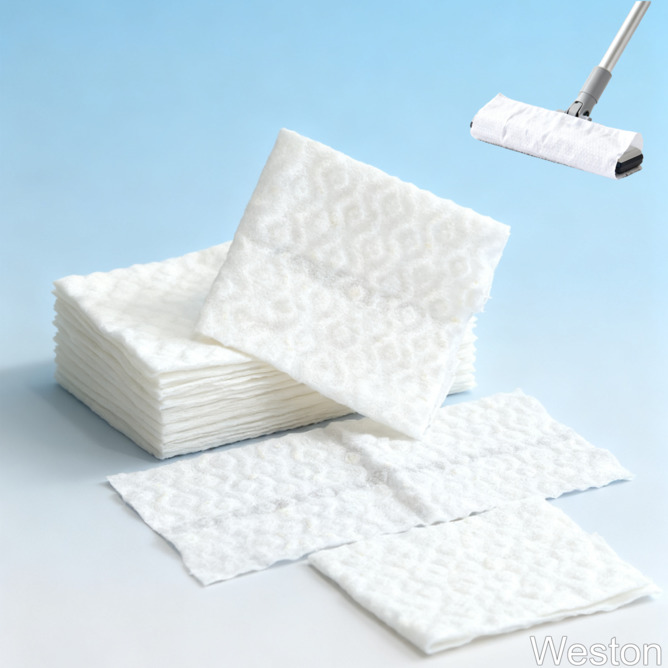
| Finish | Flat, embossed, or apertured, per product line | — |
| Antibacterial test support | Available on request, tested per product formulation (e.g., AATCC 100) | AATCC 100 |
Note: Values represent typical production ranges rather than guaranteed specifications for every order. Confirmed specifications are provided in the product datasheet issued for a specific order or sample.
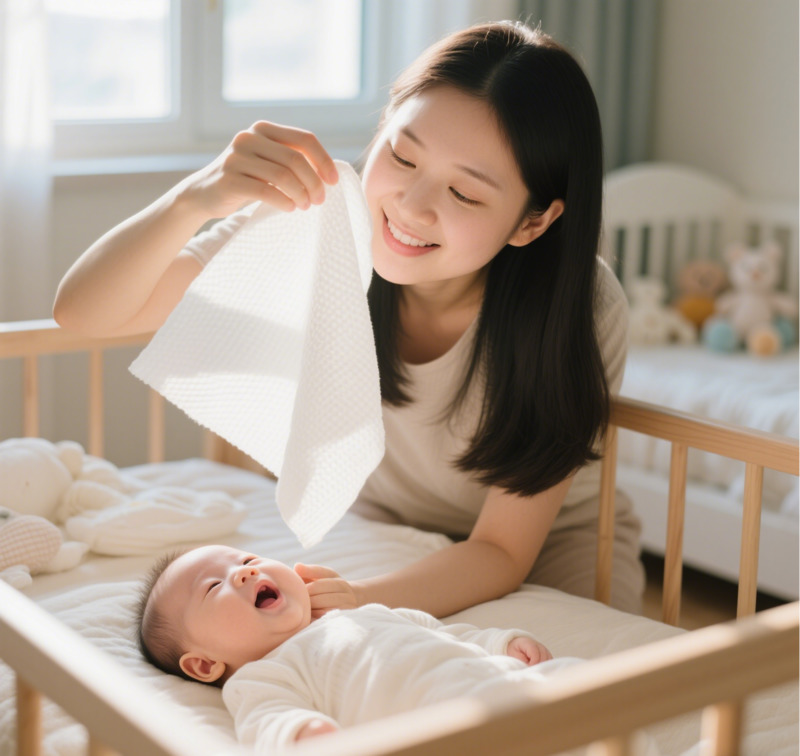
Waterlaid nonwoven fabric, in roll or converted wipe form, is applied across the following categories:
Weston Manufacturing’s baby care wipe products are produced from waterlaid nonwoven fabric formulated for skin contact use:
| Product | Formulation Focus | Basis Weight (Typical) | Primary Use |
| Baby Body Cleaning Wipes | Higher absorbency blend for general body cleaning | 70 – 80 g/m² | Routine cleaning of skin surfaces |
| Skin Friendly Baby Wipes | Lower synthetic fiber content, softer bonding profile | 70 – 80 g/m² | Sensitive-skin and frequent-use applications |
Both product lines are produced on the same waterlaid nonwoven line, with formulation adjustments (fiber blend ratio, binder type and add-on level, embossing pattern) applied according to the target specification for skin-contact use.
It is a nonwoven fabric produced by forming a fiber web from a water-based slurry (a process derived from papermaking) and bonding the web using chemical, thermal, or hydroentanglement methods.
Compared to woven textile wipes or nonwoven fabrics made by other processes (spunlace using carded fiber, airlaid, meltblown), waterlaid nonwoven fabric typically uses a higher proportion of wood pulp fiber, which affects its absorbency, biodegradability profile, and cost structure at a given basis weight.
Yes. Absorbency and strength are adjusted through fiber blend ratio, basis weight, and bonding method. These parameters are set according to the target product specification.
Waterlaid nonwoven fabric is used in hygiene disposables, including baby wipes and personal care products, when formulated and finished to the relevant skin-contact and absorbency requirements. Suitability for a specific hygiene application depends on the confirmed fiber blend, finishing process, and any required testing (e.g., skin irritation, antibacterial testing) relevant to the target market’s regulatory requirements.
Formulations with higher pulp fiber content and reduced synthetic fiber use can support sustainability-related product positioning. Specific claims (e.g., biodegradable, compostable) depend on the confirmed fiber composition and should be verified against the applicable standard and target market regulation before use in marketing or labeling.
Waterlaid nonwoven fabric offers a measurable set of characteristics — absorbency, tensile strength, surface consistency, and formulation flexibility — that position it as an alternative material for wipe production where reduced synthetic fiber content and controlled fiber shedding are relevant considerations. Its suitability for a given application depends on confirming basis weight, strength, and absorbency specifications against the intended use case.
Weston Manufacturing produces waterlaid nonwoven fabric and finished baby care wipe products, including Baby Body Cleaning Wipes and Skin Friendly Baby Wipes, under factory-based quality control. For product datasheets, sample requests, or customization inquiries related to fiber blend, basis weight, or finished product specification, contact Weston Manufacturing directly.

WESTON
Privacy Policy | SiteMap
Copyright WESTON