- Email: [email protected]


A Practical, Science-Driven Guide From the Everyday Cleaning Perspective
Nonwoven textiles may not be the first thing most people think about when they wipe a kitchen spill, remove a day’s worth of makeup, or sanitize a surface. Yet, hidden inside almost every modern cleaning moment is an engineered fabric designed to work harder, absorb faster, and remain hygienic without the complexity of traditional weaving or knitting.
In a world where convenience meets cleanliness, nonwoven textiles are the quiet backbone of daily hygiene. This article breaks down what they really are, why they’re so effective, and where you encounter them almost every day. And along the way, we’ll surface a few real examples—techniques, materials, and applications—that shape the cleaning products you trust.
In the simplest terms possible, a nonwoven textile is a fabric made by bonding fibers together—not by weaving yarn across yarn, and not by looping fiber into knitted structures. Instead, fibers are tangled, fused, or compressed to create a sheet of material with specific performance traits.
This structure matters because it gives nonwovens their signature cleaning strengths:
Higher absorbency thanks to open, interconnected pores
Customizable texture for scrubbing, lifting, or gentle skin contact
Strength even when wet, which woven cotton cloths often struggle to retain
Larger surface area, allowing dirt, oil, and moisture to cling more easily
Think of a nonwoven as a deliberately engineered sponge combined with the softness of a skincare pad—fast, efficient, and predictable in the hands of the user.
To visualize the difference:
| Type of Fabric | How It’s Made | Cleaning Behavior |
| Woven | Interlaced yarns | Durable but not very absorbent |
| Knit | Looped yarns | Stretchy but retains moisture |
| Nonwoven | Bonded loose fibers | Highly absorbent, customizable, hygienic |
Among these, nonwovens dominate cleaning applications for a simple reason: they can be engineered exactly for the task at hand.
Cleaning isn’t magic—it’s physics, chemistry, and fiber engineering working together. Three mechanisms in nonwovens make them especially powerful.
Because nonwovens are made from loose fibers, they naturally form thousands of microscopic channels. These channels pull in liquids via capillary action—think of how a dry paper edge draws in water instantly.
This is why a wipe can soak up a fall of toner or spilled coffee in mere seconds. The more chaotic the fiber arrangement, the more diverse the channels—and the faster the absorption.
Different fibers behave differently with oils and water.
Hydrophilic fibers (such as viscose or woodpulp) pull in water-based liquids.
Hydrophobic fibers (like polypropylene) are great at picking up oily residues.
This explains why some makeup-remover pads slide effortlessly across eyeliner, while others excel at lifting sunscreen or sebum. Engineers blend fibers to create cloths that tackle both water and oil.
Water-jet bonding (spunlace) is a common method of making nonwovens. This process uses high-pressure water streams to entangle fibers deeply and tightly—creating a cloth that feels soft but holds up under force.
This is why you can scrub a countertop aggressively with a wipe or twist a soaked cloth without it breaking apart.
Nonwovens are everywhere—but here are four examples you likely use weekly, each designed for a specific cleaning challenge.
For surfaces that collect oil (stovetops, ranges, microwaves), nonwovens are engineered with fiber blends that absorb grease and cling to residues. The woodpulp-polyester combinations seen in many kitchen wipes strike the perfect balance between strong and thirsty.
These are designed to be gentle on skin while strong enough to carry off makeup, sunscreen, pollution dust, and excess sebum. Lyocell-based and cotton-based nonwovens excel here because they are smooth, hypoallergenic, and fluid-friendly.
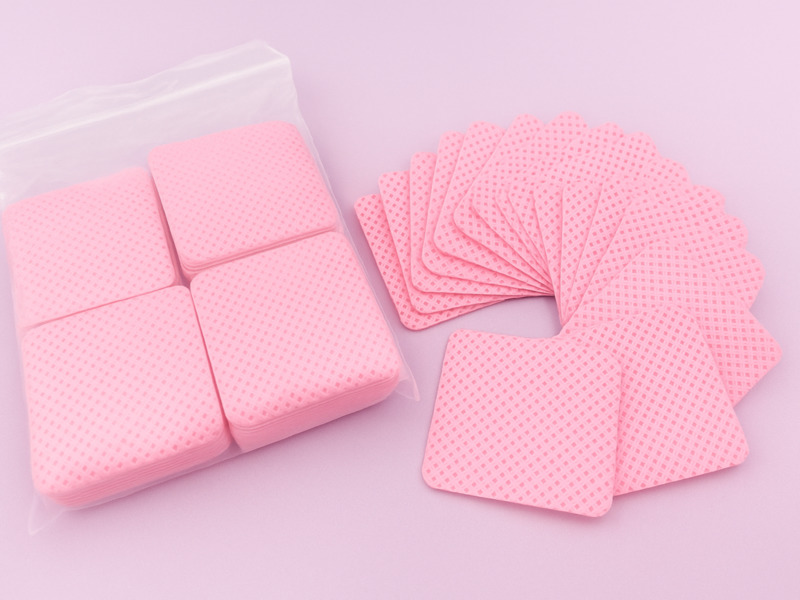
Texture also matters. Embossed dots or apertures physically help “lift and trap,” reducing the need for hard rubbing.
In automotive, mechanical, and industrial settings, nonwovens provide lint-free strength and chemical resistance. They maintain structure even under solvents or heavy friction, making them the modern replacement for woven rags.
From disinfectant wipes to hospital prep pads, the stability and cleanliness of nonwovens make them ideal for environments demanding sterility and low lint. They’re designed for fast, efficient wiping with minimal contamination risk.
When you choose a wipe—whether for your face or your kitchen—you’re actually choosing a combination of material science and engineering decisions.
A great nonwoven will have:
Fast absorption speed
Consistent wet or dry strength
Safe surface texture (not too abrasive, not too smooth)
High dirt/oil lifting efficiency
Good skin or surface compatibility
Responsible environmental footprint
This isn’t simply “better fiber equals better wipe.” It’s about tuning fiber blends, bonding methods, and pore structures to specific cleaning needs.
To truly understand nonwovens, it helps to look at their fibers individually—each brings something unique:
Highly absorbent
Rapid wetting
Soft and natural feel
Used in both consumer and industrial wipes.
Adds strength, especially when wet
Maintains structure under high friction
Ideal for industrial and multipurpose wipes
Naturally hydrophobic
Excellent oil-lifting behavior
Low lint, making it suitable for electronics, optical cleaning, or oily kitchens
Smooth, luxurious touch
Biodegradable
Great for face wipes and sensitive skin applications
Fast-growing and renewable
Naturally breathable and soft
Gaining favor in modern beauty and skincare wipes
Blending these fibers allows manufacturers to engineer wipes that clean water-based messes, oil-based dirt, or both.
Today’s consumers care about what happens after the wipe is used. Nonwovens are evolving fast:
Biodegradable fibers like bamboo, lyocell, and viscose reduce long-term waste
Efficient hydroentangling (spunlace) processes limit water pollution
Alternative synthetic fibers minimize microplastic shedding
Recyclable options support circular manufacturing models
Nonwovens are on a steady path toward greener engineering—making daily cleaning less burdensome for the environment.
Across the nonwoven industry, manufacturers are continuously refining fiber blends to meet cleaning challenges that evolve with modern lifestyles—greasier sunscreens, stronger cosmetics, faster kitchens, higher hygiene expectations.
As a practical example of this innovation, companies like Weston Manufacturing engineer specialized nonwovens that support fast, safe, and efficient cleaning across home, beauty, and industrial settings.
Here are a few advanced materials often used in these applications, integrated seamlessly into cleaning science:
High-absorption sheets such as Woodpulp Polypropylene Blend Nonwoven Rolls
Skin-focused sustainable options like Bamboo Lyocell Facial Wipes
Industrial-level materials including Starch Sized Polyester Nonwoven Fabric
For engineers, buyers, brands, or R&D teams exploring new cleaning products or seeking reliable materials, technical samples are available upon request:
[email protected]
Nonwoven textiles aren’t just substitutes for woven fabrics—they are purpose-built materials that improve cleaning efficiency, absorption, hygiene, and convenience in ways older fabrics simply can’t. You interact with them every day, even if you don’t notice. From the wipe that lifts kitchen grease to the pad that removes makeup gently, nonwovens do their work quietly, cleanly, and consistently.
Understanding how they function, what they’re made of, and why they behave the way they do doesn’t just make you a more informed consumer. It also highlights a world of material science designed to make life easier, cleaner, and safer—with less effort, and more engineered intelligence behind every swipe.

WESTON
Privacy Policy | SiteMap
Copyright WESTON