- Email: [email protected]


Nonwoven polyester is often described in simple terms, but the material itself is more precise than it sounds. It is not woven, not knitted, and not random. It is a controlled sheet of fibers engineered to meet specific performance needs. To understand it clearly, it helps to separate two ideas: the fiber and the structure.
Polyester is the fiber. Nonwoven is the structure.
Polyester, usually in the form of PET (polyethylene terephthalate), is a synthetic material known for its strength, stability, and resistance to moisture. It does not absorb water easily, does not degrade quickly, and holds its shape under stress. These properties make it a reliable base material.
Nonwoven refers to how those fibers are turned into fabric. Instead of spinning fibers into yarn and then weaving them, the fibers are laid directly into a sheet and bonded together. This changes not just how the material is made, but how it performs.
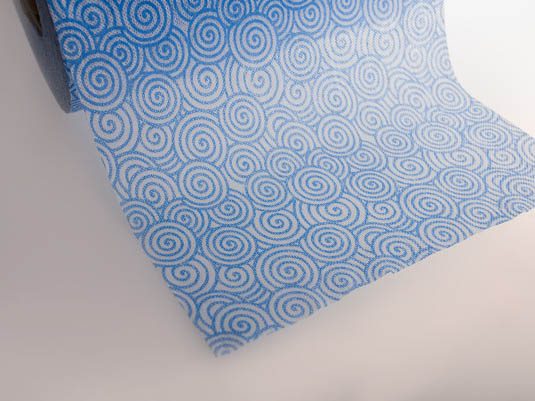
Nonwoven fabric is formed by arranging fibers into a web and then bonding them. The bonding step is what gives the material its structure.
Key facts:
No yarn is formed at any stage
Fibers are distributed in a controlled but non-directional way
Bonding replaces weaving as the main structural process
This approach allows manufacturers to design materials based on function rather than tradition. The final fabric can be soft, rigid, absorbent, or resistant depending on how it is processed.
The production process is usually described in three stages, but in practice, the bonding method defines the material.
Mechanical bonding: fibers are entangled using needles or high-pressure water (spunlace)
Thermal bonding: heat softens fibers and fuses them together
Chemical bonding: binders are applied to hold fibers in place
Important detail:
Bonding technology has more influence on performance than fiber type alone. For example, hydroentanglement creates a softer and more cloth-like surface compared to thermal bonding.
Woven polyester relies on interlaced yarns. Nonwoven polyester relies on fiber bonding.
This leads to practical differences:
Strength in woven fabrics is directional; in nonwovens, it is more evenly distributed
Nonwovens can be produced faster and with less material waste
Surface properties can be engineered more freely
Nonwoven polyester is not trying to replace woven fabric. It is designed for applications where flexibility in structure matters more than traditional textile strength.
The material appears in both everyday and industrial settings, often without being noticed.
Common applications:
Cleaning wipes and industrial wiping materials
Medical disposables and hygiene products
Filtration layers in air and liquid systems
Packaging and protective layers
Industrial applications:
Automotive interiors and insulation
Construction membranes
Geotextiles for soil stabilization
In many of these uses, consistency and cost control are more important than appearance.
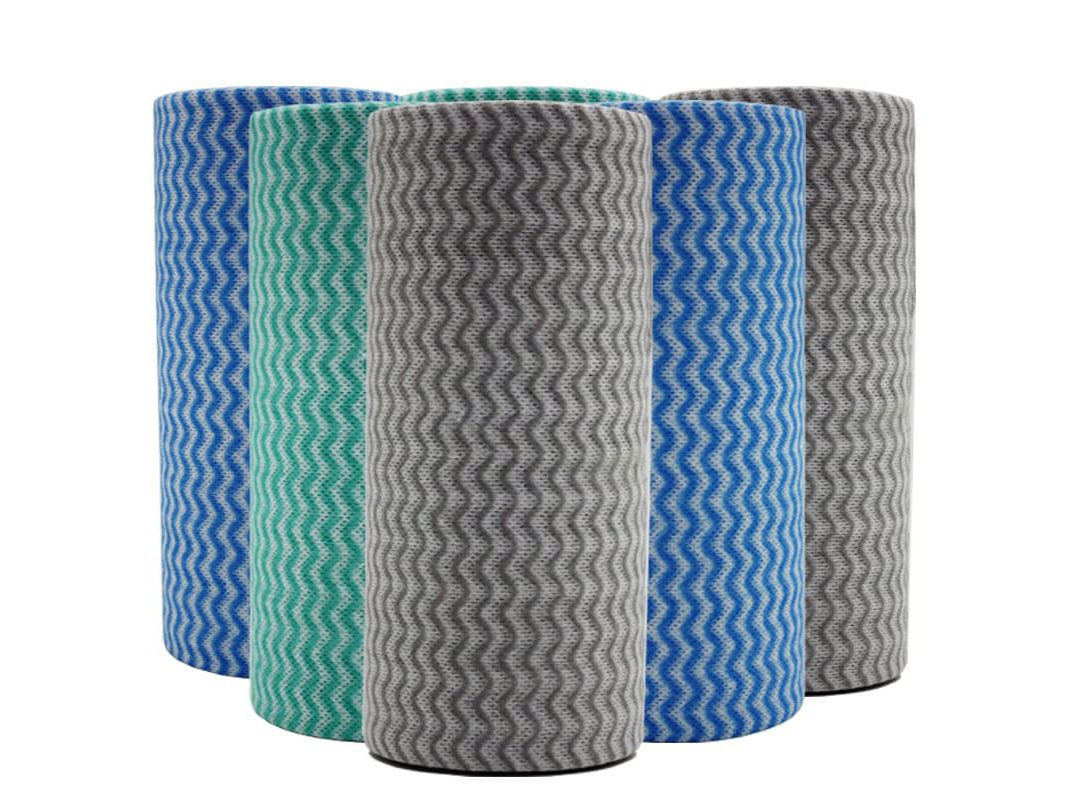
Nonwoven polyester is chosen for what it does consistently, not for how it looks.
Strengths:
Stable in wet conditions
Resistant to chemicals and oils
Can be engineered for low lint or high absorbency
Scalable production with uniform quality
Limitations:
May not match woven fabrics in tensile strength under heavy load
Surface feel depends heavily on processing method
Environmental impact depends on disposal and recycling systems
These trade-offs are why it is often used in functional, single-use, or controlled environments.
One of the clearest use cases for nonwoven polyester is in cleaning and hygiene applications. Wipes require a balance of absorbency, strength, and cleanliness.
Spunlace (hydroentangled) nonwoven polyester is especially relevant here. The process uses high-pressure water to entangle fibers without chemical binders, resulting in a softer and more uniform material.
This is where materials like Hygienic Kitchen Wipes Material become practical. They are designed to handle water, oil, and repeated wiping without breaking apart. The structure also helps reduce lint, which is important in both household and industrial cleaning.
In more specialized cases, variations such as Black Viscose Polyester Spunlace Nonwoven Material are used where appearance, contrast, or specific performance properties are required. Blending fibers, for example combining polyester with viscose, can improve absorbency while maintaining strength.
Another example is Polyester Viscose Blend Low Lint Nonwoven Fabric, which targets environments where fiber shedding must be minimized. This is critical in electronics, precision cleaning, or food-contact surfaces.
These are not cosmetic differences. They are small adjustments in fiber composition and bonding that change how the material behaves in real use.
Not all nonwoven fabrics use polyester, but polyester is one of the most common choices for a reason.
Material advantages:
Maintains strength when wet
Resistant to microbial growth compared to natural fibers
Compatible with multiple bonding methods
Cost-effective for large-scale production
When blended with fibers like viscose, it can balance durability with absorbency. This combination is widely used in wiping products and hygiene materials.
From a production standpoint, nonwoven polyester is less about fabric tradition and more about process control. A polyester Nonwoven Manufacturer focuses on consistency, fiber distribution, and bonding precision rather than weaving patterns.
This shift in thinking is important. It explains why nonwoven materials continue to expand into areas where woven fabrics were once dominant.
There are two common misconceptions:
Neither is accurate. High-performance filtration media, medical disposables, and industrial wipes often rely on nonwoven polyester because it delivers predictable results.
The material is not defined by simplicity. It is defined by control.
Understanding nonwoven polyester comes down to recognizing that it is engineered from the fiber level up. The absence of weaving is not a limitation. It is what allows the material to be shaped around function rather than forced into it.

WESTON
Privacy Policy | SiteMap
Copyright WESTON