- Email: [email protected]


Dissolving wood pulp, often regarded as the purest and most refined form of cellulose extracted from wood, holds a vital position in the transition toward sustainable industrial materials. Derived from carefully processed wood fibers, this pulp contains a cellulose purity exceeding 90%, making it distinct from conventional paper-grade pulps. Its superior solubility and chemical reactivity enable a wide spectrum of industrial transformations — from textile fibers to nonwoven fabrics and biodegradable polymers. In a time when industries are moving away from fossil-based inputs, dissolving wood pulp (DWP) stands as one of the most promising bio-based raw materials driving both ecological and technological progress.
At its core, dissolving wood pulp is a highly purified form of cellulose — a natural polymer composed of glucose molecules linked by β-1,4-glycosidic bonds. The purification process involves removing non-cellulosic components such as lignin and hemicellulose, resulting in a uniform and reactive cellulose structure. This refined molecular architecture gives the material its unique ability to dissolve in specific chemical solvents, forming viscose or other cellulose derivatives.
The production process generally involves several stages:
Wood Selection: Typically, both hardwoods and softwoods are used, chosen for their balanced fiber strength and uniformity.
Pre-hydrolysis and Cooking: Controlled treatment removes hemicellulose and loosens lignin.
Bleaching and Refinement: Multiple purification stages enhance whiteness, brightness, and chemical reactivity.
Drying and Finishing: The result is a high-purity pulp with predictable viscosity and polymer chain distribution.
What makes DWP scientifically compelling is its molecular uniformity, which translates into predictable performance in downstream applications. The degree of polymerization (DP), crystallinity, and purity levels directly affect the end-use properties of fibers, films, and nonwoven structures derived from it.
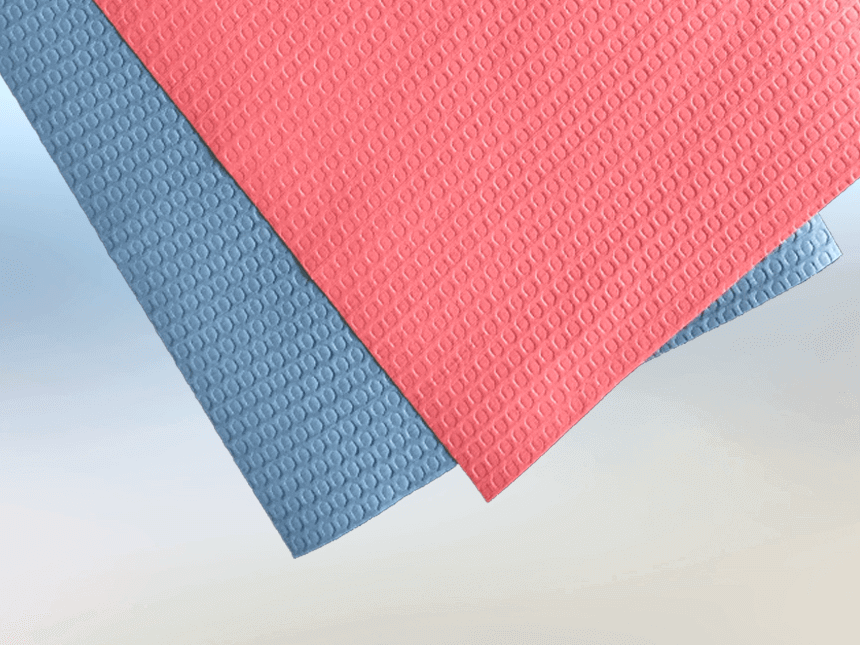
Dissolving wood pulp is not an end product but a feedstock that undergoes transformation into various regenerated or modified cellulose products. Each transformation harnesses the pulp’s chemical reactivity to produce materials suited for distinct performance needs.
The most recognized application lies in the production of viscose rayon, modal, and lyocell fibers — all regenerated cellulose types differing by process and solvent system. These fibers exhibit excellent breathability, softness, and moisture management, making them ideal for apparel, home textiles, and hygiene products. Their biodegradability provides an environmental edge compared to synthetic fibers derived from petrochemicals.
From a scientific standpoint, the uniform cellulose chains of DWP facilitate consistent spinning performance and enhance fiber tensile strength. Advances in solvent systems have also minimized chemical residues, allowing regenerated fibers to meet stricter environmental standards.
Beyond textile fibers, DWP serves as the molecular foundation for a wide range of cellulose derivatives, including cellulose acetate, nitrocellulose, and carboxymethyl cellulose (CMC). These derivatives perform essential roles in coatings, films, pharmaceuticals, and controlled-release formulations. The high chemical reactivity of dissolving pulp’s hydroxyl groups allows selective substitution reactions, creating derivatives with precise solubility, viscosity, and film-forming properties.
For example, cellulose acetate is used in optical films and membranes, while CMC enhances water retention in industrial and food applications. Each application draws upon the structural integrity and renewability of the cellulose backbone.
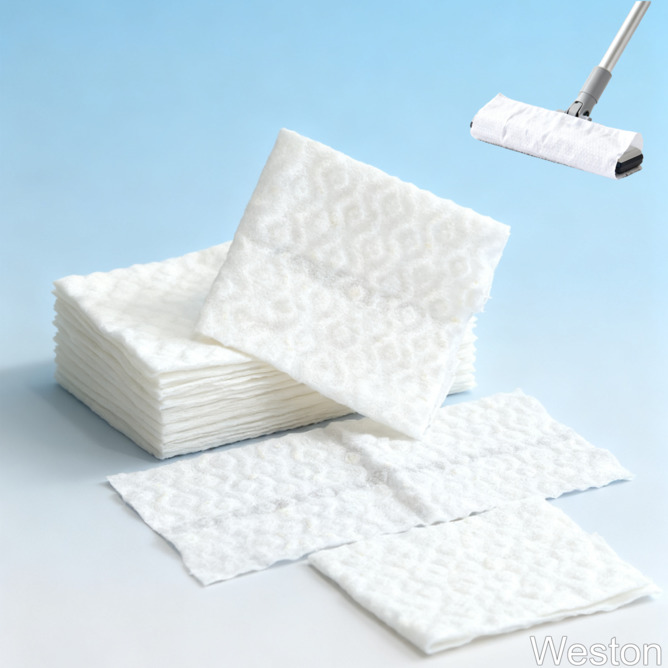
One of the fastest-growing uses of dissolving wood pulp lies in nonwoven technology, especially in spunlace (hydroentangled) processes. When blended with synthetic fibers like polypropylene or polyester, DWP-derived cellulose fibers contribute superior absorbency, softness, and natural texture.
In this context, Weston Manufacturing has developed advanced nonwoven solutions such as Woodpulp Polypropylene Blend Nonwoven Rolls, which integrate the absorbent strength of cellulose with the resilience of polypropylene. Similarly, the X80 Similar Woodpulp Polypropylene Honeycomb Spunlace structure enhances liquid distribution and tensile stability, ideal for heavy-duty wipes and industrial cleaning fabrics. The Woodpulp Polyester Embossed Turquoise Spunlace variant demonstrates how controlled embossing patterns can improve tactile appeal and fluid management in professional-grade applications.
These examples underscore how dissolving wood pulp contributes not only as a raw material but also as a functional enhancer that improves the end-product’s balance between absorbency, durability, and sustainability. The synergy between natural cellulose and synthetic polymer fibers enables nonwoven materials to achieve both performance and environmental responsibility — a combination increasingly sought after in the global market.
Every industrial material, even one as renewable as dissolving wood pulp, has its strengths and constraints. Understanding both allows manufacturers to apply it effectively and responsibly.
Renewable Origin: Extracted from managed forests, DWP supports circular economy models and reduces reliance on petroleum-based materials.
High Reactivity and Purity: The nearly pure cellulose content allows predictable and efficient chemical modification.
Biodegradability: Products derived from DWP naturally decompose, mitigating long-term environmental accumulation.
Versatility Across Industries: It serves as a universal base for fibers, films, thickeners, coatings, and nonwoven fabrics.
Excellent Compatibility: When blended with synthetics in nonwovens, DWP enhances absorbency and softness without compromising mechanical strength.
Processing Sensitivity: DWP requires precise chemical control during dissolution and regeneration; any impurities can affect fiber consistency.
Moisture Sensitivity: Cellulose fibers tend to swell in high humidity, influencing dimensional stability.
Higher Production Complexity: Refining wood pulp to high purity levels demands more energy and water than standard pulps.
Limited Thermal Resistance: Pure cellulose degrades at elevated temperatures, so applications requiring heat stability may need composite formulations.
In industrial practice, these limitations are mitigated by hybrid material engineering — blending woodpulp-derived fibers with thermoplastic polymers or modifying fiber structures during manufacturing. For instance, in Weston’s spunlace production lines, optimized blending ratios and hydroentanglement techniques maintain consistent tensile properties while enhancing softness and fluid retention.
From a sustainability perspective, dissolving wood pulp represents a bridge between biological carbon cycles and industrial material innovation. As forests absorb atmospheric CO₂ and store it within cellulose chains, converting that biomass into functional products prolongs carbon retention while displacing fossil-intensive alternatives.
Modern DWP production also embraces closed-loop chemical recovery systems, minimizing waste and reusing process chemicals such as sodium hydroxide and sulfur compounds. Furthermore, the use of certified forestry sources ensures traceability and ecosystem protection. These developments reflect the broader shift toward bio-based material economies, where renewability and recyclability are integrated into manufacturing philosophies.
In nonwoven applications, cellulose’s biodegradability provides a practical advantage in waste management. Wipes, absorbent pads, and filtration layers made from woodpulp-based spunlace degrade naturally, aligning with the increasing global emphasis on eco-conscious disposable products.
Scientific innovation continues to unlock new potential for DWP. Recent research explores nanocellulose extraction from dissolving pulp, producing materials with extraordinary strength and barrier properties for packaging and biomedical applications. Meanwhile, biocomposite engineering combines cellulose with biodegradable polymers to replace plastics in flexible films and molded components.
In the nonwoven domain, emerging production technologies such as hydroentangled multilayer structures and functional surface treatments further enhance fiber bonding and absorbency control. Weston Manufacturing’s advancements in woodpulp-polymer spunlace materials exemplify this progress — combining high-efficiency fluid transfer, mechanical robustness, and tactile comfort across professional cleaning, medical, and cosmetic segments.
The adaptability of dissolving wood pulp to both traditional and high-performance applications underscores its central role in the next generation of bio-industrial materials.
As industries shift toward sustainable and high-performance materials, the ability to control fiber composition and texture becomes critical. Weston Manufacturing has built its reputation on precision-engineered spunlace nonwoven products that integrate cellulose-based fibers with polymer components to achieve tailored absorbency, softness, and strength.
Whether producing Woodpulp Polypropylene Blend Nonwoven Rolls for industrial cleaning, X80 Similar Woodpulp Polypropylene Honeycomb Spunlace for heavy-duty wiping, or Woodpulp Polyester Embossed Turquoise Spunlace for specialized hygiene and cosmetic applications, Weston’s expertise ensures consistency from fiber selection to final roll performance. The company’s deep understanding of cellulose behavior — from the molecular level of dissolving wood pulp to the final texture of spunlace fabric — allows clients to benefit from products that are both scientifically optimized and environmentally mindful.
In the evolving landscape of bio-based materials, dissolving wood pulp stands not merely as a resource but as a foundation for innovation. And with partners dedicated to mastering its transformation, such as Weston Manufacturing, the potential of this renewable material continues to expand — shaping cleaner, smarter, and more sustainable industrial solutions for the future.

WESTON
Privacy Policy | SiteMap
Copyright WESTON